

AI CERTS
2 months ago
Maine’s Infrastructure Expansion Veto Shifts Data Center Policy
Analysts link the decision to accelerating AI growth and tightening energy supply across New England. Moreover, the veto shields a $550 million redevelopment in Jay, promising hundreds of jobs. Stakeholders now watch whether legislators attempt an override during the upcoming session. Meanwhile, utilities and regulators prepare new modeling to gauge electricity demand. This article unpacks the policy clash, stakeholder positions, and potential national ripples. Readers will also find professional insights and certification resources for navigating emerging infrastructure debates.
Veto Sparks Policy Debate
In her veto message, the Maine governor acknowledged mounting concerns over grid stability and climate goals. Nevertheless, she labeled the Infrastructure Expansion Veto a necessary move to protect Jay's redevelopment. She argued the bill’s lack of exemptions would derail economic recovery in a distressed mill town. Furthermore, her office highlighted projected 800 construction jobs and 100 permanent positions.
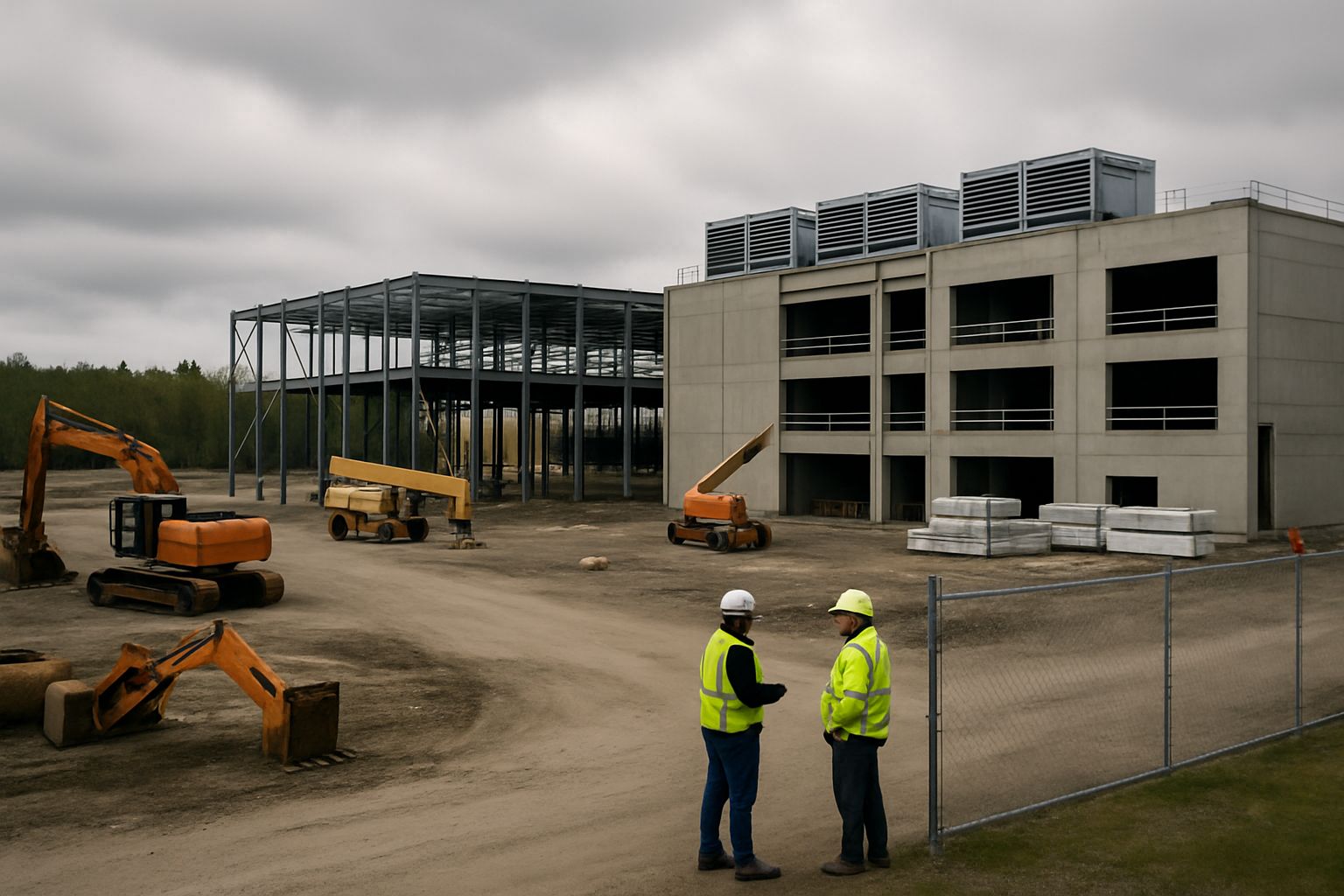
Sponsors saw things differently. Rep. Melanie Sachs called the decision a rejection of public demand for a prudent state freeze. Additionally, environmental groups warned that unchecked data centers could raise electricity rates statewide. They cited Lawrence Berkeley National Laboratory findings that U.S. facilities consumed 176 TWh in 2023.
Those statistics equal roughly 4.4 percent of national electricity use. Moreover, several scenarios project steep increases by 2028, driven by AI growth. Consequently, critics maintain the Infrastructure Expansion Veto postpones essential planning conversations. The section underscores how policy interests collide with rapid technological expansion.
Voices on both sides stress urgency yet disagree on tactics. Therefore, understanding local economic stakes becomes the next crucial step.
Economic Stakes For Jay
The former Androscoggin mill once anchored Jay's tax base. After its closure, unemployment rose and municipal revenue plunged. Consequently, town leaders backed the redevelopment, envisioning high-speed computing replacing idle machinery. The Infrastructure Expansion Veto preserves that vision, at least temporarily.
Developer documents outline a 20-megawatt initial phase, scaling upward if market demand materializes. In contrast, L.D. 307 would have halted permit reviews above 20 megawatts. Nevertheless, local officials argue existing infrastructure eases integration and limits environmental disruption. Moreover, repurposing a brownfield aligns with circular-economy principles.
Supporters also emphasize diversified revenue streams. A revived tax base could lower residential rates and fund public services. Additionally, permanent operations jobs carry salaries above regional medians, according to town filings. Such benefits fueled intense lobbying against the proposed state freeze.
Economic hopes in Jay remain tied to swift permitting. However, grid and climate pressures still shadow the project, steering attention toward technical challenges.
Grid And Climate Pressures
ISO-New England forecasts rising load from electrification and AI growth. Meanwhile, Maine's renewable targets require substantial transmission upgrades. Critics of the Infrastructure Expansion Veto fear uncoordinated projects will strain energy supply. Furthermore, sudden high-load interconnections can shift upgrade costs to ratepayers.
L.D. 307 proposed a 13-member council to evaluate technical solutions. Membership included utilities, labor, tribal nations, and environmental advocates. Moreover, the group would have delivered recommendations by February 2027. Without legislation, the Maine governor plans an executive order mirroring that mandate.
Stakeholders worry timelines could slip without statutory deadlines. Nevertheless, the governor promised quick action and public transparency. Additionally, Central Maine Power has begun preliminary studies on integrating the Jay facility. Results will influence broader decisions on future data centers across the region.
Grid reliability stakes remain unresolved after the veto. Therefore, the political path forward gains fresh importance.
Legislative Path Forward
The Legislature passed L.D. 307 with 79 House and 21 Senate yeas. However, an override requires two-thirds majorities in both chambers. Political analysts rate the chances uncertain after intense lobbying. The Infrastructure Expansion Veto therefore may survive unchallenged.
Lawmakers could craft a revised bill that carves out the Jay project. Consequently, a narrow exemption might reconcile economic and environmental goals. Alternatively, members may adopt a shorter state freeze until council findings emerge. Moreover, separate tax incentive reforms already passed without resistance.
- Late April: Governor files executive order establishing council.
- Early May: House and Senate convene for veto override votes.
- Summer 2026: Council begins data collection on energy supply impacts.
- February 2027: Final recommendations due to Legislature.
Timelines display how policy can evolve quickly in Augusta. Subsequently, stakeholder engagement will shape each milestone.
Stakeholder Reactions Diverge
Business groups applauded the Infrastructure Expansion Veto for maintaining investment certainty. In contrast, Maine Conservation Voters called the action "incredibly disappointing." Additionally, Food & Water Watch warned of water-cooling impacts and rising bills. The Maine governor countered that executive-branch oversight will protect communities.
Labor unions remain split. Some prioritize immediate construction jobs, while others seek long-term rate stability. Moreover, rural lawmakers face pressure from constituents needing employment. Nevertheless, urban districts prioritize grid decarbonization over additional load.
Divergent priorities complicate consensus. Therefore, national observers are treating Maine as a policy laboratory.
National Context Emerging
Other states contemplate similar moratoria amid AI growth and electricity constraints. For example, North Carolina and Georgia committees recently opened hearings on large data centers. Moreover, congressional staff have explored federal guidelines for equitable energy supply allocation. Consequently, Maine's Infrastructure Expansion Veto offers a case study for future statutes.
Analysts note that 20-megawatt thresholds remain common in draft bills. However, hyperscale AI training campuses increasingly request 100-megawatt interconnections. Additionally, corporate buyers demand renewable power purchase agreements, influencing regional planning. These dynamics reinforce the urgency of coordinated state freeze strategies.
Maine's decision resonates far beyond New England. Subsequently, technology leaders must monitor evolving regulatory landscapes.
Strategic Takeaways For Leaders
Corporate strategists should track ongoing override votes and executive council formation. Furthermore, project designers must engage utilities early to model energy supply scenarios. Professionals can enhance their expertise with the AI Executive™ certification. Additionally, scenario planning around Infrastructure Expansion Veto outcomes will reduce investment risk.
Environmental managers can benchmark cooling innovations that cut water use by 90 percent. Meanwhile, municipal leaders should negotiate community benefit agreements before permits issue. Moreover, transparency around carbon accounting will satisfy skeptical ratepayers. These steps position stakeholders for resilient, responsible development.
Proactive governance bridges economic needs and climate commitments. Therefore, informed action today prevents costlier interventions tomorrow.
Maine's Infrastructure Expansion Veto halted the nation’s first statewide pause on large computing hubs. However, the debate over a state freeze continues inside the Legislature. The Maine governor moved to salvage local jobs while promising rigorous study. Meanwhile, critics warn that unchecked AI growth could overwhelm the regional energy supply. National policymakers are watching because data centers now shape grid investment decisions. Moreover, economic developers see brownfield projects like Jay as blueprints for revitalization. Consequently, stakeholders must balance growth ambitions with environmental safeguards. Finally, deepen your strategic insight and career prospects by earning the linked AI Executive™ credential today.
Disclaimer: Some content may be AI-generated or assisted and is provided ‘as is’ for informational purposes only, without warranties of accuracy or completeness, and does not imply endorsement or affiliation.


