

AI CERTS
3 months ago
Anthropic’s Silicon Push Amid Hardware Shortage
The move would echo strategies at OpenAI, Meta, and Amazon. However, custom silicon carries daunting cost, timeline, and yield risks. This feature unpacks the capacity deal, the exploratory chip program, and industry reactions. Readers will gain clear numbers, risk assessments, and next steps worth monitoring. Therefore, tech leaders must grasp the implications before the next procurement cycle.
Global AI Compute Race
Nvidia’s dominance in GPU sales once defined the field. However, soaring model size and inference volume shifted attention toward purpose-built accelerators. Consequently, hyperscalers began commissioning ASICs to lower cost per token. OpenAI tapped Broadcom; Meta revived its in-house chip design program; Amazon shipped Trainium. Anthropic already booked over one gigawatt of Google TPU capacity for 2026.
Moreover, the new deal multiplies that baseline roughly fourfold starting 2027. Energy planners flag the arrangement because three gigawatts rivals some national grids. These numbers confirm accelerating demand despite constrained supply. Nevertheless, the widening gap keeps competition intense as we see next.
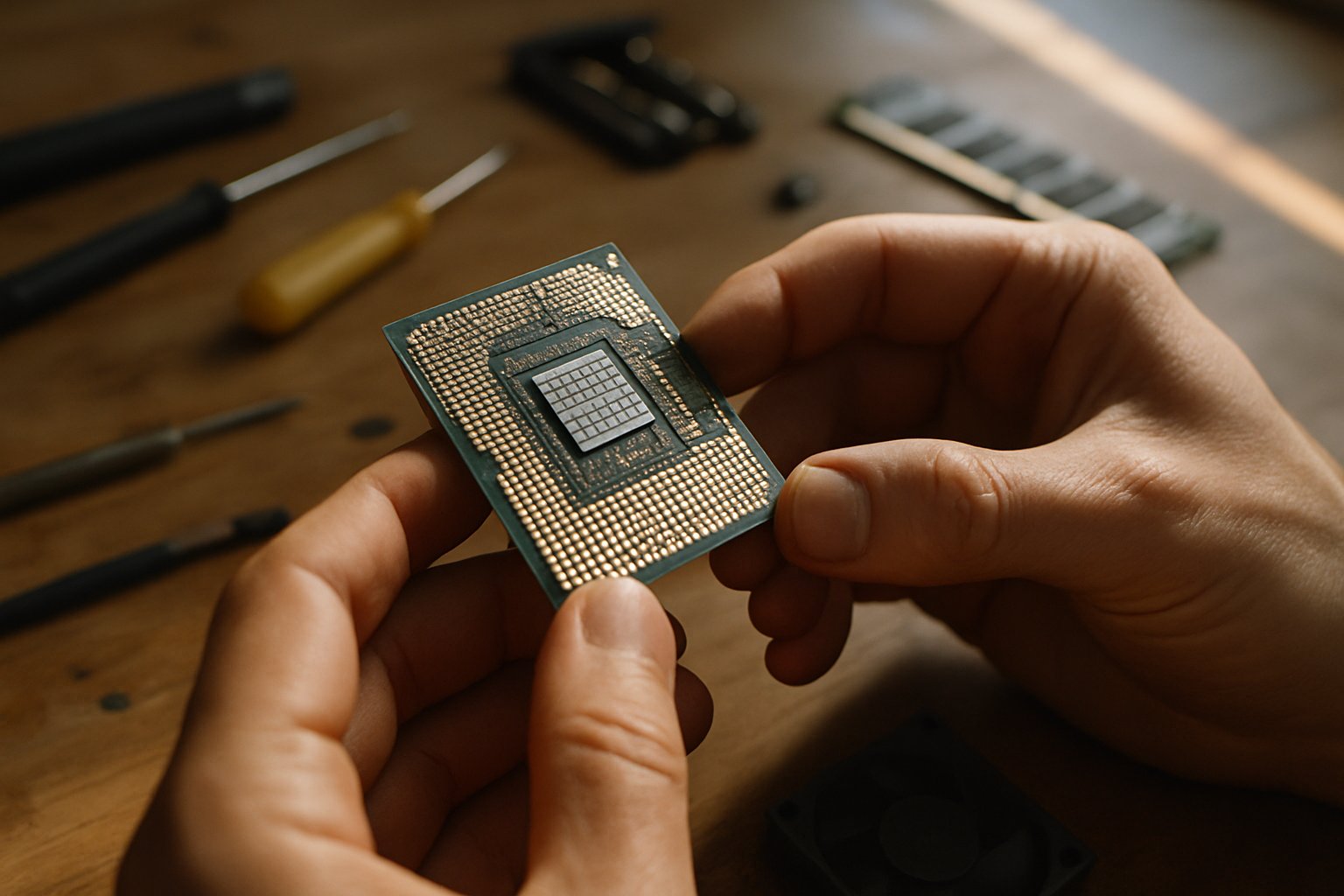
Anthropic Capacity Expansion Plan
The April 6 announcement paired Anthropic with Google and Broadcom in a novel structure. Google will design next-generation TPU versions while Broadcom manufactures and packages them. Anthropic gains priority access to approximately 3.5 gigawatts, mostly within United States campuses. Consequently, the lab secures scale before Nvidia’s booking window opens again. Analysts stress the arrangement protects Anthropic from the ongoing Hardware Shortage that inflates spot prices. Annualized revenue already exceeds $30 billion, providing financial cover for multi-year contracts.
- 3.5 GW TPU capacity starting 2027
- >1 GW committed for 2026 ramp
- $30B revenue run rate as of April
- Partnership spans manufacturing, packaging, and supply guarantees
Furthermore, CFO Krishna Rao framed the pledge as disciplined, not speculative. The capacity locks in compute during an acute market crunch. However, Anthropic now questions whether reliance on partners remains sustainable.
Custom Silicon Evaluation Path
Reuters revealed on April 9 that Anthropic is studying an internal accelerator project. Sources described the initiative as exploratory, with no taped-out design yet. Designing cutting-edge silicon typically costs at least half a billion dollars. Moreover, teams must integrate EDA tools, firmware, compilers, and datacenter orchestration. In contrast, purchasing cloud TPU time shifts capital from CapEx to OpEx. Effective chip design governance also demands deep collaboration with foundry partners like TSMC. Nevertheless, custom chips can deliver workload-specific performance and lower per-token cost. A persistent Hardware Shortage also incentivizes owning patented die layouts.
- Performance tuning for Anthropic transformer architecture
- Reduced latency for real-time inference
- Strategic insulation from Hardware Shortage shocks
- Potential margin expansion at scale
Consequently, the board must weigh risk against these prospective benefits. Exploration alone signals serious intent despite unsettled budgets. The following section dissects financial and technical roadblocks.
Cost And Risk Factors
Historical data shows only a handful of companies successfully launch new accelerators at scale. Broadcom CEO Hock Tan recently warned that laboratory prototypes rarely survive production yield hurdles. Therefore, Anthropic must budget extra for testing, packaging, and high-bandwidth memory procurement. A Hardware Shortage of HBM stacks already inflates lead times beyond 18 months. Delayed tooling deliveries, another byproduct of the Hardware Shortage, extend project calendars. Furthermore, physical infrastructure such as substations and cooling systems can lag silicon readiness. Chip design teams also compete fiercely for scarce verification engineers.
- Non-recurring engineering exceeding $500 million
- Foundry slot allocation uncertainty
- Software stack rewrite burden
- Opportunity cost versus renting Google TPU clusters
Consequently, many observers believe Anthropic will proceed cautiously, perhaps co-designing with Broadcom. Up-front cost is only one barrier; geopolitical supply concerns deepen the dilemma. Industry reactions illuminate those external pressures.
Industry Reactions And Impacts
Investors greeted the capacity deal with optimism, citing secured throughput during the continuing Hardware Shortage. Meanwhile, Nvidia shares dipped marginally after Broadcom highlighted rising custom silicon demand. Analysts at Mizuho argued the move validates the broader chip design pivot among large labs. Moreover, grid operators call the multi-gigawatt buildout an unprecedented planning challenge. Consequently, regulators may fast-track renewable projects adjacent to new data centers.
- Cloud providers: Seek differentiated services
- Foundries: Compete for advanced nodes
- Policy makers: Monitor regional power stress
- Enterprise buyers: Watch pricing volatility
Professionals can deepen architecture skills through the AI Developer™ certification. Stakeholders recognize that supply volatility links directly to training expense. The outlook for leading chipmakers clarifies the competitive map.
Outlook For Key Chipmakers
Google continues to iterate TPU architectures, leveraging internal software co-design advantages. AMD and Intel target market openings created by the persistent Hardware Shortage. TSMC, meanwhile, anticipates tight capacity allocations through 2028. Consequently, ordering wafers early becomes essential for every ambitious chip design effort. Broadcom benefits regardless, because it fabricates both Google accelerators and many customer ASICs. Nevertheless, new entrants must overcome qualification hurdles before winning major share. Start-ups lacking capital feel the Hardware Shortage most acutely, often missing foundry windows. Competitive dynamics hinge on manufacturing lead times and tooling availability. Strategic takeaways emerge from these intertwined forces.
Strategic Takeaways Moving Forward
Anthropic’s compute roadmap illustrates how frontier labs respond under persistent Hardware Shortage pressures. TPU access from Google and Broadcom secures near-term scale while exploration of custom silicon hedges future volatility. Consequently, executives must evaluate cost, time, and supply security with brutal clarity. Professionals can deepen expertise via the AI Developer™ certification, gaining leverage in upcoming procurement waves.
Take decisive action now to secure skills, capacity strategies, and competitive advantage. Moreover, diligent monitoring of regulatory filings will reveal whether Anthropic converts evaluation into execution. Stay alert as capital, power, and silicon converge to reshape the AI stack.
Disclaimer: Some content may be AI-generated or assisted and is provided ‘as is’ for informational purposes only, without warranties of accuracy or completeness, and does not imply endorsement or affiliation.


