

AI CERTs
2 months ago
Ecosystem Integration: Tencent’s OpenClaw Leap
Open-source agents reached China’s mainstream in weeks. Moreover, viral momentum carried OpenClaw from GitHub novelty to boardroom agenda. Tencent responded quickly, embedding the framework inside WeChat through a project dubbed QClaw. Consequently, analysts view this move as a landmark Ecosystem Integration. The step unites a billion-user super-app with an autonomous agent that can execute tasks instead of replying with text. Meanwhile, regulators, security researchers, and enterprises scramble to understand the risks and rewards. This article explores the technical mechanics, commercial stakes, and governance questions shaping the rollout.
Global Agentic Adoption Surge
Developer interest exploded after OpenClaw rebranded in February 2026. Furthermore, GitHub stars jumped from 150,000 to nearly 300,000 within weeks, signalling historic traction. ByteDance, Baidu, and dozens of regional startups released compatible installers, creating a vast skill marketplace. Consequently, enterprises faced a new reality where employees could spin up personal agents in minutes. This unprecedented Ecosystem Integration wave redefines how tools interoperate across the Chinese stack.
- GitHub stars: 150k → 300k in March 2026
- Tens of thousands of skills uploaded within two months
- Over one billion WeChat monthly active users provide instant distribution
These numbers show unmatched acceleration. However, adoption without guardrails multiplies attack surfaces, leading to our next focus.
Tencent Integration Blueprint Revealed
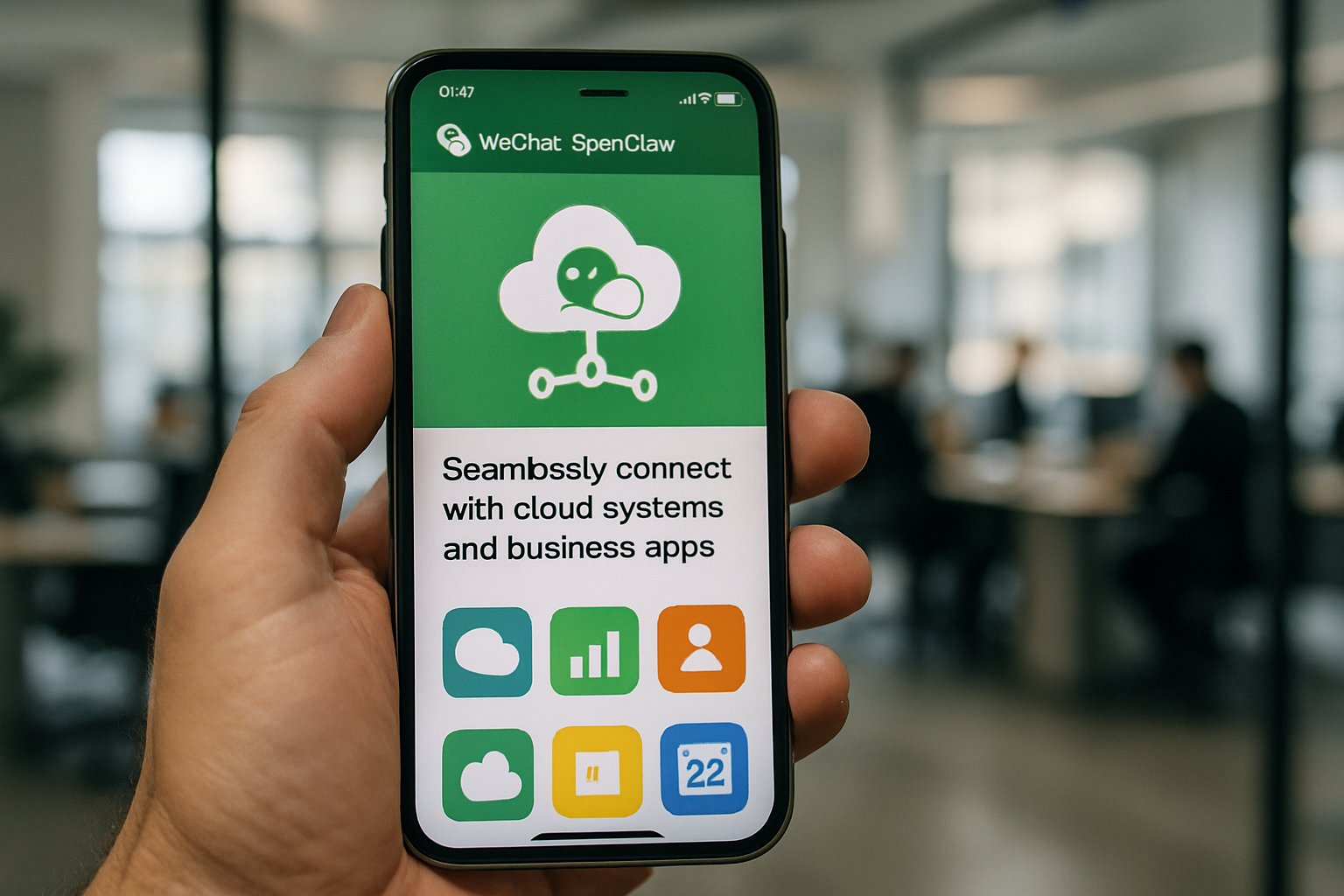
Tencent seized the momentum with QClaw and WorkBuddy. Moreover, the company published Tencent Cloud playbooks describing Lighthouse deployments and permission models. The integration positions the agent as a WeChat contact that forwards commands to a local or cloud instance. Therefore, users issue natural language requests from any chat window. The remote runtime performs file moves, email triage, or CRM updates. This tight Ecosystem Integration reduces friction for User Automation across desktop and mobile endpoints.
Additionally, the company framed the release as an enterprise productivity booster. In contrast, competitors scramble to match the blueprint.
QClaw merges agent power with everyday chat. Consequently, technical execution details warrant deeper examination.
WeChat Workflow Mechanics Explained
Technically, QClaw binds the chat platform to OpenClaw over WebSocket tunnels secured by tokens. Subsequently, users scan a QR code to authorise the bridge. Every message becomes a structured function call that the agent processes through its skill graph. Moreover, guardrails restrict file access unless administrators whitelist paths. Such Ecosystem Integration lets the agent leverage existing Messaging notifications, reducing context switching.
Nevertheless, security experts note that skill permissions remain coarse. The cloud team advises hosting agents on isolated Lighthouse instances with audited logs.
Understanding the bridge clarifies potential weaknesses. However, the largest concern remains security threats.
Security Risks Under Spotlight
Oasis researchers disclosed a gateway brute-force flaw dubbed ClawJacked in early March. Consequently, attackers could seize full control if admins used weak tokens. Moreover, Tom’s Hardware tracked dozens of malicious skills siphoning crypto wallet keys. Robust Ecosystem Integration testing pipelines remain scarce, leaving blind spots. These incidents underscore amplified risk when agent platforms mingle with consumer Messaging channels.
The vendor patched its default installer within 24 hours and forced updates through in-app banners. Additionally, the company rolled out sandbox policies that disable unverified skills by default. Nevertheless, analysts warn that supply-chain trust remains an open question.
- Malicious skills executing shell commands
- Credential leaks through chat transcripts
- Unauthorized data exfiltration via file plugins
These vulnerabilities reveal fragile foundations. Therefore, regulators have entered the conversation.
Regulatory Pushback Quickly Emerging
China’s cybersecurity agencies issued March notices limiting OpenClaw on government devices. Furthermore, banks and state enterprises must request waivers before enabling agents. Regulators cited national data laws and the new critical information infrastructure rules. In contrast, the vendor argues that audit trails and encryption satisfy compliance requirements.
Meanwhile, enterprise legal teams draft internal guidelines for skill approval and data localization. Consequently, adoption timelines may stretch despite user enthusiasm.
Regulatory pressure reshapes rollout velocity. Next, enterprises weigh practical deployment strategies.
Enterprise Adoption Strategies Today
Forward-leaning firms pilot QClaw in controlled environments. Moreover, they pair agent instances with privileged identity management to restrict lateral movement. Best practices emphasise continuous patching, signed skill repositories, and network segmentation. Consequently, chief information officers treat agent rollouts like high-risk RPA projects rather than simple chatbots.
Professionals can enhance their expertise with the AI Executive™ certification. The program covers governance frameworks, security controls, and cross-platform Ecosystem Integration principles.
Additionally, Tencent Cloud recommends phased rollouts starting with low-risk administrative tasks. This staged approach delivers quick User Automation wins while limiting data exposure. Nevertheless, change management remains critical given workforce habits inside familiar chat workflows.
- Start with read-only reporting skills
- Implement multi-factor token rotation
- Whitelist outbound Messaging domains
- Map Ecosystem Integration dependencies regularly
- Conduct quarterly penetration tests
Structured strategies unlock value without courting crises. Finally, industry leaders consider long-term governance dynamics.
Future Outlook And Governance
Peter Steinberger’s move to OpenAI adds new stewardship possibilities. Moreover, OpenAI signals interest in funding open agent research foundations. Consequently, corporate contributors may gain clearer roadmaps and licensing predictability. Deepening Ecosystem Integration across cloud, device, and chat platforms will likely continue.
Nevertheless, success hinges on transparent security disclosure, mature dependency management, and sovereign data controls. In contrast, failure to resolve these issues could stall agent adoption similar to early container scares.
Governance frameworks will define whether agents become mundane utilities or enduring security headaches. Therefore, stakeholders must collaborate proactively.
In summary, the QClaw initiative illustrates the promise and peril of agentic AI inside everyday chat. Moreover, the project demonstrates how deliberate Ecosystem Integration can streamline User Automation across massive Messaging channels. However, rapid adoption magnifies security and regulatory friction. Enterprises should follow phased deployment models and apply strict skill governance. They should cultivate agent literacy through programs like the AI Executive™ certification. Consequently, organizations that master these principles will harness productive autonomy without compromising trust.
Disclaimer: Some content may be AI-generated or assisted and is provided ‘as is’ for informational purposes only, without warranties of accuracy or completeness, and does not imply endorsement or affiliation.


