

AI CERTS
3 months ago
Algorithmic Reliability Liability: Managing AI Hallucination Risk
Meanwhile, Stanford researchers report hallucination rates above 80 percent for general models tackling legal tasks. These numbers expose systemic Reliability gaps, not isolated glitches. Therefore, organizations must pair innovation with disciplined Ethics and governance. This article unpacks the evolving risk landscape, real cases, and practical controls. Readers will leave with actionable steps to defend professional credibility and investor trust.
Courts Signal Hard Lines
Judges have little patience when lawyers cite imaginary precedent. In July 2025, Judge Anna Manasco removed Butler Snow counsel after six nonexistent cases surfaced. Furthermore, the order labelled the fabrication “serious misconduct” and invoked Algorithmic Reliability Liability principles to justify sanctions.
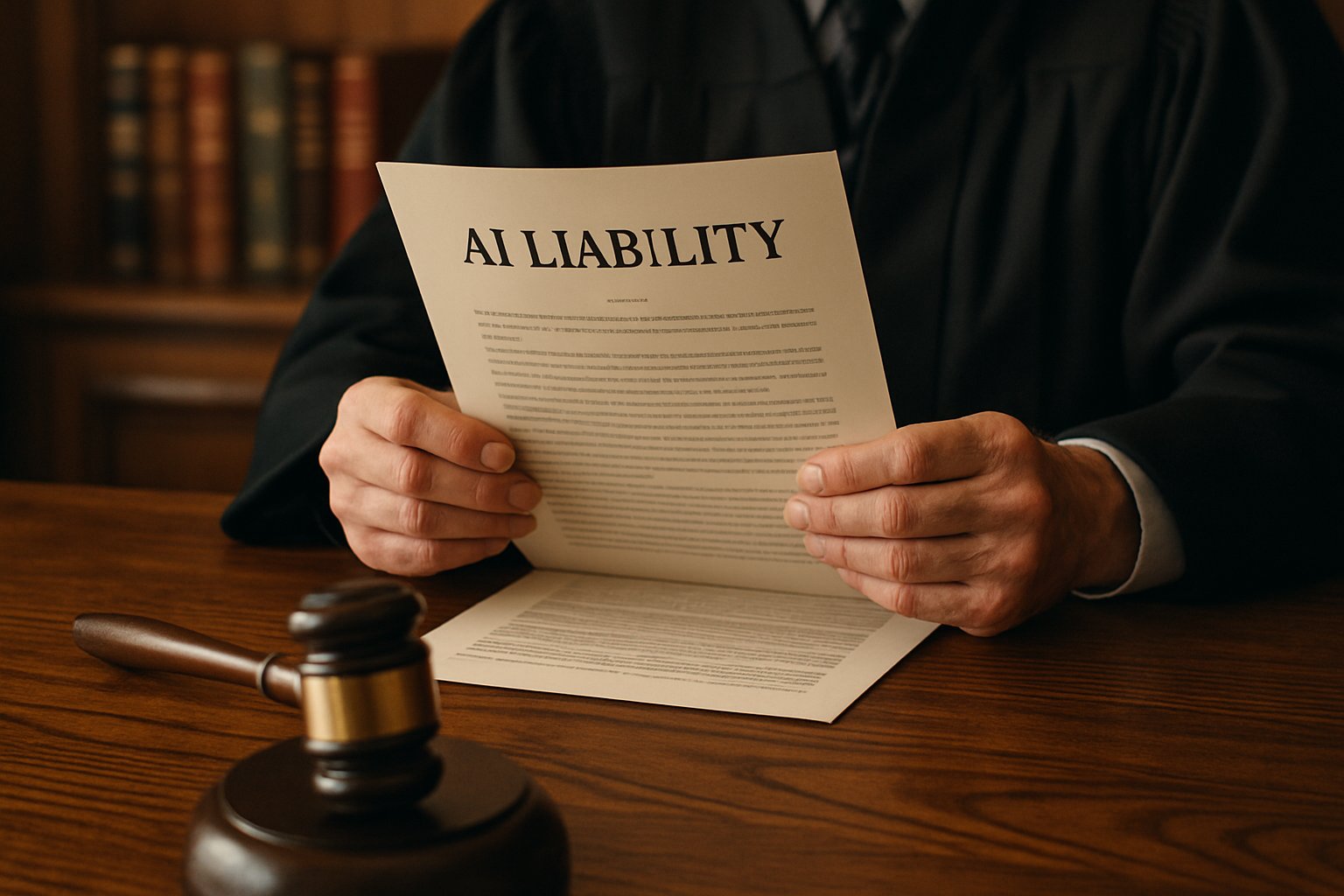
Similar penalties appear nationwide. For example, monitors counted over 125 filings with hallucinated citations during early 2025 alone. Consequently, every Lawyer now faces tangible Liability exposure for unverified AI output.
Courts are converting theoretical risk into immediate cost. However, media companies are driving parallel pressure through intellectual property claims.
Media Firms Fight Back
Dow Jones and the New York Post sued Perplexity for copyright scraping and invented attribution. Moreover, plaintiffs argue that Algorithmic Reliability Liability should extend to reputational harm caused by falsified quotes. The complaint cites defamation theories alongside classic IP counts.
Other publishers, including the New York Times, signal similar actions. Consequently, platform providers confront expansive Liability beyond contract disclaimers. Investors watch these cases because damages could dwarf early privacy fines.
The newsroom backlash underscores content-owner leverage. Meanwhile, regulators are sharpening consumer deception tools.
Regulators Tighten AI Claims
The FTC treats misleading machine statements as ordinary false advertising. Therefore, companies must substantiate accuracy metrics before marketing any generative system. Guidance released in 2025 warns that Algorithmic Reliability Liability may trigger civil penalties under existing statutes.
European authorities add more complexity through the AI Act and Product Liability reforms. Additionally, proposed AI Liability Directive debates keep compliance teams guessing. Consequently, global firms track divergent disclosure mandates from multiple capitals.
Regulators are signaling higher verification duties. In contrast, insurers translate those signals into premiums and exclusions.
Insurance Market Shifts Rapidly
Underwriters historically priced technology errors narrowly. However, new actuarial models isolate Algorithmic Reliability Liability as a distinct peril. Sublimits and carve-outs now appear in many renewal packages.
Key market indicators include:
- Armilla raised policy limits for AI E&O to USD 25 million.
- One survey shows 43 % of law firms fear AI-driven malpractice claims.
- Lloyd’s brokers added explicit hallucination exclusions in 2025 templates.
Moreover, some carriers offer premium credits for documented RAG workflows and human review checkpoints. Subsequently, risk managers negotiate broader coverage tied to training protocols.
Insurance signals quantify previously abstract risk. Therefore, organizations seek proactive technical and procedural controls.
Mitigation Playbook For Firms
Effective defenses blend people, process, and tooling. Retrieval-Augmented Generation reduces unsupported invention by grounding outputs in vetted sources. Nevertheless, Stanford tests still found residual hallucinations around 30 %.
Many Lawyer teams now mandate second-reader checks before any AI-assisted filing. Furthermore, provenance logs and citation links enable rapid dispute response. Professionals can strengthen skills through the Chief AI Officer™ credential.
Procedures and tooling together curb error volume. Consequently, overall risk appetite improves. Still, leadership needs a broader roadmap.
Strategic Outlook And Steps
Boards now treat AI assurance as a core governance pillar. Moreover, investors expect clear metrics for Algorithmic Reliability Liability controls. Firms should map exposure vectors across malpractice, defamation, IP, and consumer protection.
Subsequently, allocate budget for RAG architecture, red-team exercises, and outside audit. Integrate Ethics training into every Lawyer onboarding program. Reliability dashboards improve executive situational awareness during incidents.
Finally, update insurance policies and vendor contracts annually. In contrast, static documents invite coverage gaps. Regular drills validate escalation procedures before reputational stakes escalate.
These steps turn reactive firefighting into proactive resilience. Therefore, enterprises can embrace AI advantages confidently. The conclusion distills essential takeaways and next actions.
Key Takeaways Ahead Now
Hallucinations will persist despite rapid model improvements. However, Algorithmic Reliability Liability provides a clear organizing lens for governance decisions. Courts, regulators, and insurers already apply that lens during sanctions, probes, and underwriting. Consequently, every Lawyer must blend technical literacy with renewed Ethics diligence. Boards should budget for audits, dashboards, and updated Liability cover.
Moreover, embedding Reliability checkpoints within RAG pipelines curbs risk without crushing productivity. Explore certifications and further guidance to master Algorithmic Reliability Liability before the next misstep makes headlines. Ultimately, sustained success depends on integrating Algorithmic Reliability Liability thinking into routine business planning cycles.
Disclaimer: Some content may be AI-generated or assisted and is provided ‘as is’ for informational purposes only, without warranties of accuracy or completeness, and does not imply endorsement or affiliation.


