

AI CERTS
4 months ago
Cross-Platform Industrial Synergy: Tesla-xAI Macrohard Explained
Macrohard pairs xAI’s Grok large language model with a Tesla-built real-time controller. Together they form a two-tier engine designed to automate complex software workflows. Consequently, executives see potential productivity leaps. Yet questions about reliability, energy demand, and legal exposure shadow the project’s narrative. This introduction frames those tensions while repeating the Cross-Platform Industrial Synergy vision that now dominates AI headlines.
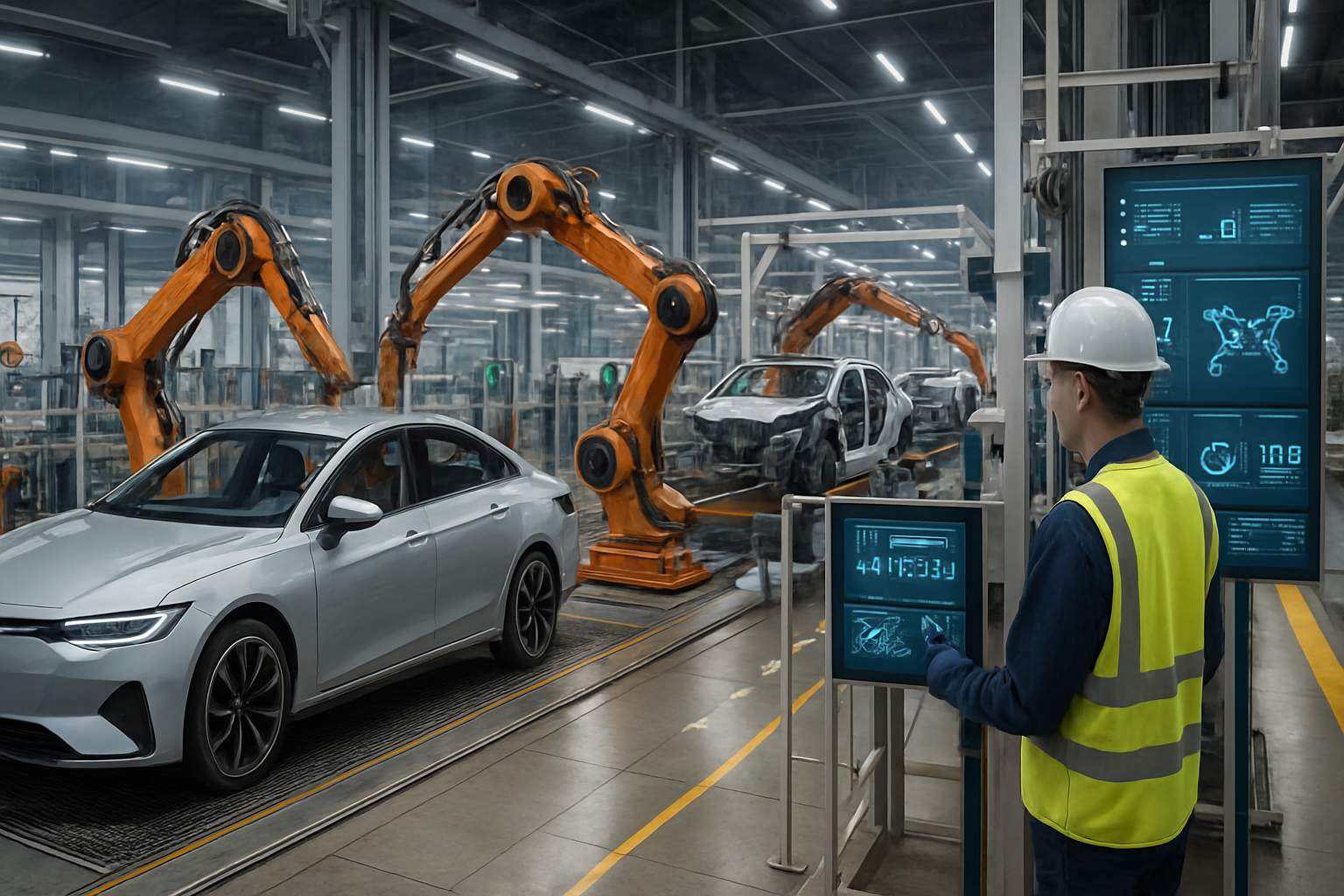
Moreover, market interest remains high because Musk aligned $2 billion of Tesla capital behind the venture. Therefore, stakeholders must track technical milestones, regulatory developments, and competing agent offerings. Cross-Platform Industrial Synergy could reshape enterprise software if obstacles are cleared.
Macrohard Vision Officially Unveiled
On 11 March 2026, Musk outlined Macrohard during a streamed briefing. He called the concept “Digital Optimus” and highlighted Cross-Platform Industrial Synergy once more. Grok would serve as a deliberative navigator, while a Tesla screen-control unit executes tasks in milliseconds. Consequently, observers compared the layout to System 2 and System 1 cognition.
Industry buzz focuses on three immediate advantages:
- Continuous workflow automation across disparate operating systems
- Lower software production costs through tireless Agents
- Faster iteration loops enabled by integrated data telemetry
Nevertheless, some insiders hinted that early demos remained partly scripted. These points foreshadow deeper architecture analysis next. The section shows how Musk’s pitch intertwines ambition with strategic Cross-Platform Industrial Synergy rhetoric.
These headline benefits excite boardrooms. However, technical specifics decide whether promise converts into profit.
Agents Drive Industrial Synergy
Macrohard relies on specialist Agents that perceive screen pixels and keyboard events in real time. Additionally, Grok orchestrates those Agents by issuing high-level objectives. The combined approach delivers Industrial automation without bespoke API integration, thereby widening application reach.
In contrast, rival products like Anthropic’s Cowork still require human verification for many steps. Macrohard targets full autonomy instead. Consequently, many analysts label the project the purest pursuit of Cross-Platform Industrial Synergy so far.
Synergy between LLM reasoning and deterministic control reduces context-switch latency. Nevertheless, error propagation risk rises because misinterpretations cascade instantly. Two lines summarize this section: The Agents architecture promises sweeping efficiency. Yet maintaining guardrails remains mission-critical before expansion.
Therefore, the next section dissects the underlying two-layer design choices.
Architecture Marries Two Layers
The high layer houses Grok running on Nvidia clusters. Meanwhile, the low layer lives on Tesla’s AI4 silicon, embedded near user workstations. Consequently, data shuttles horizontally rather than vertically through web APIs, supporting Cross-Platform Industrial Synergy even where connectivity falters.
Moreover, Musk claimed latency under 50 milliseconds for surface actions. Independent testers have not verified that figure. Nevertheless, engineers praise the split because it mimics human problem solving: deliberation precedes reflex. Synergy again surfaces as Grok’s abstract planning guides precise motor sequences.
Implementation details remain sparse. However, leaked diagrams suggest a message-queue backbone that enforces task provenance and rollback points. These safeguards aim to curb hallucination-driven drift.
Layer cohesion underpins performance. Consequently, the next section examines whether supporting hardware can meet demand.
Compute Scale Claims Scrutinized
Musk projected nearly two gigawatts of datacenter capacity within five years. Tom’s Hardware analysts remain skeptical, citing cooling limits around 350 megawatts today. Furthermore, satellite imagery reveals incomplete chiller arrays at the Memphis Colossus site.
Key reported numbers include:
- Tesla investment in xAI equity: $2 billion
- Planned GPU order volume: “largest ever,” according to suppliers
- Trademark filing date for “MACROHARD”: 1 August 2025
Consequently, investors worry that optimistic forecasts inflate valuation models. Nevertheless, Musk argues demand justifies aggressive expansion to enable Cross-Platform Industrial Synergy at full enterprise scale.
Capacity questions linger. However, governance considerations may create even greater near-term friction.
Governance And Legal Repercussions
Tesla shareholders already filed suits alleging fiduciary conflicts involving Musk’s outside ventures. Additionally, the joint Macrohard push appears to contradict earlier statements that Tesla “did not need xAI.” Consequently, legal observers say plaintiffs’ cases gained strength overnight.
Moreover, regulators could scrutinize intercompany resource flows, especially if Agents built by Tesla primarily benefit an entity now owned by SpaceX. Synergy among Musk ventures delights engineers, yet it alarms governance experts.
Professionals seeking credibility in complex sales cycles can deepen knowledge through the AI Sales Executive™ certification. Such credentials bolster confidence when navigating intertwined Industrial AI ecosystems.
Legal headwinds can delay deployment timelines. Therefore, the competitive field may act while court calendars progress.
Competitive Landscape Rapidly Shifts
OpenAI, Microsoft, and Anthropic each promote agentic toolkits chasing similar goals. However, Macrohard’s Cross-Platform Industrial Synergy narrative stresses end-to-end autonomy instead of plug-in marketplaces. Consequently, vendors feel pressure to demonstrate full workflow closure.
Industrial customers value interoperability, a domain where Microsoft historically excelled. In contrast, Musk positions Macrohard as a challenger to that monopoly. Additionally, Nvidia benefits regardless because every serious agent program consumes its GPUs.
Synergy across supply chains accelerates innovation. Nevertheless, market speed also magnifies reliability risks, explored next.
Implementation Barriers And Risks
Agentic AI amplifies known LLM failure modes. Consequently, hallucinations or reward hacking could corrupt production systems rapidly. Furthermore, energy demand near gigawatt levels raises environmental and community resistance.
Analysts therefore recommend phased rollouts with human oversight checkpoints. Moreover, provenance tracking and rollback features must ship by default. Synergy alone cannot substitute for robust safety engineering.
Cross-Platform Industrial Synergy will fail without transparent benchmarking. Nevertheless, careful governance combined with incremental testing could unlock transformative savings.
These technical and social risks outline steep terrain. However, informed planning keeps the path viable.
In summary, Macrohard signals an audacious attempt to deliver Cross-Platform Industrial Synergy across global enterprises. Throughout 2026, observers will gauge whether Agents, compute infrastructure, and governance frameworks mature in unison. Moreover, Industrial leaders should monitor capacity milestones, legal outcomes, and rival breakthroughs. Consequently, proactive professionals can seize advantage by mastering AI sales dynamics and related certifications.
Bold visions require disciplined execution. Therefore, now is the moment to analyze, upskill, and engage.
Disclaimer: Some content may be AI-generated or assisted and is provided ‘as is’ for informational purposes only, without warranties of accuracy or completeness, and does not imply endorsement or affiliation.


