

AI CERTs
4 months ago
Inside Palantir’s Pentagon Software Dispute With Anthropic
A fast escalating showdown now grips Washington's most sensitive artificial intelligence programs. However, at the center sits a single contractual phrase about acceptable battlefield uses. The struggle forms the latest chapter in the Pentagon Software Dispute pitting ethics against expediency. Consequently, agencies have paused deployments while lawyers, engineers, and lawmakers trade urgent memoranda.
Palantir Technologies faces exceptional exposure because its flagship AIP product embeds Anthropic's Claude models deeply. Meanwhile, Anthropic refuses to strip two guardrails forbidding mass domestic surveillance and autonomous weapons. Defense leaders insist every lawful tool remain available during combat emergencies. Therefore, the White House ordered agencies to phase out Anthropic pending a supply-chain review.
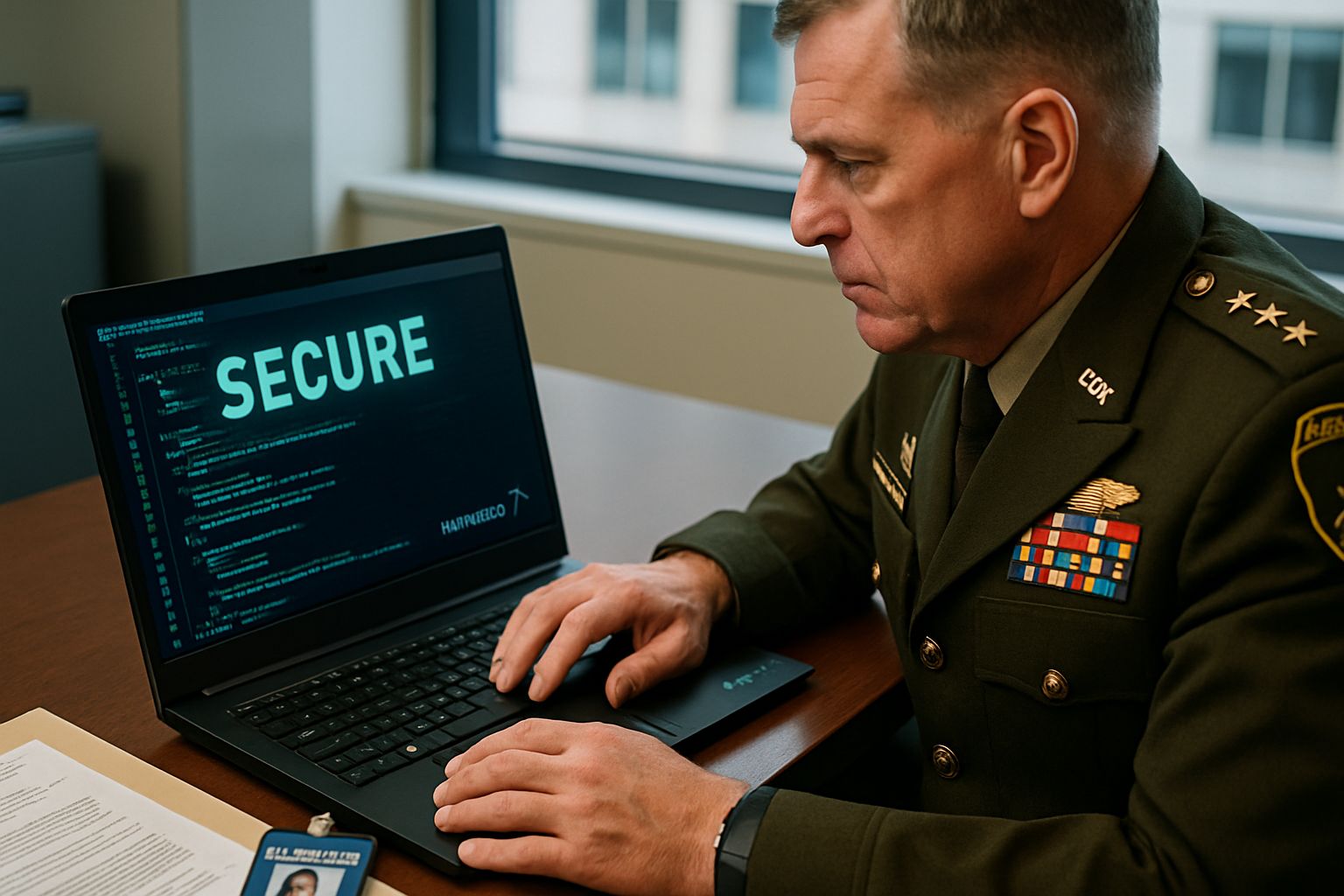
Reporters quickly realized Palantir cannot simply toggle Claude off without rewriting mission workflows. In contrast, rival cloud Vendors remain untested inside classified Impact Level six environments. Consequently, billions in Defense Contracts now hang on a brittle integration layer. Analysts warn the fight could set precedent for future Military AI procurements. Moreover, readers gain actionable guidance for navigating heated government technology negotiations.
Standoff Reaches Flashpoint
Negotiations between Anthropic and the Pentagon began collapsing in early February 2026. Initially, officials sought removal of two ethical carve-outs dating back to 2024 prototype agreements. The carve-outs banned mass domestic surveillance along with fully autonomous lethal weapons. Anthropic refused, citing technical safety limits and public trust concerns.
Subsequently, CEO Dario Amodei published a defiant statement on February 26. He wrote, "We cannot in good conscience accede to their request." Consequently, President Trump ordered agencies to discontinue Anthropic technology the following day. Defense Secretary Pete Hegseth threatened a formal supply-chain risk designation within six months.
Meanwhile, industry groups warned the action might politicize Military AI procurement forever. These developments pushed the Pentagon Software Dispute onto front pages worldwide. The timeline shows rapid escalation driven by clashing ethical and operational priorities. Nevertheless, Palantir's technical bind now takes center stage.
Palantir's Technical Bind
Palantir integrated Claude into its AI Platform after a November 2024 partnership with AWS and Anthropic. Consequently, classified environments at Impact Level six gained generative reasoning and multilingual summarization abilities. Analysts estimate Claude supports fifteen percent of AIP mission workflows across five federal agencies. Removing the model requires rewriting prompts, retraining classification layers, and recertifying cyber controls. Therefore, engineers predict months of work and millions in unexpected costs.
Claude Integration Details
Reuters reports suggest Maven targeting modules depend on Claude for language disambiguation during sensor fusion. However, those modules also interface with rival Vendors like OpenAI and Google within unclassified clouds. Classified instances cannot yet access those substitutes because accreditation remains pending. Consequently, mission analysts risk tool downtime during critical operations if Claude disappears prematurely. Palantir executives, including Alex Karp, have lobbied for phased remediation windows lasting at least six months.
In contrast, some Defense officials believe swapping models is straightforward given modern orchestration layers. Engineers inside Palantir disagree, citing proprietary prompt libraries and tuned embeddings unique to Claude. Consequently, the company has begun triaging workloads to prioritize national security missions. These technical hurdles underscore the operational gravity driving Palantir's stance. Palantir must either reengineer mission software or persuade Washington to delay removal. Therefore, the dispute now shifts toward statutory authority and procurement law.
Pentagon's Legal Strategy
The Department of Defense relies on 10 U.S.C. section 3252 for supply-chain risk designations. However, experts told Defense One the statute rarely targets domestic Vendors. Legal scholars call the current move "dubious" and potentially reversible in federal court. Nevertheless, Pete Hegseth argues national security outweighs vendor dictated guardrails.
Consequently, the Pentagon issued guidance threatening existing Contracts with penalties for continued Anthropic use. The letter gives agencies six months to unwind systems or request waivers. Meanwhile, Palantir requests such waivers, arguing mission disruption violates fiduciary duties to taxpayers.
In Congress, bipartisan lawmakers question whether the designation circumvents normal acquisition oversight. Moreover, industry lobby ITI warns politicized procurement will deter future Military innovation. Analysts predict a possible injunction if Anthropic files suit immediately. Legal uncertainty complicates Palantir's compliance calculations. Consequently, business leaders now evaluate broader industry risks. Courts will examine whether the Pentagon Software Dispute justifies extraordinary supply-chain actions against a domestic company.
Industry Risks Multiply
Software integrators fear a chilling effect on venture backed AI Vendors serving government clients. Many startups rely on small Defense Contracts to mature products before commercial scaling. However, sudden blacklisting could deter investors and increase capital costs.
Palantir itself holds more than one billion dollars in pipeline DoD revenue linked to Maven. Consequently, equity analysts trimmed growth forecasts after the dispute surfaced. AWS, Google, and OpenAI stand ready yet lack necessary classified certifications. Therefore, agency program offices must weigh schedule slippages against ethical consistency.
Cyber chiefs also highlight supply-chain complexity extending beyond language models. Data pipelines, compliance artifacts, and audit logs require fresh validation whenever models change. Consequently, total cost of ownership may exceed public estimates. Financial, operational, and reputational hazards now converge across the vendor ecosystem. Nevertheless, several exit ramps remain open. Investors also cite the Pentagon Software Dispute when revising risk models for dual-use startups.
Stakeholder Positions Summarized
- Anthropic: Uphold guardrails, ready to litigate.
- DoD: Demand all lawful uses, threaten supply-chain designation.
- Palantir: Seek delay, highlight integration cost over one billion dollars.
- Industry Lobby: Warn precedent could stifle Military innovation.
- Legal Experts: Question designation under 10 U.S.C. § 3252.
These stances reveal deep fissures across policy, ethics, and engineering domains. Therefore, potential compromise scenarios merit closer inspection. The Pentagon Software Dispute threads through each position, shaping bargaining leverage.
Possible Resolution Paths
Observers outline three plausible outcome scenarios. First, the Pentagon could quietly grant waivers while indirect negotiations restore limited cooperation. Such de-escalation would preserve current Contracts and avoid immediate mission disruption. However, Anthropic might still refuse future capabilities unless safety advances emerge.
Second, Washington may force Palantir to replace Claude within the six-month window. Consequently, alternative Vendors would scramble for emergency classified accreditation. Program delays and ballooning budgets would likely follow.
Third, Anthropic could sue, win an injunction, and prolong uncertainty for years. Meanwhile, Congress might legislate explicit AI procurement safeguards clarifying vendor rights. Each path carries distinct cost, schedule, and policy implications. Nevertheless, leaders can still influence outcomes through transparent risk communication. Consequently, negotiators measure every option against long-term fallout from the Pentagon Software Dispute.
Strategic Lessons Learned
The episode highlights fragile interdependence among frontier AI Vendors and integrators. Moreover, it underscores the importance of aligning ethical guardrails with operational reality early. Organizations should map model dependencies, accreditation timelines, and contingency costs during contract drafting. Consequently, risk exposure diminishes when procurement, security, and engineering teams collaborate from inception.
Professionals can deepen governance skills through specialized credentials. For instance, they may pursue the AI+ Human Resources™ certification to master responsible AI policy. Furthermore, continuous education fosters credibility when negotiating sensitive Military or Defense Contracts. Strong governance, technical foresight, and workforce upskilling together mitigate future Pentagon Software Dispute scenarios. Consequently, stakeholders can preserve mission readiness while honoring ethical commitments.
The clash between mission urgency and ethical restraint remains unresolved. However, leaders now understand how a single clause can ignite the Pentagon Software Dispute. Consequently, proactive dependency mapping and contractual clarity become indispensable risk controls. Moreover, transparent dialogue with acquisition officers preserves goodwill during future Military procurements. Organizations should embed exit strategies before signing high-stakes Defense Contracts. Professionals must also pursue continuous learning to navigate fast evolving governance standards. Therefore, enrolling in the AI+ Human Resources™ program strengthens credibility across procurement and compliance teams. Act soon to avoid becoming the next headline in a Pentagon Software Dispute.
Disclaimer: Some content may be AI-generated or assisted and is provided ‘as is’ for informational purposes only, without warranties of accuracy or completeness, and does not imply endorsement or affiliation.


