

AI CERTS
2 months ago
AI Component Cost Surge Doubles SSD Prices, Hits Storage Market
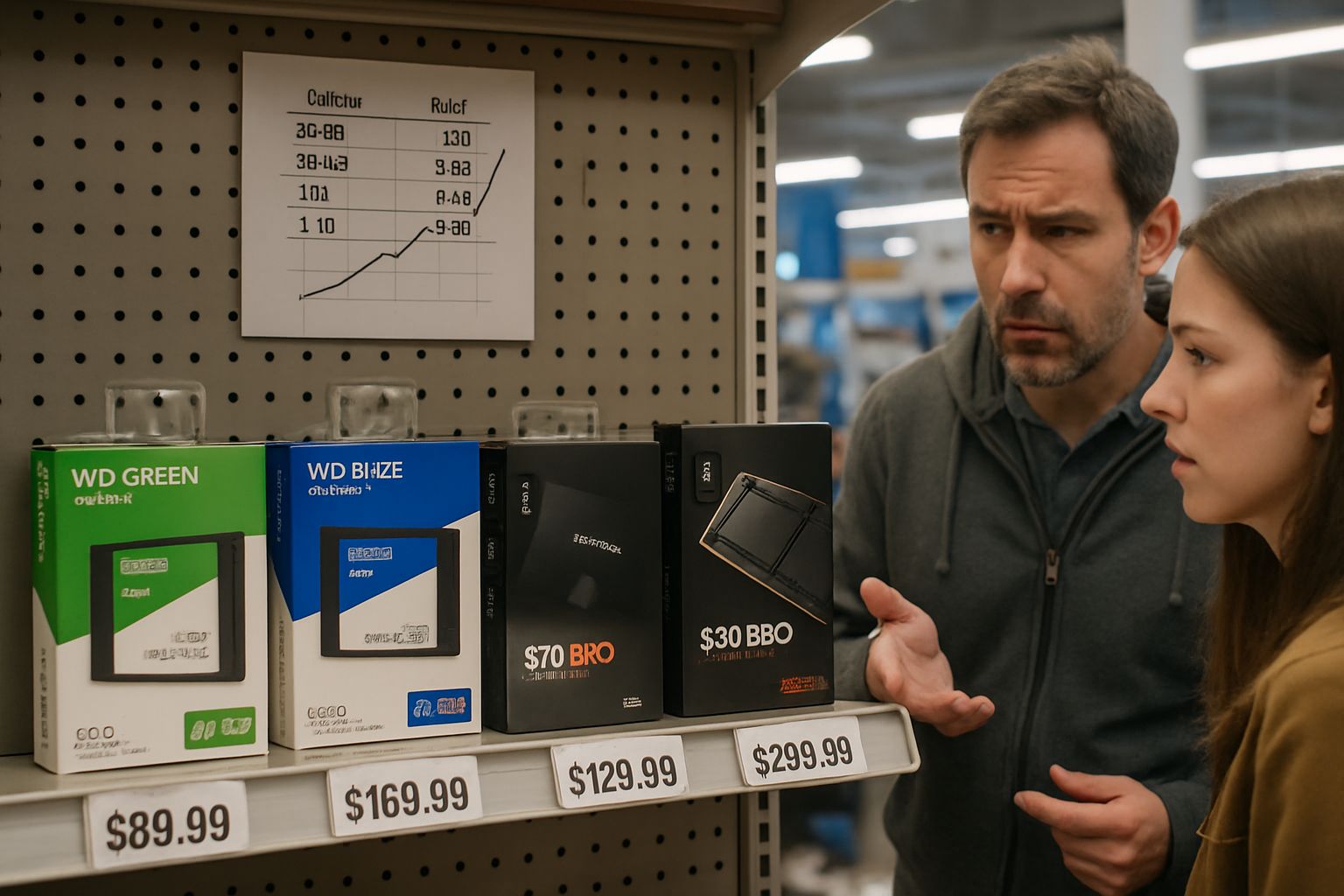
Meanwhile, analysts from TrendForce and Digitimes confirm that price momentum accelerated into fourth-quarter 2025.
Additionally, Micron executives acknowledge that little fresh capacity arrives before 2027, prolonging tight conditions.
In contrast, hyperscalers leverage scale to lock multiyear supply, leaving smaller buyers vulnerable.
Therefore, understanding the forces behind this turmoil is essential for procurement strategy and budget planning.
This article decodes critical drivers, stakeholder impacts, and mitigation steps for professionals navigating volatile flash economics.
Along the way, readers will meet expert quotes and practical resources to sustain resilience.
AI Component Price Trends
TrendForce traced the first uptick to inventory rebuilds early 2025 after a prolonged oversupply.
However, demand from massive AI inference farms quickly outran that modest rebound.
Consequently, suppliers lifted contract prices monthly instead of quarterly, accelerating inflation across densities.
Digitimes cited Phison showing a 1-Tb TLC chip jumping from US$4.80 to US$10.70 by November.
That single metric represents roughly 123% growth, twice the historical average annual swing.
Samsung and SanDisk added fuel by raising some deals 50-60%, signaling confidence that clients would absorb premiums.
Moreover, Kingston observed wafer quotes soaring 246% against first-quarter baselines, an unprecedented spike.
These figures underscore how the AI Component Cost Surge rewired expectations for flash valuation.
Nevertheless, official list prices lag street realities, creating confusion for budget holders.
Subsequently, retailers shortened promotion windows to hours, reflecting real-time volatility.
These numbers reveal how dramatically economics changed.
However, persistent tightness suggests the shock is not temporary.
The next section explains why supply remains constrained.
Why Prices Keep Rising
Producers deliberately cut output during the 2024 slump to defend margins.
Consequently, inventories sat at multiyear lows when AI workloads exploded mid-2025.
Furthermore, capacity earmarked for high-bandwidth memory diverted wafers from mainstream Storage chips.
In contrast, construction of new fabs requires at least 24 months and billions in capital.
Therefore, Micron and peers hesitate to overcommit after previous boom-bust scars.
Additionally, hyperscalers negotiate take-or-pay contracts, locking supply and squeezing the open market.
The AI Component Cost Surge also incentivizes manufacturers to prioritize premium enterprise skews.
Meanwhile, controller vendors like Phison must chase scarce dies, inflating downstream assembly costs.
This feedback loop magnifies the AI Component Cost Surge, extending pressure well into 2027.
- 1-Tb TLC chip jumped 123% between July and November 2025.
- SanDisk lifted some contract quotes by 50% in November 2025.
- Samsung reportedly added up to 60% on select memory agreements.
- Kingston cites wafer costs up 246% versus early 2025.
Supply discipline, diverted capacity, and explosive demand now operate in concert.
These intertwined forces guarantee elevated costs until new fabs activate.
Against that backdrop, understanding the broader supply chain offers deeper insight.
Critical Supply Chain Dynamics
Every supply tier currently faces different constraints.
Manufacturers ration wafers, controller makers ration firmware support, and integrators ration finished SSD inventory.
Moreover, contract versus spot markets now diverge sharply.
The AI Component Cost Surge now drives unprecedented volatility across those parallel markets.
Contract deals include monthly escalators, while spot quotes fluctuate hourly.
Consequently, purchasing managers struggle to benchmark a fair price.
Distributors like Fusion Worldwide report allocations favoring enterprise AI deployments.
Meanwhile, consumer channels receive leftovers, often irregular capacities and slower QLC models.
Furthermore, regulatory friction complicates cross-border transfers of advanced NAND tooling, slowing expansion.
Micron warned that geopolitical reviews could delay critical equipment shipments by quarters.
Nevertheless, some suppliers boost yields through layer stacking, partially offsetting wafer shortages.
Flow disruptions compound limited production, amplifying volatility across ordering cycles.
Predictive analytics now become indispensable for procurement forecasting.
Next, we examine how suppliers stoke and manage this turbulence.
Impact On Key Suppliers
Higher selling prices naturally expand gross margins for NAND giants.
However, suppliers also face political scrutiny over windfall profits during strategic component crises.
Samsung channels cash into advanced process nodes and HBM production lines.
Meanwhile, Western Digital prioritizes enterprise SSD portfolio revisions to capture lucrative AI workloads.
Consequently, Micron signals record capital expenditure, yet maintains disciplined capacity additions.
Moreover, YMTC exploits domestic subsidies to backfill local demand after foreign sanctions.
Phison, lacking wafer assets, levies premium controller fees to offset die scarcity.
In contrast, smaller module houses pause shipments, unwilling to absorb daily cost swings.
Therefore, the AI Component Cost Surge creates winners and losers within manufacturing hierarchies.
Suppliers bet that disciplined output will sustain profitability until at least late 2027.
Suppliers leverage scarcity to rebuild margins and fund next-generation investments.
Yet that strategy prolongs pain for downstream buyers.
Understanding those buyer challenges is our following focus.
Effects For Global Buyers
Laptop and console makers already cut planned model volumes for 2026 launches.
Meanwhile, enterprise procurement teams renegotiate service-level agreements tied to Storage refresh cycles.
Consequently, some hyperscalers accept older-generation SSD options to stretch budget allocations.
Retail consumers encounter shrinking discounts, especially on high-capacity drives.
Moreover, Kingston advises upgrading immediately, predicting no near-term relief.
In contrast, system integrators bundle smaller drives with cloud extensions, balancing cost spikes.
Therefore, the AI Component Cost Surge reshapes product planning across market segments.
Professionals can enhance their expertise with the AI Data Robotics™ certification.
Additionally, certification insight supports smarter negotiations by clarifying technical trade-offs among TLC, QLC, and endurance tiers.
Subsequently, buyers armed with current knowledge command stronger positions in volatile talks.
Buyers face higher costs, unpredictable lead times, and specification compromises.
Upskilling provides one defensive tactic.
Forecast scenarios will further guide tactical timing.
Forecast And Mitigation Plans
TrendForce now projects additional double-digit contract gains through early 2026, then moderate easing.
However, no analyst expects pre-2025 cost levels before late 2027.
Digitimes echoes that timeline, citing absent wafer expansion announcements from major fabs.
Consequently, organizations must adopt layered risk management.
Recommended actions include multi-year volume agreements, diversified supplier pools, and accelerated component qualification.
Furthermore, tactical pre-buys during brief troughs can offset future escalations.
Nevertheless, aggressive hoarding strains cash flow, so finance teams require transparent consumption models.
Meanwhile, software optimizations such as compression and tiering reduce immediate Storage footprints.
Subsequently, redesigned workloads delay capital outlays until supply normalizes.
Overall, proactive governance counterbalances the AI Component Cost Surge impacts.
Forecasts indicate years of elevated costs.
Mitigation hinges on disciplined procurement and technical agility.
Upskilling complements those measures, as our final section outlines.
Upskilling For Competitive Advantage
Technical staff conversant with NAND architectures negotiate smarter and avoid over-specification.
Furthermore, certifications validate credibility when challenging supplier lead times or feature claims.
The AI Component Cost Surge spotlights the advantage of cross-functional fluency between engineering and finance.
Consequently, forward-looking teams enroll in specialized programs covering data path optimization and cost modeling.
For example, the earlier linked AI Data Robotics™ credential deepens proficiency in workload profiling.
Moreover, shared vocabulary accelerates consensus during crisis budgeting sessions.
Therefore, talent development multiplies the impact of material mitigation tactics described above.
Enhanced skills shorten negotiation cycles and cut hidden lifecycle expenses.
Knowledge remains the most agile hedge against volatile silicon markets.
We now recap essential insights and propose immediate steps.
SSD economics transformed once AI workloads intensified.
The AI Component Cost Surge doubled core memory costs and reshaped every procurement decision.
Suppliers profit, yet buyers confront scarcity, longer lead times, and higher unit costs.
However, disciplined forecasting, strategic contracts, and Storage optimization mitigate much exposure.
Additionally, continuous learning empowers staff to align technical needs with shifting cost signals.
Consequently, leaders should secure key components early, negotiate volume protections, and invest in talent.
Act now to adopt layered mitigation.
Pursue the AI Data Robotics™ certification to maintain competitive momentum.
Disclaimer: Some content may be AI-generated or assisted and is provided ‘as is’ for informational purposes only, without warranties of accuracy or completeness, and does not imply endorsement or affiliation.


