

AI CERTs
4 months ago
AI demand lifts NAND flash prices to record highs
Samsung just shocked the memory world. Contract buyers report spikes unseen since the 2021 chip crunch. Prices for multiple modules jumped as much as 60 percent in weeks. Consequently, analysts warn a broader squeeze is only starting. The crux of the issue sits with hyperscale AI deployments hungry for every gigabyte. Therefore, supply is being diverted from consumer devices toward data centers racing to train larger models. This unprecedented pivot has sent NAND flash prices to multi-year highs, reversing last year's slump. Meanwhile, executives are publicly preparing customers for further increases. Professionals across hardware, cloud, and finance must recalibrate strategies immediately. Subsequently, this article dissects the numbers, the actors, and the outlook in clear detail.
AI Demand Squeezes Supply
Generative AI clusters gulp memory at a historic pace. TrendForce estimates data centers will absorb 70 percent of premium capacity during 2026. Moreover, GPU makers prioritise high-bandwidth packages, sidelining commodity wafers once slated for consumer SSDs.
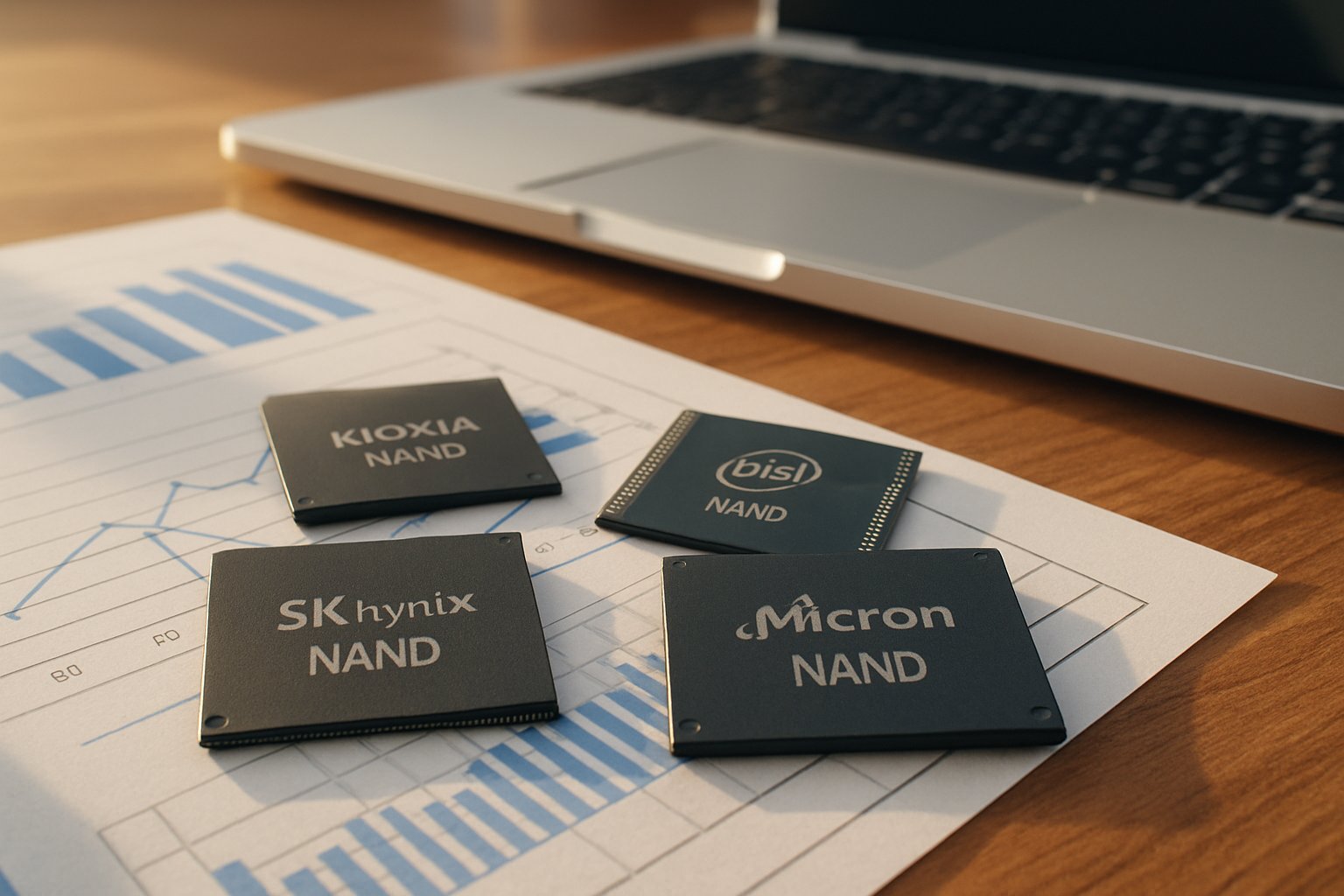
In contrast, smartphone and PC builders now chase shrinking allocations. T. M. Roh called the imbalance "unprecedented" while predicting inevitable device price hikes. Consequently, AI memory shortage headlines dominate every supply meeting this quarter. Current NAND flash prices already eclipse 2024 peaks despite still climbing demand.
Demand is skewed toward hyperscalers, draining the open market. However, the worst stress may still lie ahead as longer contracts lock supply.
Samsung's Aggressive Pricing Shift
Reuters uncovered Samsung contracts showing 32 GB DDR5 modules rising from $149 to $239 within two months. Additionally, 64 GB and 96 GB parts posted increases exceeding 30 percent.
Although headlines claim prices doubled, the hikes vary by part number and timing. Nevertheless, the direction is clear and supports Samsung’s record 20 trillion-won quarterly profit.
Ellie Wang at TrendForce notes buyers are "working on long-term agreements" despite the premiums. Therefore, NAND flash prices could remain elevated even if demand cools temporarily. Contract guidance suggests NAND flash prices could step up another 10 percent in February.
Samsung has seized the moment with disciplined allocation and premium tiers. Consequently, rivals feel compelled to follow, amplifying market momentum toward higher levels. That shift sets the stage for a data-center bidding war examined next.
Data Center Buying Frenzy
Microsoft, Google, Amazon, and Meta are pre-paying to secure multi-year memory blocks. Furthermore, Nvidia bundles HBM deals that lean on the same fabrication stages as NAND.
Tobey Gonnerman observes server makers now accept they "won’t get nearly enough product" this year. Meanwhile, brokers report spot quotes sometimes 40 percent above already-inflated contract benchmarks. Spot traders quote NAND flash prices at premiums rarely seen outside crisis periods.
These premiums funnel directly into hyperscale budgets, inflating total cost of ownership for new AI clusters. Therefore, the AI memory shortage extends beyond raw silicon into power, cooling, and floor-space planning.
Big buyers are outbidding traditional OEMs, draining channel inventories. Consequently, downstream manufacturers face tough compromises, discussed in the next section.
Ripple Effects For OEMs
PC and smartphone assemblers already slash planned memory footprints to protect margins. Moreover, retail pricing for several 1 TB SSDs surged 25 percent year-on-year by January.
- TrendForce spot NAND index up 38 percent since July.
- Kioxia says 2026 production is completely sold out.
- Several 32 GB DDR5 kits retail above $300, double early-2025 levels.
In contrast, automotive suppliers risk delayed launches because firmware qualifies specific memory SKUs months beforehand. Consequently, small integrators without contracts experience unpredictable delivery times and pricing. For many PC builders, rising NAND flash prices erase any benefit from cheaper CPUs.
OEMs either absorb costs or pass them to consumers. However, both options threaten unit sales, pressuring already thin hardware margins.
Market Numbers In Focus
Quantifying the swing clarifies the stakes. Below are headline metrics shaping sentiment.
- Contract NAND flash prices have risen 25-45 percent since mid-2025, according to TrendForce.
- Samsung’s memory unit delivered a 48 percent gross margin last quarter, its highest in five years.
- IDC models show every 10 percent climb in component cost reduces global PC shipments by 2 percent.
Nevertheless, analysts still expect double-digit percentage gains through at least Q3 2026. Therefore, procurement teams must monitor weekly updates, not quarterly summaries. Each TrendForce update underlines the deepening AI memory shortage and its cascading cost impact.
The numbers validate supplier confidence. Subsequently, attention shifts to future capacity builds.
Capacity Expansion Timeline Ahead
Samsung, SK Hynix, and Micron announced multi-billion-dollar fab projects targeting 2027 start-of-production dates. Additionally, several governments offer subsidies to accelerate groundbreaking.
However, lead times for cleanrooms, lithography tools, and packaging lines stretch 18-36 months. Consequently, relief may arrive only after current hardware upgrade cycles complete.
Kioxia executives stress it is "physically impossible to accelerate delivery" without equipment already on order. Therefore, NAND flash prices could remain above historical averages until new capacity stabilizes inventories. Without fresh fabs, analysts see NAND flash prices staying volatile through 2028.
Supply additions are real yet distant. Meanwhile, stakeholders must adopt immediate mitigation tactics explored next.
Strategic Actions For Stakeholders
Enterprises can hedge by signing multi-year, volume-flex contracts that include escalation ceilings. Furthermore, design teams should qualify alternate densities to maintain production even when preferred parts vanish.
Consumers considering upgrades may buy sooner, before retail channels reset to higher baselines. Professionals can enhance foresight with the AI Ethics Strategist™ certification, integrating responsible procurement frameworks.
Equity markets rewarded Samsung and Micron shares with double-digit gains since November. Nevertheless, previous supercycles show abrupt reversals once supply catches demand off-guard.
In contrast, downstream OEM valuations lag, reflecting margin compression fears. Therefore, analysts advise monitoring fab construction milestones and hyperscale capex guidance.
Proactive moves shorten exposure to volatile inputs. Consequently, knowledgeable players capture upside while limiting downside.
Samsung’s bold moves mark a pivotal inflection for the memory ecosystem. Moreover, hyperscalers remain willing to pay, keeping NAND flash prices firmly elevated. Consequently, the AI memory shortage will likely persist until large new fabs switch on. OEMs, investors, and consumers must adapt procurement, design, and capital strategies without delay. Professionals should monitor weekly data feeds and diversify component sources aggressively. Additionally, consider augmenting decision frameworks with the linked AI ethics credential to balance profit and responsibility. Act now to secure supply, protect margins, and drive informed innovation within an increasingly memory-constrained world.
Disclaimer: Some content may be AI-generated or assisted and is provided ‘as is’ for informational purposes only, without warranties of accuracy or completeness, and does not imply endorsement or affiliation.


