

AI CERTS
5 months ago
OEMs gear up for Tokyo Auto Salon 2026
Consequently, exhibitors are finalizing strategies to cut through the noise. This article maps the landscape for teams planning their presence.
Event Overview Snapshot
The 44th edition runs across Halls 1–11 plus outdoor space. Friday morning remains a Business Day window, while afternoon hours open to premium pass holders. Tickets cost ¥4,000 on Friday and ¥3,000 the rest of the weekend. Additionally, the Online Auto Salon stream will serve global fans who cannot travel. Exhibitor applications closed in August 2025, locking the floorplan.
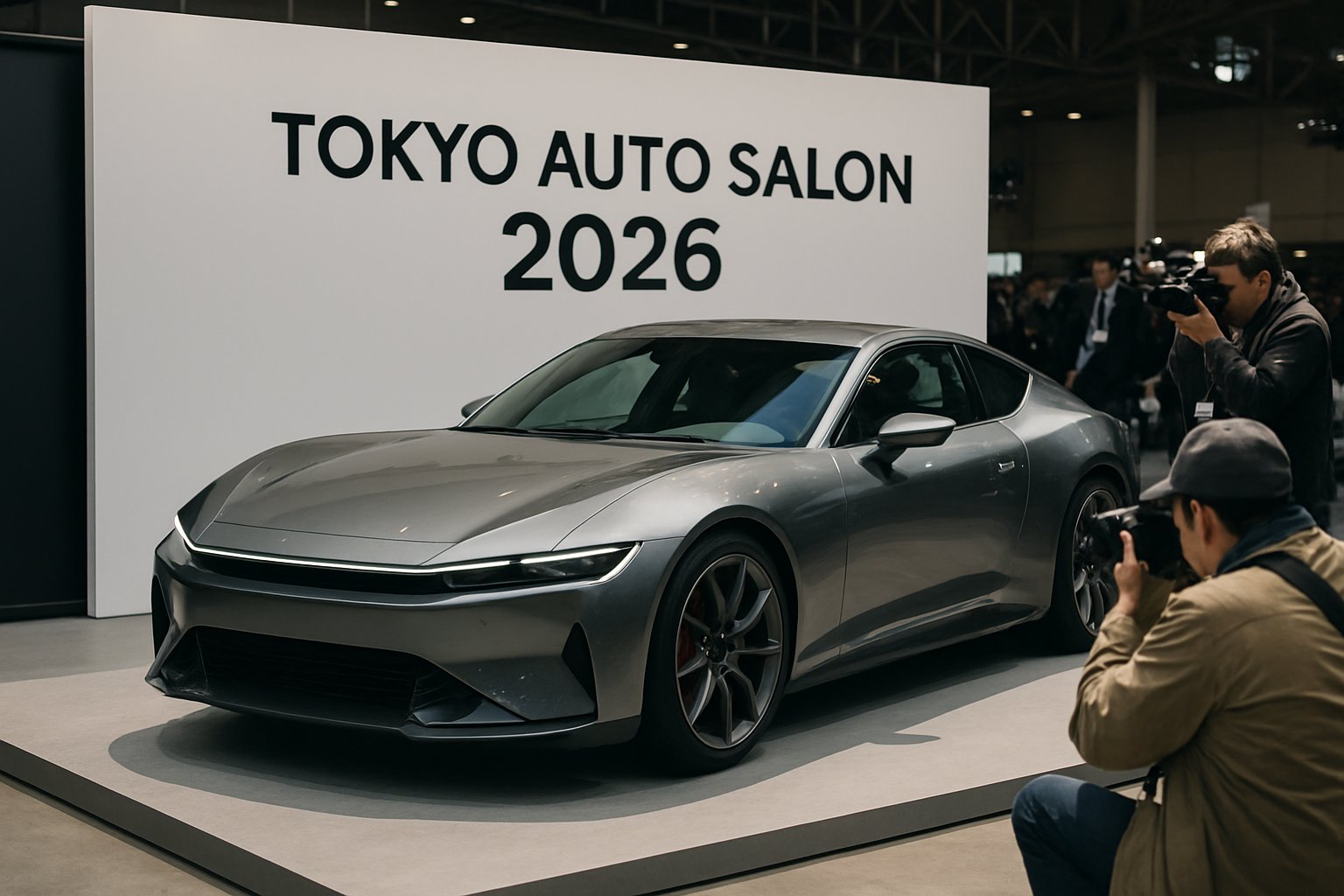
Several headline moments anchor day one. Toyota’s Akio Toyoda will present the new GR GT and GR GT3. Nissan’s press slot promises a manual Z NISMO announcement. Honda, meanwhile, showcases its “Honda Sports DNA” booth, featuring the Prelude HRC Concept and a racing simulator.
These schedule pillars define media coverage. However, smaller tuners will still grab attention through daring aero kits and electrified swaps.
The section illustrates the show framework. Subsequently, we examine who is exhibiting and why.
Confirmed Exhibitor Highlights
Toyota GAZOO Racing headlines the OEM roster. Furthermore, group members Daihatsu and Toyota Industries share floor real estate. Nissan’s NISMO and Autech divisions follow, banking on motorsport credibility. Honda Racing Corporation adds high-rev theater with GT500 machinery. Subaru’s STI will balance performance with electrification research. In contrast, Mazda focuses on a CX-5 centerpiece and race derivatives.
Aftermarket players remain the Salon’s heartbeat. HKS prepares multiple tuned vehicles and a Defi collaboration. Liberty Walk plans wide-body supercar builds that amplify social media reach. TOM’S brings Lexus projects celebrating heritage, while Bridgestone introduces a new Potenza tire line.
Expect a rich mix of specialties:
- 389+ exhibiting companies projected, based on 2025 benchmarks
- Nearly 900 cars likely displayed across indoor and outdoor zones
- Product launches covering exhausts, aero, software, and connectivity
This cast guarantees variety for every Tokyo crowd segment. Consequently, media houses will juggle competing story angles.
The lineup reveals broad industry commitment. Therefore, attendance metrics deserve closer inspection.
Attendance And Reach
Organizers recorded 258,406 visitors in 2025, a 12 percent rise over 2024. Moreover, 290,708 livestream plays extended the footprint abroad. These numbers make the Tokyo Auto Salon a serious marketing multiplier, not merely a fan festival. Brands can capture valuable leads while gathering on-site feedback.
Historical data signals further growth in 2026:
- Trendline shows consistent post-pandemic recovery
- OEM world premieres add draw power
- International travel restrictions have eased, boosting tourism mobility
Consequently, floor congestion will intensify, straining logistics for larger booths. Nevertheless, high traffic elevates exposure for smaller parts makers that depend on footfall.
The reach figures underscore investment value. Next, we unpack the trends shaping booth content.
Key Industry Trends
Electrification now coexists with petrol passion. Therefore, visitors will find EV conversions beside turbocharged classics. Honda’s concepts illustrate hybrid integration without losing sports DNA. Meanwhile, Subaru executives stress maintaining driving feel even with battery assistance. Furthermore, tuners like HKS prototype high-output electric motors mated to legacy drivetrains.
OEMs treat the Salon as a quasi-motor show. Consequently, vehicles like Toyota’s GR GT3 make global public debuts here rather than at traditional expos. This shift reflects experiential marketing priorities and the desire for authentic community engagement.
Another trend involves data-driven personalization. Companies will flaunt connected ECU flash tools and AR configurators. Professionals can deepen related expertise through the AI + Robotics™ certification, aligning tech skills with emerging mobility demands.
These currents influence content strategy. Subsequently, teams must weigh advantages against possible pitfalls.
Benefits And Risks
Pros dominate the conversation. Firstly, brands tap massive live audiences for immediate feedback. Secondly, high-quality media coverage fuels international brand perception. Thirdly, cross-pollination between tuners and OEM engineers accelerates innovation.
However, challenges persist:
- Booth construction costs rise with design complexity
- Scheduling conflicts dilute press attention during overlapping reveals
- Crowd control issues can hamper product demonstrations
- Messaging missteps may alienate petrol-focused fans amid electrification pushes
Nevertheless, careful planning mitigates these issues. Moreover, collaborative schedules among partners can spread media exposure.
This risk matrix guides resource allocation. Next, we examine practical preparation steps.
Planning For Teams
Preparing for the Tokyo Auto Salon demands early action. Booth locations are now fixed, yet activation details remain adjustable. Therefore, teams should finalize show-car transport, multimedia assets, and staffing rosters by mid-December 2025. Additionally, briefing spokespeople ensures crisp messaging during Business Day interviews.
Marketing leads must coordinate livestream infrastructure to serve audiences unable to visit Tokyo. Furthermore, social channels should preload teasers, embargoes, and influencer collaborations. Consequently, real-time engagement will peak during headline reveal windows.
Suppliers should schedule B2B meetings during Friday’s silent hours. Moreover, after-hours networking near Kaihin-Makuhari stations remains invaluable for deal making.
These steps foster operational readiness. Finally, we conclude with strategic takeaways.
Final Takeaways Ahead
The 2026 edition presents unrivaled exposure, vibrant culture, and evolving technology. OEM debuts, tuner creativity, and surging attendance create a compelling playground. Meanwhile, electrification themes mingle with traditional horsepower, reflecting a broader mobility transition.
Companies that align storytelling with audience passion will maximize returns. Moreover, professionals can future-proof skills through certifications and data-centric training.
These insights prime participants for show success. Ultimately, the Tokyo Auto Salon rewards thoughtful preparation and fearless innovation.
Disclaimer: Some content may be AI-generated or assisted and is provided ‘as is’ for informational purposes only, without warranties of accuracy or completeness, and does not imply endorsement or affiliation.


