

AI CERTS
2 hours ago
XDOF Monetizes Robot Training Data Revolution
However, money alone does not guarantee useful datasets; process rigor does. This article explores how XDOF operates and why physical AI demands better corpora. It also examines what the move means for the automation stack.
Robot Data Demand Surge
Every ambitious robotics lab now chases generalist agents that see, reason, and act in open worlds. Moreover, those agents require far richer experience than language models ingest. Consequently, demand for curated Robot Training Data has spiked.
- Global spending on data infrastructure for physical AI grew 42% year-over-year, according to ResearchIntelo.
- Analysts estimate 30% of robotics AI budgets now fund collection, cleaning, and annotation workflows.
- Synthetic simulators still dominate quantity, yet only 11% of teams rely solely on virtual data.
These figures illustrate a clear gap between dream and reality. Therefore, suppliers who can deliver repeatable Robot Training Data pipelines occupy a strategic niche.
Real interaction bytes remain scarce despite soaring investment. However, XDOF claims it can close the deficit. The next section dissects that claim.
Inside XDOF Business Model
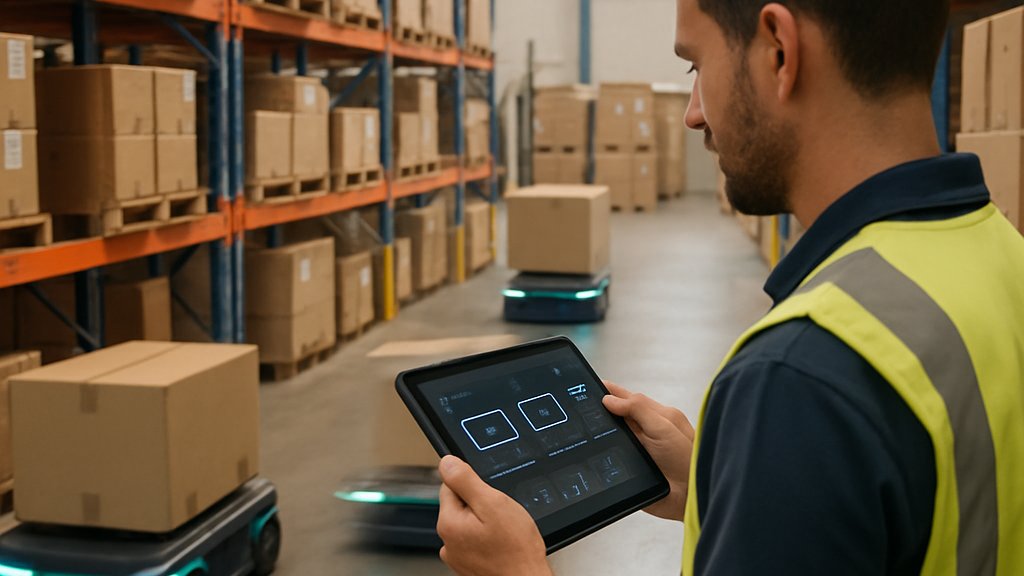
XDOF runs warehouse labs packed with commodity arms, depth cameras, and conveyance rigs. Operators wearing VR gloves teleoperate robots to produce high quality manipulation trajectories. Furthermore, the company layers automated QA, sensor calibration, and metadata enrichment atop the capture loop. In contrast, many research labs script similar steps manually, losing consistency at scale. XDOF packages each trajectory into standard Robot Training Data schemas consumable by downstream pipelines.
Revenue arrives through three streams. First, subscription access grants customers fresh interaction rolls each month. Second, bespoke collection contracts target domain specific tasks, such as warehouse picking. Third, an upcoming marketplace will let smaller teams purchase slices without negotiating lengthy terms.
Philippe Wu, the CEO, summarizes the thesis succinctly. He stated, "We needed data before models," emphasizing chronology over algorithms.
XDOF essentially productizes the tedious steps every embodied AI team must replicate. Consequently, buying beats building for many cash-rich labs. Yet capabilities matter more than business charts, so we examine the flagship dataset next.
Teleoperation Pipeline Core Basics
Teleoperation remains the fastest path to dense, labeled demonstrations. Moreover, human dexterity bridges gaps that simulation cannot yet model accurately. GELLO, the 2024 IROS framework, underpins XDOF's low-cost controller rigs. Consequently, one operator can command multiple robots simultaneously, squeezing cost per trajectory. High fidelity Robot Training Data emerges directly from skilled human control.
Reliable teleoperation converts expensive robots into prolific data scribes. Therefore, it forms the spine of XDOF's capture engine discussed below. With mechanics covered, we unpack the published corpus.
ABC Dataset Details Unpacked
Announced with UC Berkeley, the ABC release represents the firm's public debut asset. The bundle includes 130,000 manipulation trajectories, 300 hours of simulation, and 100 hours of real evaluations. Additionally, metadata captures joint states, force-torque values, RGB-D frames, language task prompts, and failure flags.
- Cross-embodiment coverage spans four gripper types and two mobile bases.
- Aligned simulation counterparts ease Robot Training Data sim-to-real studies.
- Open evaluation split enables apples-to-apples benchmarking.
Researchers like David McAllister argue such breadth could parallel ImageNet's catalytic impact on vision. ABC offers a rare mix of scale and openness. Consequently, many labs plan to incorporate it within upcoming model training cycles. Competitive pressures reinforce that urgency.
Competitive Robotics Data Landscape
NVIDIA, Robo.ai, and Neocambrian also chase the emerging marketplace. The chip giant supplies simulation engines, synthetic corpora, and pretrained physical AI world models. In contrast, Robo.ai focuses on bespoke field data captured from deployed service fleets. Meanwhile, several stealth ventures market robotics data factories that promise automated annotation and compliance auditing.
XDOF differentiates through scale and its neutral marketplace positioning. Its marketplace brokers Robot Training Data across sectors. Moreover, partnerships with universities create credible validation channels. However, substitution threats loom. If synthetic simulators reach photoreal fidelity, cost conscious teams may bypass expensive physical collection.
Competition pushes rapid innovation yet compresses margins. Therefore, XDOF must continue expanding data variety and service quality. Risk analysis illustrates further hurdles.
Risks And Market Limitations
Running robot warehouses burns cash on maintenance, calibration, and safety oversight. Consequently, each new Robot Training Data set carries high fixed overhead.
Hardware diversity also complicates cross-embodiment generalization. Models trained on one sensor stack may behave unpredictably on another. Additionally, egocentric recordings raise privacy and intellectual property concerns for corporate environments.
Licensing terms determine whether buyers can redistribute improved checkpoints. Nevertheless, transparent documentation and careful consent workflows can mitigate these issues.
Operational risks remain significant yet manageable with process discipline. Consequently, stakeholders should evaluate supplier maturity during procurement. We close with strategic guidance.
Strategic Takeaways And Outlook
Robot Training Data now resembles crude oil for embodied intelligence pipelines. Furthermore, hybrid pipelines that mix real and synthetic episodes appear inevitable. Teams should map tasks to data modalities, balancing cost, fidelity, and scaling speed.
- Audit existing robotics data repositories for gaps relative to deployment goals.
- Evaluate vendors on schema openness, licensing flexibility, and QA automation.
- Invest in staff who can curate data flywheels that support continual model training.
Professionals can enhance their expertise with the AI Robotics Specialist™ certification. Moreover, such credentials signal commitment to rigorous data governance across the automation stack.
In summary, strategic investments in diverse, validated corpora will separate successful robot companies from hopeful imitators. Therefore, monitoring XDOF and its peers should remain on every CTO's priority list.
XDOF's emergence underscores a structural truth. Algorithms thrive only when fueled by abundant, diverse evidence. Robot Training Data provides that evidence and, consequently, shapes the frontier of physical AI. Stakeholders who invest early in curated pipelines will accelerate deployment, slash prototyping cycles, and boost performance robustness. Nevertheless, due diligence on licensing, privacy, and hardware alignment stays critical. Act now: review existing corpora, pilot the ABC dataset, and consider upskilling with the linked certification.
Moreover, engage procurement teams to compare XDOF with synthetic alternatives from NVIDIA and others. The race toward generalist robots is accelerating; decisive data strategy will determine enterprise winners. Those decisions ripple across the entire automation stack. Future factories will depend on those choices made today. Choose wisely.
Disclaimer: Some content may be AI-generated or assisted and is provided ‘as is’ for informational purposes only, without warranties of accuracy or completeness, and does not imply endorsement or affiliation.


