

AI CERTS
1 day ago
Verifiable AI Startup Pramaana Nabs $27M for Proof Models
Therefore, professionals now ask how proof artifacts can change compliance, finance, and healthcare workflows. This article dissects the funding, technology, and market context surrounding Pramaana’s bold play. Meanwhile, we examine benefits and challenges that will shape adoption during the next 12 months. Readers seeking career advantages will also find certification pathways linked throughout.
Market Signals Show Strength
Pramaana’s funding arrives amid surging regulatory pressure on model transparency. Consequently, boardrooms prioritize solutions that guarantee output correctness rather than probability. The Verifiable AI Startup narrative resonates because auditors can inspect attached proofs line by line. Analysts compare this moment to the early DevSecOps wave that redefined code security.
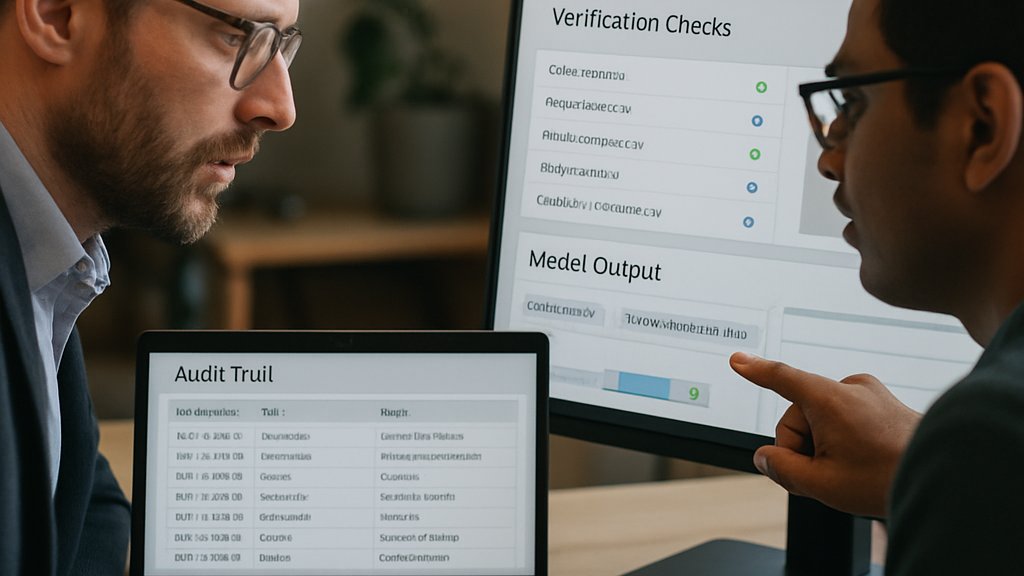
Moreover, the Verification Summit drew 150 engineers and lawyers keen on formal verification roadmaps. Vinod Khosla’s keynote underscored commercial urgency, signaling deeper Khosla Ventures commitment beyond cash. Consequently, several Fortune 500 compliance teams attended to gauge pilot potential. Such visible interest strengthens confidence for secondary investors now evaluating similar plays.
These observations illustrate why verifiable approaches hold gravity in high-stakes environments. However, signals alone do not guarantee success. The next section unpacks Pramaana’s proof machinery. Market enthusiasm reflects pressing governance needs. Nevertheless, technical depth will decide lasting impact.
Technology Behind Proof Layers
Pramaana blends large language models with Lean-style theorem provers. Consequently, the system auto-formalizes statutes into machine-checkable specifications. This process extends formal verification methods seen in academia. Proof artifacts accompany every generated answer, enabling deterministic audits. That positioning reinforces Pramaana’s identity as a Verifiable AI Startup, not a tooling vendor.
Additionally, the company’s Domain Formalizer converts ambiguous clauses into precise code. Experts liken the workflow to the Catala project that encoded French tax law. In contrast, Pramaana layers large models on top, which accelerates drafting by suggesting intermediate lemmas. Therefore, domain specialists can validate or adjust proofs using familiar natural language prompts.
Trustworthy AI goals depend on proof completeness and specification coverage. However, auto-formalization remains resource intensive and demands iterative expert review. These realities create cost considerations explored later. The technology merges symbolic rigor with generative speed. Consequently, funding details reveal why investors accepted the risk.
Seed Funding Round Details
The $27 million seed funding round ranks among 2026’s largest early deals for infrastructure AI. Khosla Ventures led, while Accel, Nexus, BoldCap, Premji Invest, and Unbound joined. Moreover, insiders confirm the valuation exceeded typical research-stage multiples. The Verifiable AI Startup category benefited from heightened policy scrutiny after several LLM failures.
Pramaana hosts merely 40 staff, so fresh capital extends runway beyond 24 months. Consequently, management plans aggressive hiring across proof engineering, compilers, and domain law specialists. Additionally, funds allocate budget for customer pilots in taxation and healthcare. Such pilots will test proof scalability under real transaction loads.
Investors cite three decisive factors: deep research pedigree, early summit traction, and clear compliance pain points. Accordingly, the following metrics shaped their term sheet.
- Summit attendance: 150 professionals across law, finance, medicine.
- Prototype latency: 800 milliseconds per verified query.
- Projected gross margin: 70% after cloud optimization.
These indicators justified aggressive seed funding despite nascent revenue. Analysts predict every Verifiable AI Startup will soon publish audited metrics. The capital infusion grants breathing room for technical refinement. Meanwhile, adoption barriers still loom.
Adoption Hurdles And Fixes
Early adopters wrestle with formal specification upkeep across changing regulations. However, Pramaana proposes shared libraries that update continuously through community pull requests. The approach mirrors open-source security feeds for zero-day vulnerabilities. Nevertheless, enterprises must still validate jurisdictional nuances before deployment.
Training costs also rise because proof checkers scale poorly across massive models. Consequently, the company optimizes proofs by pruning extraneous lemmas during compile time. In contrast, rivals rely on statistical guardrails that lack deterministic guarantees. That contrast strengthens Pramaana’s trustworthy AI positioning among risk-averse sectors.
Talent scarcity presents another hurdle. Professionals can enhance their expertise with the AI Researcher™ certification. Moreover, Pramaana sponsors graduate fellowships to replenish formal verification skills. The Verifiable AI Startup model requires multidisciplinary teams bridging law and software proofs. Adoption challenges remain significant yet addressable. Consequently, competitive dynamics intensify as others chase the space.
Competitive Landscape Now Forms
Several stealth teams now brand themselves as a Verifiable AI Startup alternative. However, most focus on single domains like contracts or avionics. Pramaana’s cross-vertical ambition may yield defensible network effects through reusable proofs. Additionally, big-cloud vendors study integration points for governance modules.
Industry watchers note Khosla Ventures has funded adjacent trustworthy AI tooling companies. Consequently, portfolio synergies could accelerate ecosystem standards. Nevertheless, incumbents might lobby for lighter certification regimes favoring legacy software. The coming 18 months will clarify winner profiles.
Competition will sharpen technical roadmaps. Therefore, enterprises must monitor proof performance benchmarks carefully.
Enterprise Outlook And Steps
Boards evaluating the space should weigh audit depth, latency, and maintenance cost. Moreover, aligning internal governance teams early reduces rollout headaches. Leaders should request demonstration proofs attached to representative workflows. Consequently, metrics like error surface area and explanation clarity become selection criteria.
The Verifiable AI Startup movement encourages joint workshops between engineers and regulators. Formal verification literacy will therefore shift from niche to mainstream. Khosla Ventures expects commercial traction once first pilots publish audited savings figures. Meanwhile, Pramaana targets tax calculation and clinical safety as launch domains.
Interested leaders can upskill staff through the earlier linked AI Researcher™ certification. Additionally, summit recordings will release next quarter, offering deeper technical walkthroughs. Enterprises have a clear evaluation roadmap. Nevertheless, disciplined proof reviews remain non-negotiable. Failure to evaluate any Verifiable AI Startup thoroughly could expose firms to compliance fines.
Conclusion And Next Actions
Pramaana’s journey illustrates how proofs may anchor enterprise trust in generative systems. Moreover, the $27 million seed funding validates market urgency for deterministic guarantees. The Verifiable AI Startup narrative now influences hiring, budgeting, and regulatory planning worldwide. However, auto-formalization complexity means sustained research investment is vital. Enterprises can pilot small domains first while monitoring latency metrics. Consequently, early lessons will shape broader governance playbooks. Professionals should pursue the linked certification to gain competitive insight into formal verification frameworks. Finally, stay tuned for summit videos and pilot case studies that will benchmark trustworthy AI progress. Act now and investigate proofs before rivals outpace your compliance roadmap.
Disclaimer: Some content may be AI-generated or assisted and is provided ‘as is’ for informational purposes only, without warranties of accuracy or completeness, and does not imply endorsement or affiliation.


