

AI CERTS
2 hours ago
DropGenie’s Seed+ Boost Signals Gene Editing AI Breakthrough
The technology already impressed peer reviewers in 2025. That paper described arrayed CRISPR screens on primary CD4+ T cells. Meanwhile, automation vendors have begun integrating the cartridge format into robotic stations. Consequently, many observers call the company a bellwether for lab digitalization.
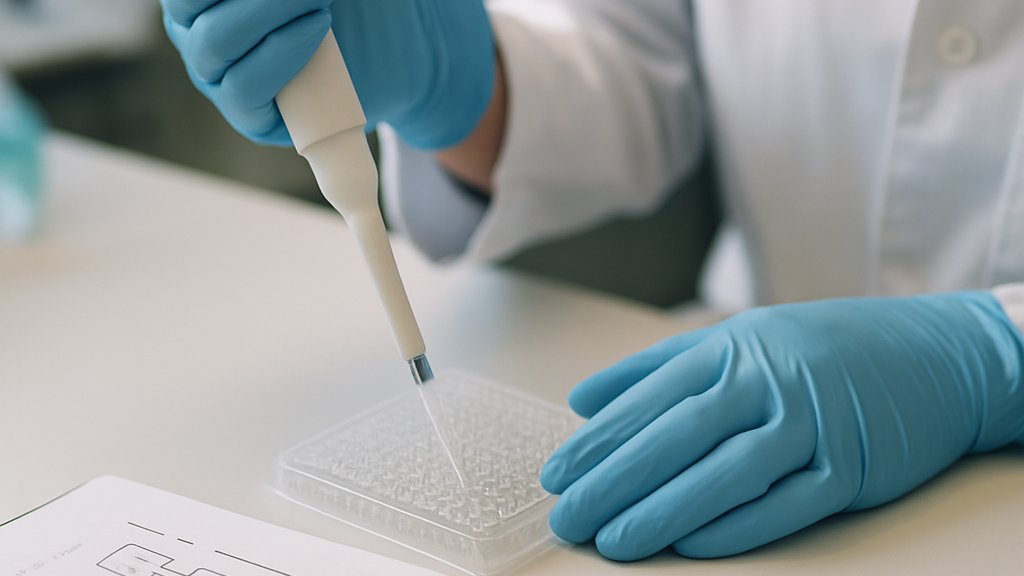
Gene Editing AI Demand
Pharma pipelines increasingly depend on accurate functional genomics. However, pooled screens can obscure donor-specific responses. DropGenie targets that gap with arrayed CRISPR screens at single-donor granularity. Consequently, clinicians hope to de-risk cell therapies earlier. Gene Editing AI algorithms require high-quality training data. Therefore, low-input electroporation becomes strategic because each experiment feeds models fresh signals. Industry analysts note that Merck’s accelerator prefers startups delivering both hardware and data streams.
Additionally, alliance partners like Revvity can route cartridges directly into sequencing pipelines. As a result, Gene Editing AI and wet-lab instrumentation now reinforce each other's value. These synergies explain why venture scouts flagged DropGenie early. In contrast, traditional electroporation rigs rarely scale under 10,000 cells per condition. Consequently, many rare-cell studies never leave the whiteboard. The new platform reopens those investigations. That momentum will bolster downstream product launches.
Demand for precise, small-scale editing is unmistakable. However, technical claims still warrant deeper inspection.
Platform Claims Scrutinized
Scientists respect published evidence more than marketing slides. Consequently, DropGenie commissioned peer-reviewed validation in 2025. The study reported robust knockout rates above 80% across primary cells. Meanwhile, viability exceeded 90%. Furthermore, reagent usage dropped by half compared with common protocols. Such numbers attracted labs focused on life sciences automation.
- 48 programmable reaction sites per cartridge enable parallel testing.
- Approximately 3,000 cells per site support scarce sample workflows.
- 192-gene screen used 25× fewer cells than benchmarks.
- Cas9 consumption fell by about 50× in that experiment.
Moreover, the company markets “100× miniaturization” and “40× lower cost.” Nevertheless, external replication across assay types remains limited. Researchers at AbbVie are reportedly running pilot CRISPR workflows on the system. Results from those pilots could confirm or challenge the figures. For now, early adopters value the flexible API that integrates with lab robots. Consequently, life sciences automation teams can code liquid transfers without pump recalibration. These validation efforts will decide commercial traction.
Initial data appear convincing, yet reproducibility will decide credibility. Therefore, the funding context merits equal attention.
Funding Picture Clarified
Public databases list multiple convertible notes since 2020. However, no single headline round has been disclosed. The Seed+ label likely groups recent notes and the MDSS grant. Consequently, observers debate the exact amount of startup capital secured. Dealroom estimates remain below typical Series A thresholds. Nevertheless, Merck, TVC, and CQDM supply non-dilutive support alongside $100,000 cash. Moreover, those partners open enterprise sales channels. Industry insiders stress that biotech funding often mixes grants, equity, and equipment credits.
Additionally, DropGenie previously graduated from SOSV’s RebelBio, adding international investors. In contrast, many competitors raised larger sums to finance disposable consumables. Yet efficient cost structures may let DropGenie progress with leaner budgets. Startup capital thus becomes a strategic variable, not just a vanity metric. The company continues confidential talks with institutional backers. These negotiations may soon yield a formal disclosure.
DropGenie leverages diverse cash sources to extend runway. However, transparent figures would further reassure prospective users.
Technical Performance Metrics
Efficiency drives purchasing decisions in core labs. Accordingly, the platform posts >80% knockout efficiency. Viability consistently surpasses 90% after electroporation. Furthermore, screens can proceed with fewer than 10,000 cells. Such attributes enable multi-donor CRISPR workflows within a single cartridge. Therefore, scientists compare genetic perturbations across patients without sample pooling. Moreover, each cartridge’s 48 sites operate independently. This independence prevents crosstalk among edits. Consequently, data quality improves.
Integration with INTEGRA robots delivers hands-free pipetting. Meanwhile, Revvity imaging modules track phenotypes in real time. These additions reinforce life sciences automation adoption. Gene Editing AI pipelines then analyze images for functional hits. Nevertheless, throughput still trails pooled lentiviral screens. However, arrayed design provides richer per-donor metadata.
Performance metrics support the miniaturization story. Consequently, competitive analysis becomes the next focal point.
Competitive Landscape Shifts
Several vendors sell large-volume electroporators. However, most lack discrete droplet control. Consequently, they struggle with sample scarcity. DropGenie positions itself between microplate robotics and microfluidic chips. Moreover, integrations with Beckman Coulter promise seamless bench upgrades. In contrast, start-ups using acoustic transfection market alternative delivery physics. Venture analysts monitor each approach’s cost curve. Gene Editing AI companies care chiefly about data density per dollar. Lower reagent bills influence that metric strongly.
Additionally, DropGenie claims 40× cost reduction versus conventional systems. Competitors must answer that challenge or pivot. Meanwhile, biotech funding continues flowing toward platform plays. Investors favor technologies feeding cloud analytics with standardized outputs. That preference benefits miniaturized array formats.
Competition remains fierce, yet cost and data advantages help DropGenie stand out. However, scaling support will test execution.
Adoption Barriers Remain
Early enthusiasm can fade without user success stories. Laboratories must re-write standard protocols at nanoliter volumes. Additionally, downstream sequencing pipelines need recalibration. Nevertheless, partner application notes simplify training. Regulatory compliance adds further hurdles. Healthcare companies expect validated serialization for audit trails. DropGenie is building such features into its cartridge RFID tags. Furthermore, life sciences automation teams crave robust APIs. The company’s software development kit addresses that need.
Consequently, developers can script CRISPR workflows in Python. Staff can upskill through the AI+ Researcher™ certification. That credential deepens understanding of algorithmic experiment design. Meanwhile, limited field data still restricts published comparisons. Startup capital allocated to customer success may change that soon.
Adoption hurdles are real but manageable. Therefore, forward-looking training and support will shape uptake.
Outlook And Takeaways
Gene Editing AI stands to gain from every data-efficient platform added to the lab. DropGenie now sits at that intersection of hardware and software. Moreover, biotech funding momentum reinforces its roadmap. Continued validation should calm cautious buyers. Consequently, larger milestones could unlock additional startup capital. Life sciences automation trends also align with the cartridge strategy. Therefore, integration partners will likely deepen ties. Gene Editing AI developers require richer training sets, which DropGenie can supply. Nevertheless, transparency around the Seed+ figure remains essential. The coming months promise clarity.
Momentum appears strong, yet open questions persist. Consequently, a concise recap follows below.
DropGenie exemplifies how microfluidic engineering converges with algorithmic discovery. The platform miniaturizes CRISPR workflows, slashing cost and conserving rare samples. Consequently, Gene Editing AI projects receive cleaner, donor-specific datasets. Moreover, diversified biotech funding and strategic partnerships stretch operational runway. Nevertheless, transparent disclosure of startup capital and independent validation remain priorities.
AI-driven gene editing adoption hinges on reproducible cartridge performance. Early automation integrations signal momentum across global labs. Therefore, teams should monitor upcoming pilot readouts and potential Series A news. Professionals can future-proof careers by earning the linked certification and exploring Gene Editing AI advancements.
Disclaimer: Some content may be AI-generated or assisted and is provided ‘as is’ for informational purposes only, without warranties of accuracy or completeness, and does not imply endorsement or affiliation.


