

AI CERTS
2 hours ago
Retail Computer Vision Drives Store Productivity Gains
Market Momentum Accelerates Fast
Grand View Research values the global segment at USD 1.66 billion today and expects USD 12.56 billion by 2033. Furthermore, a 25.4% compound rate underscores rising confidence. Amazon, Walmart, and Everseen recently expanded flagship projects, turning pilots into chain rollouts. Meanwhile, Everseen’s Everact adds a conversational layer that translates video events into plain-language prompts for staff. These moves keep Retail Computer Vision headlines frequent and budgets active.
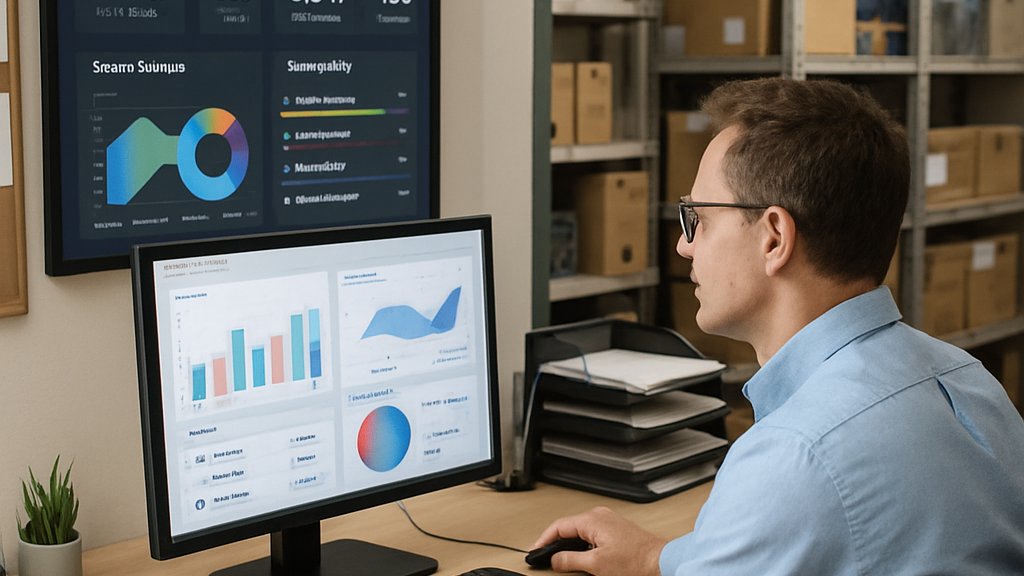
Independent consultants note adjacent computer vision spend reaching USD 21.7 billion across sectors. In contrast, retail’s share remains small, suggesting room to grow as accuracy improves and costs decline. Therefore, capital markets continue backing vendors that can convert images into real-time store operations decisions.
These growth signals frame the opportunity. However, use cases still determine value, which we explore next.
Emerging Use Case Spectrum
Autonomous checkout grabbed early attention, yet Retail Computer Vision now powers many other tasks. Shelf monitoring alerts teams when facings vanish. Additionally, gesture analysis flags suspicious behavior near high-theft categories. Queue analytics optimize staffing, while planogram compliance modules verify display integrity.
Amazon’s hybrid Just Walk Out plus RFID lanes showcase sensor fusion that improves throughput in pop-ups and stadiums. Sam’s Club reports 23% faster exits after rolling out an AI exit system across 120 clubs. Furthermore, startups like Veesion specialize in discreet theft detection for pharmacies and convenience formats.
Retail Computer Vision also enriches customer analytics by mapping footpaths and dwell time. Consequently, merchandising teams gain new evidence when re-laying aisles. These diverse scenarios illustrate why vendors now market modular capabilities rather than single flagship features.
Such variety expands addressable budgets. Nevertheless, executives still ask, “Where is the measurable lift?” The following section answers that question.
Productivity Gains In Detail
Evidence is mounting that Retail Computer Vision improves both revenue velocity and cost discipline. Vendor studies and early independent audits surface four headline benefits:
- 15%–23% labor productivity improvements, freeing staff from manual exit checks.
- 47%–300% transaction throughput uplifts at peak venue windows.
- 3%–9% shrink reduction when loss-prevention modules combine CV with RFID gates.
- 374% three-year ROI, according to a Forrester Total Economic Impact study commissioned by Everseen.
Moreover, managers report better morale because associates focus on service instead of repetitive monitoring. Meanwhile, computer vision helps data scientists enrich retail productivity dashboards with granular in-store analytics. Therefore, KPI conversations become evidence-driven rather than anecdotal.
These benefits prove compelling. However, hurdles remain before chain-wide AI deployment becomes routine.
Adoption Barriers And Fixes
Accuracy challenges persist in large grocery formats that carry thousands of SKUs. Consequently, vendors increasingly blend cameras with weight sensors and RFID tags. Privacy regulations add further complexity, demanding anonymization, consent signage, and strict data governance. Moreover, false positives can erode trust when alert thresholds are mis-tuned.
McKinsey urges cross-functional governance to align ethics, IT, and store operations. In contrast, purely technical pilots often stall because change-management budgets were overlooked. Nevertheless, leaders who pair transparent policies with staff upskilling overcome resistance and keep Retail Computer Vision pilots alive.
These obstacles highlight integration gaps. The next section outlines field-tested remedies.
Deployment Best Practice Guide
Successful Retail Computer Vision rollouts share repeatable habits. Firstly, start with narrow, high-yield use cases such as self-checkout loss prevention. Secondly, deploy edge compute to cut latency and bandwidth costs. Additionally, insist on open APIs to feed computer vision events into existing analytics stacks.
Thirdly, build human-in-the-loop loops that review ambiguous detections. Consequently, models retrain faster and regulators gain assurance. Fourthly, quantify baseline metrics before go-live, then publish weekly deltas to store teams. Meanwhile, phased AI deployment schedules allow continuous learning across formats.
Following these principles reduces time to value. It also prepares organizations for larger transformation programs examined in the next section.
Strategic Outlook For Leaders
Retail boards increasingly link long-term competitiveness to data-rich store operations. Moreover, investors reward chains that demonstrate repeatable digital productivity wins. Therefore, a structured Retail Computer Vision roadmap becomes a prerequisite for omnichannel growth.
Industry analysts predict converging platforms that blend computer vision, IoT signals, and predictive analytics. Consequently, buying decisions will favor vendors with proven integrations rather than isolated point tools. Meanwhile, CTOs must govern model drift, cyber risks, and sustainability impacts tied to energy-hungry inference hardware.
These forward-looking considerations underscore the need for skilled managers. The next section presents relevant upskilling paths.
Certification Pathways To Upskill
Talent gaps slow many AI deployment programs. Luckily, professionals can enhance their expertise with the AI Business Intelligence™ certification. Furthermore, the curriculum covers computer vision fundamentals, cloud MLOps, and governance frameworks that align with strict retail productivity targets.
Graduates exit with project templates and ROI calculators tailored for store operations scenarios. Consequently, organisations gain internal champions who can steward Retail Computer Vision investments from pilot to scale.
This skills focus closes our discussion. The final section recaps actionable insights.
Conclusion And Next Steps
Retailers now face a decisive moment. Moreover, evidence shows that Retail Computer Vision boosts throughput, trims shrink, and enriches analytics when deployed thoughtfully. However, privacy, accuracy, and change-management hurdles demand disciplined execution. Consequently, leaders should start with high-impact use cases, track measurable KPIs, and invest in staff credentials.
Adopt these principles today. Then, explore the AI Business Intelligence™ certification to accelerate your organisation’s computer vision journey and secure sustainable retail productivity gains.
Disclaimer: Some content may be AI-generated or assisted and is provided ‘as is’ for informational purposes only, without warranties of accuracy or completeness, and does not imply endorsement or affiliation.


