

AI CERTS
2 hours ago
WiMi Pushes Quantum Network AI Frontiers With Generative Designs
Additionally, it contextualizes SQGEN, dual discriminator frameworks, and the quantum bottleneck inside broader industry debates. In contrast, independent experts highlight trainability and hardware constraints. By the end, readers will grasp concrete opportunities and careful caveats. Moreover, we map relevant certifications that can accelerate upskilling. Consequently, professionals can judge whether WiMi’s path aligns with their strategic priorities. Finally, consistent keyword usage ensures SEO clarity for ongoing reference.
Inside WiMi Quantum Vision
WiMi operates across hologram computing, cloud, and mixed reality markets. Nevertheless, its latest spotlight falls on Quantum Network AI prototypes. Company press releases emphasize synergy between quantum circuits and classic pipelines. Furthermore, executives promise competitive speedups for media, security, and robotics workloads.
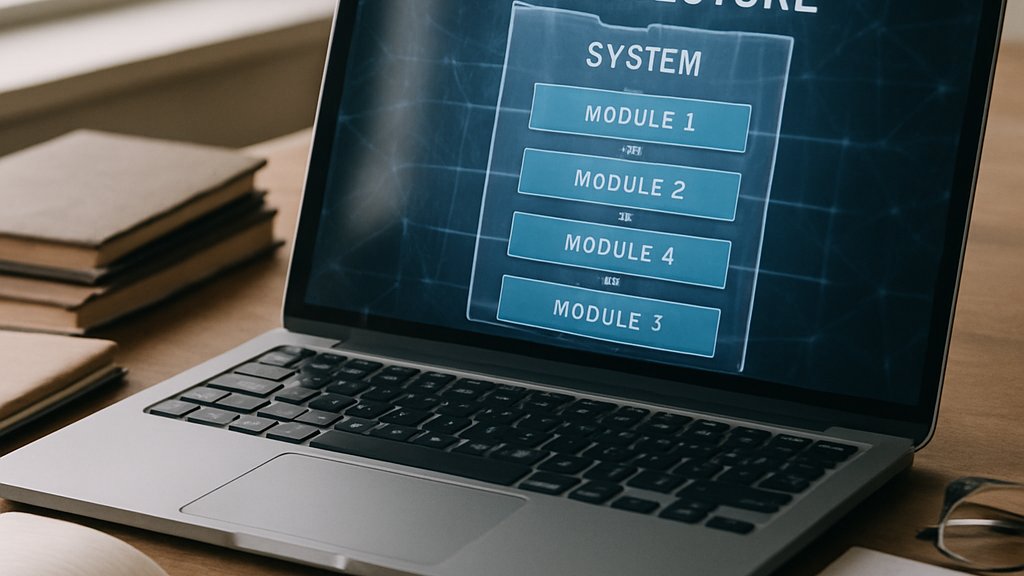
The firm labels the initiative Synergic Quantum Generative Network, or SQGEN. Consequently, stakeholders receive a coherent banner for multiple research stack threads. Generative architecture experimentation remains the central theme across those threads. IBM, Xanadu, and academic groups publish complementary findings, yet WiMi’s roadmap feels bolder.
WiMi positions itself as a full-stack quantum AI integrator. However, execution will decide whether that vision sticks. Next, we examine the core SQGEN mechanics.
Synergic Network Core Details
SQGEN pairs a quantum generator and discriminator in parallel. Therefore, both circuits update simultaneously using Nelder-Mead optimization. The process allegedly reduces gradient stalls found in earlier generative architecture tests. Additionally, relaxed reversibility cost functions decrease required gate depth.
Key company metrics appear in the September 2025 release:
- SQGEN converged faster than baseline QGANs on simulated image data, according to WiMi.
- Parallel learning cut quantum resource demands, delivering 30% lower two-qubit gate counts.
- Nelder-Mead required no gradient sampling, easing barren plateau exposure.
In contrast, independent benchmarks remain unavailable. Consequently, practitioners must replicate experiments on public simulators before trusting the figures. Meanwhile, early simulator runs suggest Quantum Network AI could converge within fewer epochs than classical baselines. SQGEN’s appeal lies in reduced gates and synchronous learning. The following section evaluates WiMi’s dual discriminator upgrade.
Dual Discriminator Architecture Design
WiMi’s November 2025 release introduced a hybrid QCNN discriminator stack. Two discriminators process complementary feature channels, then share gradients. Moreover, the schema targets mode collapse, a notorious GAN failure. IBM researchers earlier noted gradient resilience in shallow QGANs, supporting WiMi’s premise. Consequently, the ensemble advances Quantum Network AI robustness.
The first discriminator runs on parameterized quantum circuits. Meanwhile, a classical convolutional sibling refines low-frequency patterns. Generative architecture benefits when hybrid pathways handle diverse statistical signatures. Subsequently, the model outputs an averaged reality score for adversarial training.
Dual discriminator designs promise robustness yet double resource complexity. However, WiMi counters that shallow circuits cap quantum overhead. Yet bottlenecks still matter, as the next section explains.
Quantum Bottleneck Efficiency Impact
WiMi’s January 2026 note replaced the U-Net bottleneck with QB-Net quantum modules. Consequently, parameter counts allegedly dropped thirty-fold while accuracy held steady. Such compression intrigues hologram computing teams seeking lighter edge models. Furthermore, fewer parameters translate into quicker inference and smaller memory footprints.
The bottleneck trick embeds quantum AI slices inside proven computer vision pipelines. In theory, entanglement encodes global context more compactly than classical tensors. Nevertheless, noise could erode those quantum correlations on current NISQ hardware. Therefore, simulation studies should precede any production pilot.
QB-Net illustrates modular Quantum Network AI adoption without wholesale system rewrites. Still, trainability hazards linger, demanding mitigation strategies. We now explore plateau risk controls.
Mitigating Barren Plateau Risks
Barren plateaus emerge when gradient norms vanish exponentially. IBM’s QTML study provided tight bounds showing certain qGAN setups avoid that fate. Therefore, shallow circuits and careful initialization remain vital. Moreover, Nelder-Mead sidesteps gradient needs entirely, offering another escape hatch.
Researchers also recommend layerwise training and problem-specific encodings. In contrast, WiMi bundles these ideas into its research stack roadmap. Generative architecture variants could further refine locality to preserve gradients. Consequently, early adopters should test gradient histograms during every iteration.
Mitigation techniques tame plateaus yet add engineering overhead. The next heading covers tooling that simplifies experimentation.
Tooling For Rapid Prototyping
PennyLane, Qiskit, and Cirq support hybrid training loops. Additionally, managed backends on IBM Cloud provide real qubit access under quotas. Developers can reproduce SQGEN on simulators before scaling to Quantum Network AI hardware. Xanadu tutorials show image generation examples mirroring WiMi’s demonstrations.
A practical research stack often includes GitHub workflows, experiment tracking, and dataset versioning. Furthermore, a modular design lets teams swap quantum AI kernels as devices mature. Professionals can enhance their expertise with the AI+ Quantum Specialist™ certification. Such credentials bolster hiring conversations around hologram computing initiatives.
Robust tooling shortens iteration cycles and improves reproducibility. However, strategic direction still dictates value. Finally, we assess timelines and hurdles.
Roadmap And Key Challenges
WiMi must translate prototypes into scalable services. Market adoption depends on hardware cost, performance, and developer familiarity. Moreover, regulatory clarity around cloud cryptography and data residency will influence deals. Quantum Network AI solutions face extra scrutiny due to sparse industry benchmarks.
The following obstacles need sustained focus:
- NISQ noise inflates error rates beyond acceptable production thresholds.
- Talent shortages slow quantum AI onboarding for enterprise teams.
- Independent peer review remains minimal, limiting external confidence.
- Edge devices for hologram computing still lack integrated quantum accelerators.
Nevertheless, WiMi’s layered strategy offers potential mitigation levers. Parallel learning, hybrid discriminators, and modular bottlenecks distribute risk. Consequently, staged pilots can validate assumptions before capital commitments. Quantum Network AI champions should lobby vendors for transparent release schedules.
Strategic realism tempers hype yet sustains momentum. The conclusion distills actionable insights.
WiMi’s recent announcements signal rapid evolution in Quantum Network AI research. SQGEN accelerates training, dual discriminators enhance stability, and QB-Net slashes parameters. However, hardware noise, barren plateaus, and scarce benchmarks caution against blind adoption. Moreover, open tooling and certifications can bridge current capability gaps. Data leaders should prototype on simulators, track gradient statistics, and publish reproducible notebooks. Subsequently, they can scale proven workloads onto emerging quantum clouds. Act now and secure strategic advantage by pursuing the linked AI+ Quantum Specialist™ credential.
Disclaimer: Some content may be AI-generated or assisted and is provided ‘as is’ for informational purposes only, without warranties of accuracy or completeness, and does not imply endorsement or affiliation.


