

AI CERTS
2 hours ago
Grokers Redefines Knowledge Graph Reasoning at Write Time
Write-Time Shift Explained Clearly
Grokers introduces autonomous agents that traverse typed graphs as each record arrives. Moreover, the agents call governed LMs, extract attributes, and store them immediately. Future reads need no additional inference because the graph already holds enriched facts. That change tackles two chronic pain points: unpredictable latency and mounting token costs.
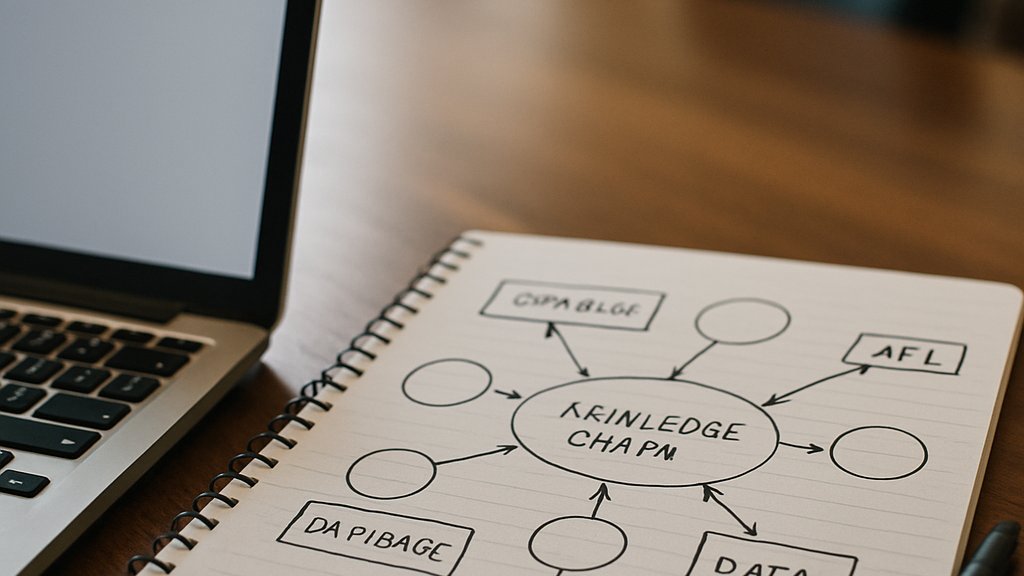
The approach also aligns with inductive reasoning principles. Each new fact generalizes patterns that guide later extractions. Consequently, reasoning quality improves as the wisdom library expands. The paper argues this progression delivers superior graph intelligence over time.
These mechanics illustrate Knowledge Graph Reasoning performed proactively. However, understanding the supporting theorems clarifies why the authors claim near-zero cache misses. Therefore, we now inspect those proofs.
Core Theorems Unpacked Succinctly
Three formal results anchor the architecture. First, the Byte-Identity Theorem shows deterministic context blocks remain byte-identical until semantics change. Consequently, key-value cache entries survive across user sessions.
Second, the Accumulation Monotonicity Theorem guarantees that resolved interactions never decrease. As the synonym cache learns, more requests bypass the model entirely. Moreover, storage hits grow monotonically.
Third, the Dual-Traversal Ordering Theorem proves that bottom-up comprehension and top-down generation uniquely cover every dependency DAG. This dual view underpins systematic inductive reasoning within typed graphs. Collectively, the theorems justify why Knowledge Graph Reasoning at write time can scale economically.
These proofs sound abstract. Nevertheless, deterministic search components convert math into concrete operations, as the next section explains. This connection ensures theoretical gains translate into production efficiency.
Deterministic Search Mechanics Overview
Traditional RAG pipelines rely on vector similarity. In contrast, Grokers deploys a synonym-cache protocol. The index maps phrases to canonical terms inside finite vocabularies. Additionally, an LM fallback triggers only when the synonym list lacks coverage.
The fallback probability provably converges toward zero. Therefore, most queries resolve through direct table lookups. Such determinism strengthens graph intelligence by avoiding flakey nearest-neighbor retrievals. It also reduces token usage during Knowledge Graph Reasoning because matching happens without embeddings.
Typed graphs gain another advantage. Each node owns a pre-ranked neighborhood that assembles context deterministically. Subsequently, cache keys align byte for byte, maximizing reuse. These engineering details matter greatly for enterprise data workloads, where throughput and auditability reign supreme.
Reliable search undergirds the benefits outlined next. However, advantages exist only if organizations manage change carefully, as we shall see shortly.
Benefits For Enterprise Data
Lower query latency remains the headline win. Furthermore, read operations skip heavy inference almost every time. Enterprises processing millions of repeated forms or invoices can slash cloud spend.
Additional gains include reproducibility. Deterministic assembly supports strict compliance audits common in enterprise data governance. Moreover, typed graphs expose structured lineage, easing debugging.
The paper highlights suitability for domains with recurring patterns. Call-center dialogues, IT tickets, and IoT events meet that description. Consequently, Knowledge Graph Reasoning embedded at ingestion aligns with operational requirements.
- Near-100% key-value cache hits predicted
- Synonym cache fallback probability approaching zero
- Improved graph intelligence through incremental learning
- Reduced cloud spending on tokens and GPUs
These numbers derive from formal analysis, not live benchmarks. Nevertheless, early adopters can validate them in controlled pilots. Meanwhile, professionals can enhance their expertise with the AI Context Engineering™ certification to manage such pilots.
The benefits excite architects. However, operational challenges lurk. The following section reviews those hurdles and proposes mitigations. Careful planning ensures value outweighs risk.
Operational Challenges And Mitigations
Write-time enrichment imposes upfront latency. Consequently, systems with high write volumes must budget GPU capacity. In contrast to RAG, the cost profile flips, demanding new tuning strategies.
Error persistence poses another threat. Incorrect extractions become durable graph content. Therefore, validation workflows and human-in-the-loop reviews remain mandatory. Additionally, typed graphs require disciplined schema evolution to avoid drift.
Storage overhead grows because denormalized attributes replicate information. Nevertheless, compression and pruning policies can curb bloat. Moreover, inductive reasoning can flag redundant facts for removal, sustaining graph intelligence integrity.
These challenges highlight critical gaps. However, emerging solutions are transforming the market landscape. Consequently, comparing Grokers with incumbent architectures clarifies decision factors.
Comparing Grokers With RAG
Retrieval-Augmented Generation dominates current production stacks. RAG fetches documents, embeds them, and feeds chunks to a model per query. Meanwhile, Grokers reverses that flow, embedding knowledge once.
Several contrasts stand out:
- Cost timing: RAG spends tokens each question; Grokers spends at write time.
- Determinism: RAG uses approximate neighbors; Grokers relies on synonym caches.
- Cache reuse: RAG enjoys partial hits; Grokers targets byte-identity hits.
Independent benchmarks remain scarce. Nevertheless, theoretical models suggest Grokers reduces cumulative tokens when read-write ratios exceed roughly ten to one. That threshold often appears inside enterprise data pipelines, especially dashboards and analytic reports.
Knowledge Graph Reasoning within RAG chains still offers flexibility for open domains. In contrast, Grokers thrives in finite vocabularies. Consequently, hybrid deployments may emerge where both coexist. Graph intelligence then benefits from complementary strengths.
These comparisons help teams choose wisely. Subsequently, a practical roadmap enables pilots that surface real metrics.
Roadmap And Practical Steps
Teams should begin with a narrow pilot containing stable dictionaries. Furthermore, instrument every API to log token counts, latency, and cache hit rates. Such observability validates or falsifies theoretical promises.
Next, integrate continuous validation. Automated tests can compare LM extractions against ground truth samples. Moreover, inductive reasoning heuristics can flag anomalies automatically.
Finally, scale gradually. Increment write pools while monitoring storage growth and synonym cache coverage. Consequently, organizations balance cost against benefit carefully. Pursuing the previously linked AI Context Engineering™ certification equips engineers to orchestrate these steps confidently.
These actions offer a pragmatic path forward. Nevertheless, consistent measurements and peer reviews remain essential for community trust. Therefore, we conclude with an overall assessment and call to explore further resources.
Takeaways And Next Moves
Grokers reframes Knowledge Graph Reasoning economics by front-loading comprehension. Typed graphs, inductive reasoning, and deterministic search combine to enhance graph intelligence substantially. Benefits include lower query costs and stronger auditability for enterprise data pipelines.
However, write-time overhead, error persistence, and storage growth demand disciplined governance. Consequently, a phased rollout, continuous validation, and certified talent mitigate these issues.
Leaders now possess a clear decision framework. Investigating reference implementations and engaging with domain certifications will turn theory into impact.
Disclaimer: Some content may be AI-generated or assisted and is provided ‘as is’ for informational purposes only, without warranties of accuracy or completeness, and does not imply endorsement or affiliation.


