

AI CERTs
5 months ago
Why Synthetic Data Generation Pipelines Speed Regulated AI
Boards in regulated industries crave faster AI rollouts yet remain wary of privacy breaches and audit failures. Consequently, many teams now turn to synthetic data generation pipelines to unlock compliant datasets at digital speed. These engineered flows create artificial records that mimic real statistics without exposing personal identifiers. Moreover, the approach supports rare-case amplification, simulation testing, and secure cross-border collaboration. Recent consolidation, new EU mandates, and cautionary research now shape executive decisions around the technology. Therefore, this article examines market trends, regulatory catalysts, pipeline best practices, and competitive dynamics shaping adoption. Along the way, we highlight privacy compliance considerations and model training quality safeguards for leadership teams. Professionals can also upskill through the forthcoming AI Security Level-2 certification linked later in this analysis. First, we track how the market is accelerating.
Synthetic Data Generation Pipelines
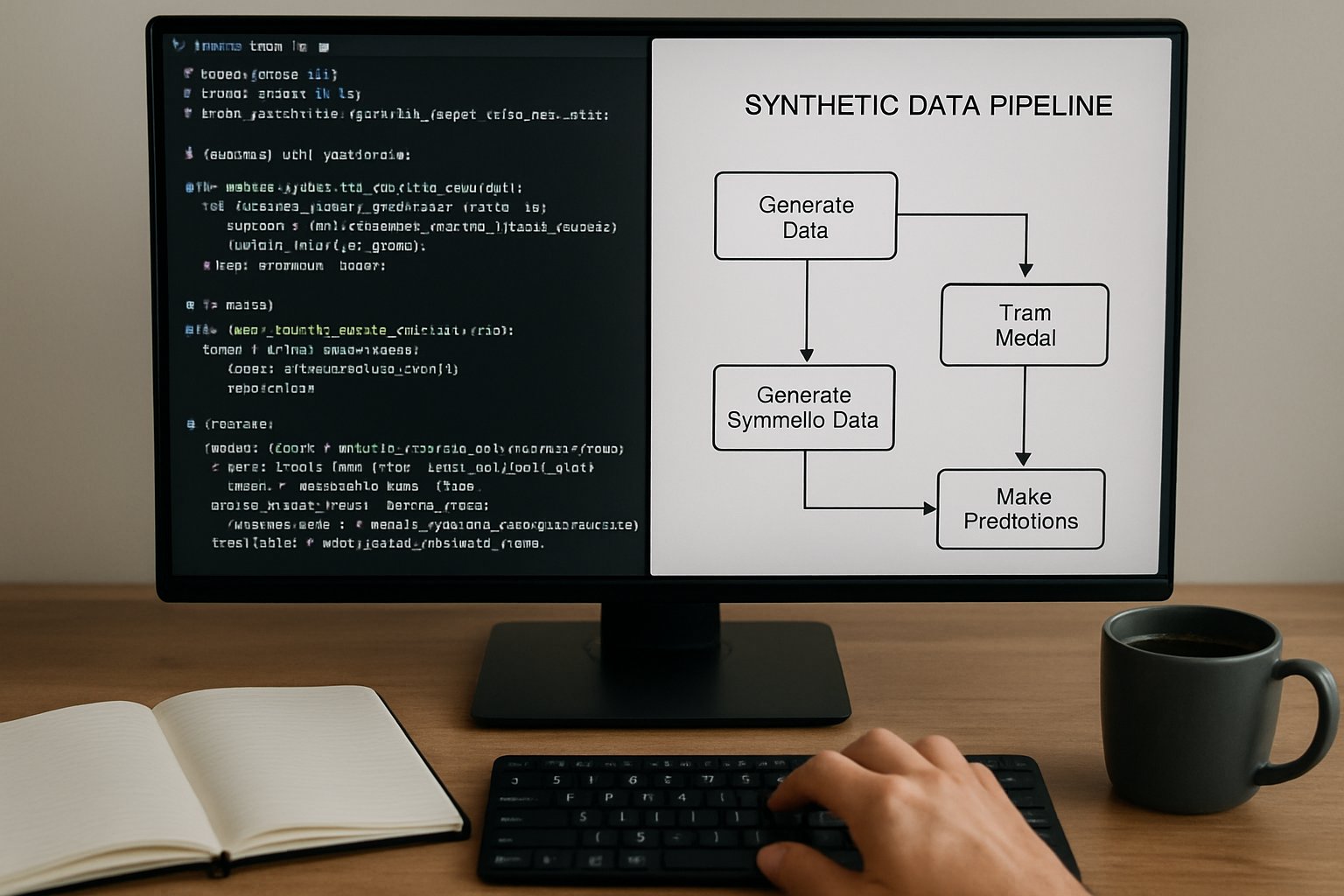
At its core, a synthetic data generation pipeline orchestrates source ingestion, generator training, validation, and documentation. Additionally, modern pipelines mix generative models, physics simulations, and rule engines depending on domain demands. These modular stages enable privacy controls such as differential privacy budgets and strict role-based access. Consequently, practitioners can demonstrate privacy compliance without slowing innovation cycles. In sum, pipelines formalize data governance and quality testing. However, market forces are pushing them beyond experimentation. Let's examine the growth drivers.
Market Momentum Rapidly Accelerates
Global demand for reliable AI datasets fuels explosive market growth. Moreover, Mordor Intelligence pegs the synthetic data market at USD 0.51 B today, rising to USD 2.67 B by 2030. That translates to a staggering 39% compound annual growth rate. Precedence Research and others forecast similar trajectories, although absolute numbers diverge. Meanwhile, venture investors pumped late-stage capital into generator specialists throughout 2024 and 2025. Nvidia’s nine-figure acquisition of Gretel illustrates strategic consolidation around training infrastructure. Consequently, synthetic data generation pipelines now bundle tightly with GPU clouds and simulation services. These numbers highlight surging interest and capital flows. However, regulation is shaping how growth unfolds.
Regulations Transform Data Disclosures
New rules are redefining acceptable data practices. Furthermore, the EU AI Act now mandates public summaries of training datasets, including provenance of synthetic records. Singapore’s PDPC guide prescribes a five-step workflow for re-identification testing and documentation. In contrast, US regulators focus on competition concerns and voluntary audits. Therefore, organisations deploying synthetic data generation pipelines must embed audit logs, metric dashboards, and lineage tables. Such evidence underpins privacy compliance during external reviews. Moreover, teams should publish differential privacy budgets and generator hyperparameters for stakeholder confidence. Compliant pipelines reduce legal exposure and speed approvals. Next, we detail recommended workflow steps.
Pipeline Workflow Best Practices
Effective synthetic data generation pipelines follow eight repeatable stages. Subsequently, each stage mitigates a distinct risk.
- Define purpose, threat model, and regulatory scope.
- Minimize sensitive fields in source data.
- Select generator type for synthetic data generation pipelines.
- Generate synthetic records to balance rare events.
- Test utility, privacy, and detection metrics.
- Document lineage and validate against real datasets.
- Monitor performance drift post-deployment.
Consequently, disciplined execution shortens model training loops and maintains statistical fidelity. These steps underpin privacy compliance and audit readiness. Nevertheless, benefits come with notable tradeoffs.
Benefits And Emerging Risks
Synthetic datasets unlock scale without exposing individuals. Moreover, rare disease or fraud models gain balanced cohorts when powered by synthetic data generation pipelines. Teams also slash data acquisition costs and iteration time. However, re-identification and model collapse remain real threats. Researchers warn that recursive training on synthetic outputs degrades accuracy over generations. Therefore, governance boards should cap synthetic-to-real ratios and refresh sources regularly. When synthetic data generation pipelines lack curation, downstream model training may drift unexpectedly. Nevertheless, rigorous privacy compliance frameworks and validation guardrails can mitigate these downsides. Balanced governance preserves trust and utility. Now, let’s scan the competitive field.
Competitive Landscape And Consolidation
Vendor strategies diverge along vertical specialization and platform breadth. For example, MDClone targets healthcare analytics while Datagen focuses on photoreal perception. Meanwhile, hyperscalers integrate native generators within cloud training suites. Nvidia’s Gretel deal embeds synthetic flows inside Omniverse and CUDA stacks. Consequently, open competition hinges on access to high-performance generators and GPUs. US FTC officials have flagged potential antitrust issues. Professionals can enhance their expertise with the AI Security Level-2™ certification. Competitive bids increasingly bundle synthetic data generation pipelines as part of managed ML contracts. Consolidation raises switching costs yet accelerates standardization. Finally, we consider strategic guidance.
Strategic Outlook For Leaders
Regulated enterprises should map roadmap milestones against evolving disclosure deadlines. Additionally, teams must budget for privacy compliance audits and continuous evidence collection. Leaders ought to mix at least 30% real data into each model training cycle. Moreover, they should watermark synthetic rows to trace feedback loops. Subsequently, procurement teams can demand transparent privacy metrics and third-party attestations. Therefore, investment in observability dashboards delivers early warnings of performance drift. These actions align innovation speed with emerging oversight expectations. Disciplined strategy secures trust and market advantage. The key insights follow below.
Synthetic data generation pipelines now sit at the center of regulated AI innovation. They expand datasets, accelerate model training, and reduce disclosure risk when designed correctly. However, privacy compliance, provenance, and model-quality safeguards remain non-negotiable. Market growth, new regulations, and platform consolidation will intensify scrutiny over the next two years. Therefore, leaders should operationalize best-practice workflows, maintain real-data anchors, and demand transparent metrics from suppliers. Moreover, upskilling through the AI Security Level-2™ certification strengthens governance capabilities. Act now to fuse speed, safety, and strategic advantage in your next AI deployment.
Disclaimer: Some content may be AI-generated or assisted and is provided ‘as is’ for informational purposes only, without warranties of accuracy or completeness, and does not imply endorsement or affiliation.


