

AI CERTS
2 hours ago
AI Real Estate Surge Revives Manhattan Leasing Market
Moreover, the label captures how data-hungry models influence air-flow plans, power loads, and amenity mixes. Colliers estimates that AI tenants signed roughly 0.67 million square feet during Q1 2026 alone. Meanwhile, vacancy for top Manhattan offices dropped near 13.5%, according to JLL figures.
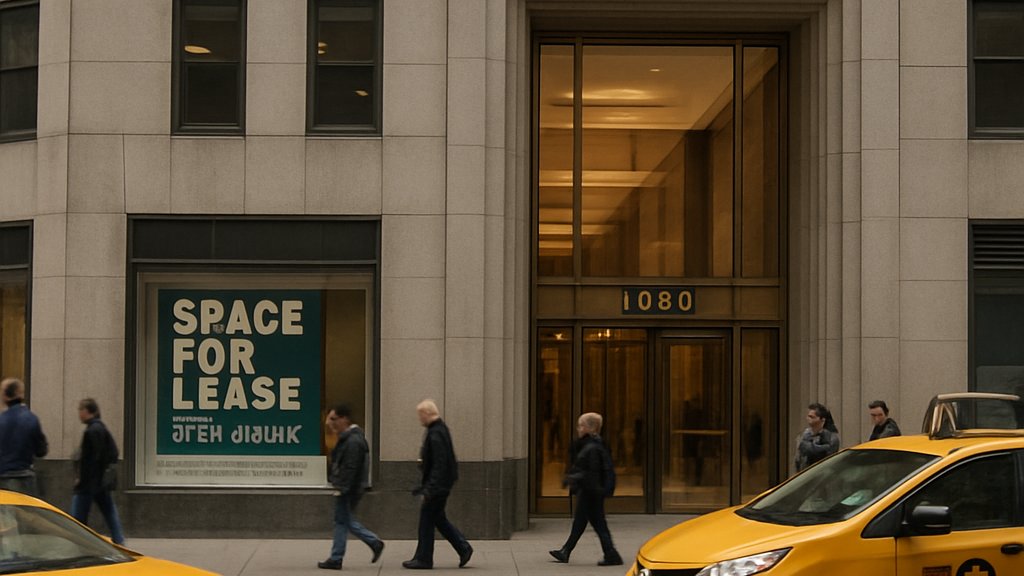
The shift signals more than statistics; it hints at a durable transformation in commercial leasing psychology. Therefore, this article explores the numbers, players, opportunities, and risks behind the AI Real Estate surge. Readers will also learn how certifications can position professionals for the new hybrid skill set. Let us examine how robots and rents now share the same headlines.
AI firms drive demand
JLL records show AI firms executed 34,500-square-foot deals on average during early 2026. In contrast, pre-2025 technology tenants averaged only 16,600 square feet. Such scaling underscores the aggressive hiring roadmaps now guiding data scientists, sales, and support teams. Consequently, AI Real Estate momentum dwarfs other tech subsectors within Manhattan offices today.
Clay’s 163,095-square-foot commitment at 11 Madison Avenue exemplifies the appetite. Moreover, Harvey AI nearly doubled its footprint to 185,326 square feet at One Madison. Anthropic may soon secure 466,000 square feet, potentially dominating an entire Hudson Square tower. These headline leases give marketing leverage to landlords courting additional AI firms.
In summary, bigger tenants translate into faster absorption for trophy properties. However, concentration within premium addresses raises exposure to a narrow corporate cohort. Next, we compare rebound indicators across key metrics.
Manhattan offices rebound fast
Colliers reports technology leasing reached 6.54 million square feet in 2025, up 71.4% year on year. Furthermore, AI leases alone captured 0.79 million square feet that year. Subsequently, Q1 2026 added another 0.67 million square feet from the same cohort. Vacancy across Class A Manhattan offices slid as trophy space disappeared from listings.
In contrast, Cushman & Wakefield tracks rising asking rents even while concessions remain elevated. The commercial leasing pulse now beats fastest in Midtown South corridors. Weighted rental abatement now averages 13.3 months, and tenant improvement allowances approach $131.70 per square foot. Nevertheless, landlords accept these giveaways to lock long-term creditworthy AI firms.
Critically, AI Real Estate absorption now accounts for more than one-third of tech take-up. The AI Real Estate phenomenon thus redefines landlord pricing power. Together, falling vacancy and incentive creativity illustrate a complex but improving market. Our next section dissects those metrics for deeper context.
Leasing metrics in focus
Data discrepancies complicate narrative building. For example, Colliers tags 0.67 million square feet of AI demand during Q1, while JLL sees 0.415 million. Moreover, methodology differences include whether renewals and flex suites qualify. Therefore, investors should review raw data before generalizing.
Still, every provider agrees on two points. First, deal size is growing rapidly, doubling within twelve months. Second, average lease terms remain shorter, often three to five years with rich expansion rights. Consequently, landlords must model cash flows against potential startup expansion or contraction.
- Average AI deal size: 34,500 SF
- Class A vacancy: 13.5%
- Rental abatement: 13.3 months
- Tenant improvement: $131.70 per SF
These indicators confirm that the trend now shapes leasing mathematics. However, building owners also confront new operational demands, discussed in the next section.
Landlord strategies and risks
Trophy landlords emphasize resilience features such as redundant fiber and high-density cooling. Additionally, they court AI firms with prebuilt collaboration labs and rooftop generators. Meanwhile, legal teams craft option-laden documents granting swift floor expansions. Such flexibility mirrors venture funding cycles and unpredictable headcount growth.
Nevertheless, exposure grows when few tenants occupy large slices of revenue. Evan Margolin, JLL, warns the pattern mimics the dot-com era exuberance. In contrast, SL Green’s Marc Holliday argues the city stands to benefit net. Both views highlight that commercial leasing success still depends on sustained office demand.
Ultimately, balanced underwriting and aggressive amenity packages appear essential. Next, we examine how startup expansion influences those underwriting models.
Startup expansion space play
High-growth algorithms require people, not only servers. Consequently, teams scale marketing, compliance, and customer success faster than model training budgets. Harvey AI hired dozens of salespeople within weeks of closing its Series D financing. Therefore, the firm secured early rights to contiguous space to avoid disruptive relocations.
Landlords accommodate by inserting phased rent commencements tied to hiring triggers. Moreover, expansion options become marketable to venture investors evaluating operational agility. Such deal structures typify AI Real Estate playbooks across Manhattan offices. Meanwhile, startup expansion pushes dense utilization ratios, stressing elevators and restrooms.
In summary, flexible footprints underpin growth but magnify credit risk. The following outlook section weighs that balance against wider office demand.
Outlook for office demand
Forecasts diverge almost as widely as the data behind them. Colliers expects trophy rent growth of 6% during 2026 if AI Real Estate leasing continues. Meanwhile, JLL cautions that venture funding volatility could stall hiring later in the year. Nevertheless, most brokers agree that Manhattan offices will outperform other US gateways.
Investors watching Manhattan offices understand that supply pipelines remain muted. Moreover, Brooklyn waterfront conversions already pitch AI Real Estate lofts with upgraded fiber loops. Consequently, office demand could spill into adjacent boroughs if talent preferences align. Future quarters will reveal whether momentum survives upcoming capital market tests.
These projections underscore both upside and fragility. Let us conclude by outlining steps professionals can take now.
AI Real Estate has recast New York’s recovery script. Moreover, AI firms now anchor marquee towers, shrinking vacancy and boosting rents. Nevertheless, concentration risk and short lease terms demand vigilant underwriting and adaptive design. Professionals who master both data science language and commercial leasing fundamentals will command premium roles. Consequently, many are formalizing skills through credentials like the AI Real Estate Certification designed for property strategists. Equip yourself today and lead the next property transformation.
Disclaimer: Some content may be AI-generated or assisted and is provided ‘as is’ for informational purposes only, without warranties of accuracy or completeness, and does not imply endorsement or affiliation.


