

AI CERTS
1 hour ago
Upriver’s $14M Bet on Agentic AI Data Engineering
Therefore, modern architects seek platforms that merge observability, lineage and execution. The company enters that race with an “AI-native” Data Context Layer running coordinated agents. Meanwhile, adjacent incumbents like Monte Carlo and Snowflake widen their own offerings. This article unpacks the market forces and evaluates Upriver’s emerging approach to AI Data Engineering.
Data Market Challenges Persist
Gartner’s 2026 survey exposes a harsh pattern. Poor data quality, unclear semantics and brittle orchestration derail ambitious algorithms. Moreover, 50 percent of generative pilots never cross the production gap. Consequently, wasted budgets and reputational hits follow.
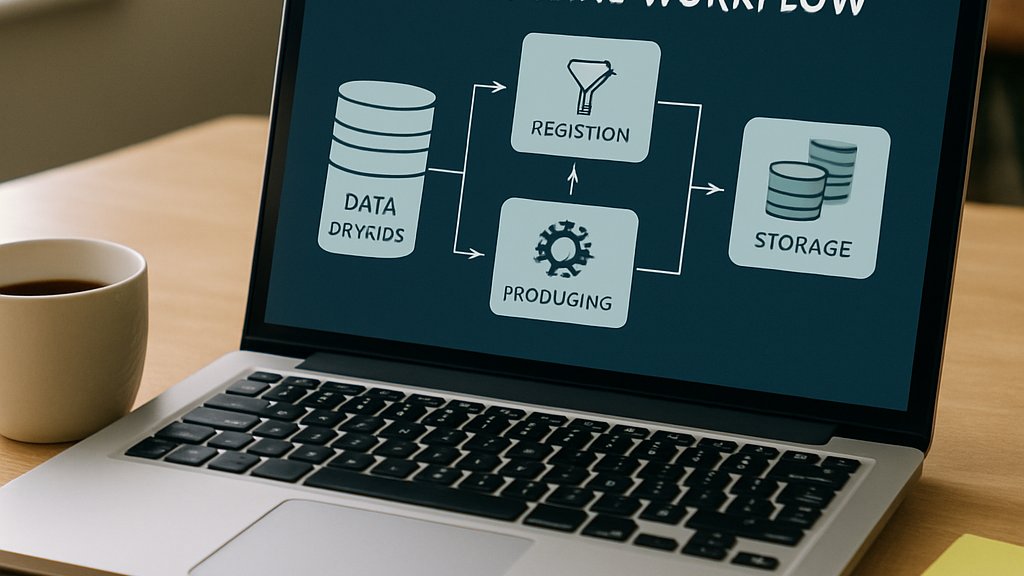
Analysts link these failures to the hidden labor inside traditional data pipelines. AI engineering teams still write bespoke transformations, manual tests and fragile dependency charts. In contrast, business executives expect immediate, trustworthy insights. Therefore, pressure mounts for leaner, automated operations.
Practitioners now view robust monitoring and lineage as non-negotiable. However, bolt-on dashboards alone cannot update schemas or fix broken feeds. Enterprise appetite grows for platforms that combine observability with execution. That convergence defines the next wave of AI Data Engineering.
Data chaos continues to cripple AI ambitions. Nevertheless, rising expectations demand decisive remediation.
The funding boom for integrated solutions sets the stage for the startup’s recent raise.
Seed Funding Momentum Grows
Founded in 2024 by Ido Bronstein and Omri Lifshitz, Upriver claims an “agentic” remedy. On June 8, investors Valley Capital Partners and Hetz Ventures led a $14 million seed round. Subsequently, the startup aims to double headcount and accelerate go-to-market. The round highlights investor faith that AI Data Engineering automation can unlock dormant value.
Early traction includes enterprise accounts such as Unity, DMGT and Nimble. Moreover, coverage cites roughly twenty employees split between Israel and the United States. The firm vows to integrate with Snowflake, Databricks and other infrastructure tooling without forcing migrations.
- Reported customer productivity lift: 60 percent (vendor statement)
- Market size for data observability 2026: $3.5 billion (Mordor estimate)
- Projected CAGR: high double digits through 2031
Additionally, the founders position their platform as a persistent knowledge graph rather than another alert stream. This narrative appeals to AI engineering leads exhausted by scattered spreadsheets and tribal lore.
Capital, customers and context form the startup’s initial edge. However, execution against complex requirements remains unproven.
The next section examines how the Data Context Layer intends to close that gap.
Building Data Context Layer
Traditional observability platforms surface incidents yet leave remediation to humans. Upriver instead constructs a Data Context Layer that agents can query and update. Consequently, the system stores schema, lineage, usage patterns and quality metrics within a unified graph.
Armed with that knowledge, autonomous agents generate pull requests, patch SQL, and schedule new data pipelines when issues appear. Moreover, each action passes through human-in-the-loop approval, audit logging and regression testing. Such automation aligns with strategic AI Data Engineering objectives inside resource-constrained teams.
Therefore, engineers gain a closed feedback loop: detection, suggestion and verified repair operate inside one workflow. Supporters argue that this approach represents the logical evolution of AI Data Engineering, where metadata is both input and actuator. In contrast, skeptics warn that uncontrolled writes could amplify errors.
Upriver also emphasises extensibility. Integrations span orchestrators, warehouses and infrastructure tooling plus model ops dashboards, reducing friction for mixed stacks. Furthermore, the company publishes SDKs so teams can craft domain-specific validation checks.
A persistent context elevates agents from observers to doers. Nevertheless, safe automation demands rigorous safeguards.
The following section explores the risks and governance principles behind agentic AI systems.
Managing Agentic Engineering Risks
Despite the promise, agentic workflows introduce operational hazards. Agents that modify production tables may propagate unexpected side effects. Consequently, strict guardrails, version control and rollback plans become essential.
Industry observers note limited independent verification of Upriver’s claims. Meanwhile, competing vendors highlight their own safety records to reassure cautious AI engineering buyers. Therefore, adoption teams must demand proof through sandboxes, red-team exercises and staged deployments.
Another concern involves governance in AI Data Engineering projects. AI regulations increasingly require transparent lineage and explainable decision paths. Upriver states that every agent action receives a cryptographic signature and audit entry. If accurate, that design could satisfy regulators and model ops leaders.
Nevertheless, cost dynamics matter. Autonomous computation cycles can inflate warehouse spend when not tuned. Optimization features, capacity tagging and usage reports help sustain budgets and protect total return.
Agents amplify both speed and risk. Accordingly, enterprise due diligence cannot be optional.
We now shift to the broader competitive field shaping adoption decisions.
Evolving Competitive Landscape Shifts
The data observability segment already hosts well-funded players managing countless data pipelines. Moreover, semantic governance vendors like Collibra and Alation converge toward similar use cases. Cloud giants meanwhile embed native monitors to protect share.
Consequently, differentiation hinges on depth of automation and breadth of infrastructure tooling coverage in AI Data Engineering ecosystems. The startup bets that agentic remediation plus a context layer will outpace alert-centric rivals. Yet incumbents enjoy wider install bases and richer ecosystem incentives.
Analysts anticipate consolidation. Platforms that unify observability, cataloging and model ops may command premium valuations. Therefore, strategic partnerships and open APIs can expand reach without unsustainable sales spend.
Competition pushes every vendor to innovate quickly. Nevertheless, unique architecture remains the company’s clearest weapon.
The workforce angle now deserves attention, because skills gaps often stall modernization programs.
Upskilling The Data Workforce
Technology alone cannot solve chronic delivery problems. Engineers, analysts and governance officers must adopt new mental models. Furthermore, agent oversight, prompt design and validation scripting require blended domain and software fluency.
Professionals can enhance their expertise with the AI Data certification. Moreover, structured programs provide practical labs covering orchestration patterns, lineage design and model ops integration.
Organizations that prioritize continuous learning report faster incident resolution and smoother feature rollouts. In contrast, teams that ignore education often over-provision headcount rather than modernize workflows.
Therefore, leaders should budget for both platforms and people to sustain AI Data Engineering momentum.
Upriver’s seed raise signals investor conviction that autonomous context layers can cure chronic data woes. Moreover, fast-growing observability budgets create room for multiple winners. The startup differentiates through agent orchestration, persistent knowledge graphs and deep infrastructure tooling hooks. Nevertheless, success hinges on rigorous governance, demonstrable ROI and industry trust. Enterprises should pilot carefully, demand transparent metrics and nurture internal expertise.
Consequently, certifications and continuous education will reinforce safe adoption. Interested readers can explore additional resources and pursue credentials to sharpen competitive advantage. Act now to evaluate platforms and enroll in recognised programs that future-proof your data leadership.
Disclaimer: Some content may be AI-generated or assisted and is provided ‘as is’ for informational purposes only, without warranties of accuracy or completeness, and does not imply endorsement or affiliation.


