

AI CERTS
1 month ago
UN Reviews AI Peacekeeping Drones After Deadly DRC Escalation
Data from ACLED show more than thirty drone or air strikes in February 2026 alone.
Meanwhile, the 11 March strike in Goma killed UNICEF's Karine Buisset, underscoring humanitarian vulnerability.
Therefore, understanding AI Peacekeeping Drones is no longer optional for policymakers or field commanders.
AI Peacekeeping Drones Impact
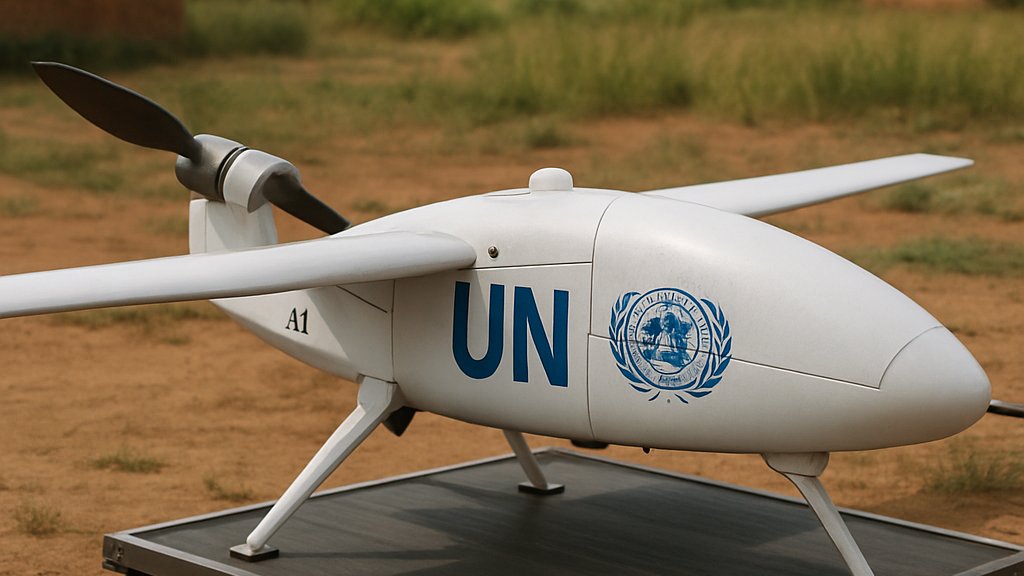
AI Peacekeeping Drones promise precision strikes and real-time intelligence for stretched missions like MONUSCO.
Moreover, autonomous navigation could reduce pilot fatigue and enable longer surveillance flights over remote terrain.
UN technical advisers claim such platforms enhance conflict monitoring by combining electro-optical sensors with satellite links.
Nevertheless, the same capabilities magnify harm when targeting rules falter or when GPS jamming distorts coordinates.
In contrast, traditional helicopters require larger crews, riskier landings, and costly maintenance cycles.
Consequently, governments across Africa are shifting procurement budgets toward AI Peacekeeping Drones and loitering munitions.
Yet, every technical gain brings fresh ethical dilemmas, especially inside densely populated cities.
These trade-offs frame the UN's current assessment exercise.
Precision benefits coexist with escalating civilian risks.
However, deeper context is essential before endorsing widespread rollouts.
Therefore, we turn to evolving strike data.
Drone Escalation Overview DRC
ACLED recorded thirty plus air and drone strikes during February 2026, the highest monthly total on record.
Moreover, repeated kamikaze attacks targeted Kisangani's Bangoka airport, damaging runways and fuel storage.
Subsequently, rebel group M23 claimed responsibility for several incidents, yet the government issued competing statements.
GPS jamming reports emerged from urban Goma, complicating humanitarian airlifts.
- February 2026: 30+ drone or air strikes recorded by ACLED.
- 11 March 2026: Drone strike killed UNICEF staffer Karine Buisset in Goma.
- UN humanitarian appeal for US$1.4 billion launched on 28 January 2026.
UNICEF staffer Karine Buisset died on 11 March after an alleged UAV strike hit a residential building.
Meanwhile, MONUSCO leaders briefed the Security Council about expanding aerial warfare and reduced civilian access to aid.
Conflict monitoring teams linked the February peak to both FARDC CH-4 sorties and insurgent FPV drones.
Consequently, analysts fear regional spill-over if cross-border drone hubs remain active.
Statistics confirm a sharp, sustained escalation.
Nevertheless, casualty attribution remains deeply contested among actors.
Next, we assess the human cost driving protection debates.
Civilian Protection Concerns Rise
Nada Al-Nashif warned that drones, artillery, and rockets now strike crowded neighbourhoods across eastern Congo.
Moreover, OHCHR documented 2,560 abuses impacting 6,760 victims between October 2025 and February 2026.
Surveillance footage reviewed by UN experts showed loitering munitions circling marketplaces minutes before detonation.
In contrast, FARDC spokespeople claim improved precision thanks to AI-assisted targeting modules.
UNICEF's outrage after Buisset's death illustrates the reputational damage AI Peacekeeping Drones can cause when mistakes happen.
Additionally, humanitarian flights face cancellation every time unidentified UAVs enter civilian airspace.
Consequently, displacement camps near Goma report dwindling food and medical stocks.
Conflict monitoring groups urge immediate independent investigations and better deconfliction channels.
Civilian harm jeopardises mission legitimacy.
Therefore, UN officials emphasise stronger oversight before further deployments.
How is the organisation addressing these warnings?
UN Monitoring Response Measures
MONUSCO employs radar arrays, acoustic sensors, and patrol cameras to map drone flight patterns.
Furthermore, analysts integrate satellite imagery with frontline reports for comprehensive surveillance pictures.
New dashboards fuse AI algorithms with manual coding to flag unusual loitering behaviour within minutes.
Nevertheless, budget pressures limit hiring of specialised data scientists and electronic warfare technicians.
The mission also shares anonymised coordinates with humanitarian pilots for route planning.
Additionally, Member States renewed Resolution 2808, extending troop ceilings and requesting updated quarterly drone briefings.
Professionals can enhance expertise through the AI Project Manager™ certification.
Consequently, staff gain project leadership skills for future AI Peacekeeping Drones rollouts.
UN tools improve situational awareness despite gaps.
However, technical hurdles persist without sustained investment.
Understanding those tools requires basic technical literacy.
Technology And Tactics Explained
Loitering munitions blend surveillance capability with explosive payloads, acting as disposable cruise missiles.
Meanwhile, FPV drones deliver sub-kilogram charges against vehicles by exploiting live video feeds.
CH-4 and TAI Anka systems, operated by FARDC, carry larger warheads and remain aloft for fifteen hours.
Furthermore, AI Peacekeeping Drones integrate object recognition to distinguish uniforms from civilian clothing under cloud cover.
However, algorithms still misclassify objects when training data omit regional building types.
Spoofing attacks can feed false coordinates, tricking return-to-base routines into landing across borders.
Consequently, operators must verify targets through layered conflict monitoring procedures before authorising strikes.
Africa's varied topography further complicates radio line-of-sight, forcing reliance on vulnerable satellite relays.
Technical limitations undermine absolute precision claims.
Therefore, tactical doctrine must evolve alongside code audits.
Divergent stakeholder views illustrate this tension.
Stakeholder Perspectives Diverge Sharply
Government officials hail successful strikes that allegedly neutralised M23 commanders without troop casualties.
In contrast, humanitarian NGOs cite rising displacement after each drone offensive.
Moreover, regional analysts warn that Rwanda's suspected involvement could internationalise the conflict.
Private contractors argue AI Peacekeeping Drones offer cost efficiency for cash-strapped African militaries.
ACLED researchers dispute top-down casualty claims, pointing to surveillance gaps and limited site access.
Subsequently, media narratives vary by language, ownership, and proximity to the front lines.
Nevertheless, all parties agree that transparency remains dangerously low.
Africa watchers fear an escalating arms race if oversight fails.
Opinions diverge along security, legal, and humanitarian axes.
However, converging on accountability standards is still possible.
That possibility depends on future policy choices.
Policy Paths Forward Possible
Experts propose an independent drone registry administered by MONUSCO and regional blocs.
Additionally, AI Peacekeeping Drones could upload encrypted flight logs to cloud servers for post-strike audits.
Investing in open-source incident mapping platforms would also democratise access to strike data.
Meanwhile, the UN may request additional budget lines for electronic warfare defences protecting humanitarian corridors.
Regional diplomacy could establish no-fly buffer zones over displacement camps using geofencing codes.
Consequently, civilian aircraft would resume vital deliveries without constant diversions.
Furthermore, capacity-building programs should train Congolese engineers to maintain verification hardware locally.
Professionals managing these initiatives will benefit from AI Peacekeeping Drones literacy and robust project skills.
Pragmatic reforms blend technology oversight with diplomatic safeguards.
Therefore, implementation speed will determine success on the ground.
Eastern Congo shows technology racing ahead of governance as autonomous drones reshape conflict dynamics.
However, UN data, expert warnings, and field reports confirm that precision promises coexist with new humanitarian threats.
Consequently, balanced solutions must combine rigorous monitoring, transparent investigations, and regional dialogue.
Professionals can drive that balance by mastering project leadership, ethics, and emerging drone standards.
Explore the linked certification to deepen skills and contribute to safer skies over Africa.
Timely action will determine whether future sorties protect lives or prolong suffering.
Disclaimer: Some content may be AI-generated or assisted and is provided ‘as is’ for informational purposes only, without warranties of accuracy or completeness, and does not imply endorsement or affiliation.


