

AI CERTS
60 minutes ago
Rumors and Reality in AI Drug Discovery
This article examines the rumor, the surrounding financial context, and the scientific realities shaping next-generation therapeutics. Additionally, we outline skill pathways and certifications helpful for professionals navigating model-driven pharma careers. Readers will gain an evidence-based view of whether buzz around Wang signals an imminent industrial pivot.
Market Momentum Builds Fast
Global estimates peg the 2026 AI-enabled drug discovery segment between $2.4 billion and $6.6 billion. Moreover, compound annual growth forecasts often exceed 25 percent, reflecting sustained interest from pharmaceutical strategists. Isomorphic Labs, Insilico Medicine, and Generate Biomedicines have announced headline partnerships worth hundreds of millions each. Consequently, observers view 2026 as a tipping point for healthcare AI integration throughout research pipelines.
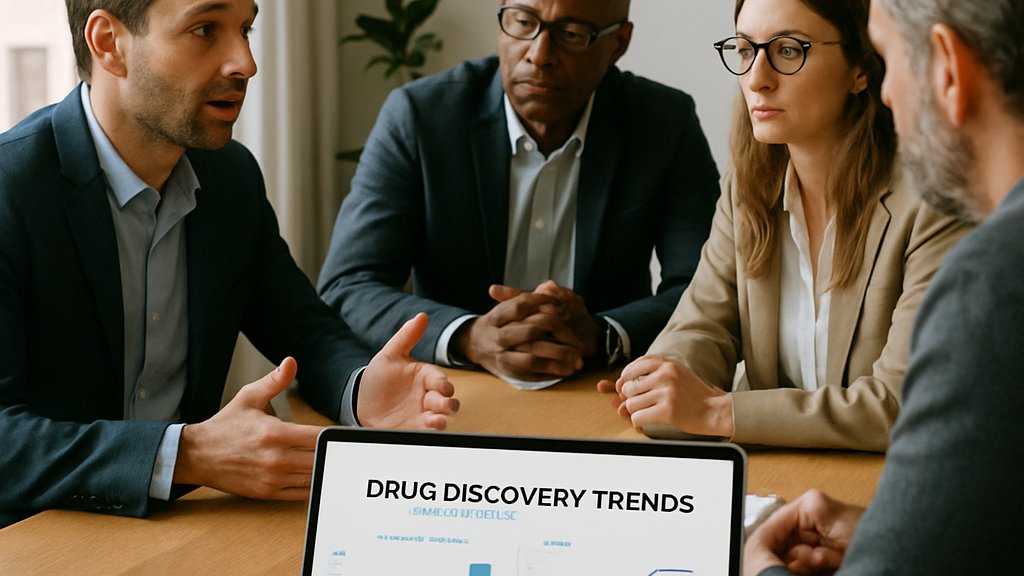
Eli Lilly’s recent $2.75 billion expansion with Insilico Medicine illustrates pharma’s willingness to pay for algorithmic insights. Meanwhile, OpenAI markets GPT-Rosalind, a life-sciences tuned model that accelerates structure prediction and toxicity filtering. These moves signal rising confidence that model-driven pharma workflows can shorten clinical timelines and cut attrition. However, veterans caution that wet-lab confirmation still determines ultimate success in the clinic.
The sector’s financial signals appear unmistakably bullish. Nevertheless, excitement alone cannot verify startup rumors, which our next section addresses.
Rumor Around Miles Wang
Anonymous posts claim Miles Wang is holding venture talks for a stealth company focused on AI Drug Discovery. Numbers as high as a $2 billion pre-money valuation circulate without supporting term sheets or regulatory filings. In contrast, reputable outlets like Reuters and Bloomberg remain silent, and no Delaware registration lists Wang as founder. OpenAI’s press team has also issued no comment concerning employee spin-outs.
Furthermore, Wang’s public record shows only peer-reviewed research in reinforcement learning and protein modeling. His recent FrontierScience benchmark paper earned citations but mentions no corporate intent. Therefore, responsible analysts classify the startup launch story as unverified gossip until primary evidence emerges. Regulatory documents, founder statements, or lead-investor confirmations would shift that assessment quickly.
For now, the rumor remains speculative. Consequently, attention turns to the technologies that could justify such valuations if the company materializes.
Technology Driving New Pipelines
Generative models now propose drug-like molecules, rank binding affinity, and predict off-target toxicity within hours. Moreover, structure prediction tools derived from AlphaFold accelerate target pocket exploration for difficult proteins. Closed-loop robotic labs then synthesize and assay promising candidates, feeding fresh data back into models. Consequently, AI Drug Discovery workflows shorten the design-make-test-analyze cycle across oncology, neurology, and rare diseases.
Healthcare AI teams increasingly integrate foundation models with graph neural networks for multitask activity prediction. In contrast, traditional high-throughput screening still demands vast reagent budgets and longer timelines. Therefore, cost-conscious biotechs view model-driven pharma strategies as essential for competitive survival. Yet, reviewers remind executives that biological complexity can outwit even the cleanest codebase.
Key capabilities underpinning modern platforms include:
- Generative design engines producing novel scaffolds under patent-free space.
- Protein-ligand docking accelerated by transformer models and GPU clusters.
- ADMET classifiers reducing late-stage toxicity surprises.
- Automated synthesis robots creating iterative compound libraries overnight.
Collectively, these tools enable AI Drug Discovery programs to iterate faster than legacy wet-lab centric workflows.
Technological convergence explains the sector’s swelling valuations. However, capital availability determines which labs translate code into clinical molecules, a point explored next.
Investment And Venture Talks
VC databases list more than 40 financings in AI-first biotech since early 2024. Moreover, several Series B rounds crossed the $200 million mark, indicating investor appetite for scale. Lightspeed, Thrive, and GV frequently appear in cap tables alongside strategic pharma vehicles. Consequently, rumors involving Lightspeed and Wang gained traction despite lacking concrete paperwork.
Independent analysts note that venture talks often precede legal incorporation by several months. Therefore, the absence of records today does not entirely preclude an ongoing fundraising process. Nevertheless, a claimed $2 billion valuation without published data appears unusually optimistic for a pre-seed startup launch. Investors typically reserve such marks for companies with validated platforms or late-stage clinical assets.
Consequently, many market watchers adopt a wait-and-see posture on the Wang rumor. Meanwhile, capital continues flowing toward model-driven pharma ventures demonstrating reproducibility benchmarks.
Funding remains available, yet evidence still drives valuations. Subsequently, we examine the scientific hurdles that could temper exuberant forecasts.
Challenges Temper Investor Optimism
Wet-lab validation gaps persist, with many in-silico hits collapsing during animal studies. Moreover, proprietary datasets create reproducibility issues that regulators increasingly scrutinize. Peer reviewers often call for uncertainty quantification and transparent model documentation before clinical testing. In contrast, black-box approaches can slow regulatory clearance, extending cash burn.
Consequently, many boards demand hybrid teams combining machine-learning scientists and veteran pharmacologists. Such teams can flag synthetic feasibility issues early, saving time and budget. Additionally, they build credibility with cautious regulators overseeing safety standards. Therefore, any credible AI Drug Discovery startup must demonstrate rigorous wet-lab partnerships from day one.
Risks remain high, yet disciplined science mitigates many setbacks. We now explore how professionals can prepare to add such discipline to future teams.
Skills And Certification Pathways
Talent shortages persist across cheminformatics, structural biology, and machine-learning engineering. Furthermore, cross-disciplinary fluency between code and bench science often distinguishes successful hires. Professionals can enhance expertise through the AI Pharma™ certification, covering model evaluation, regulation, and lab integration. Consequently, candidates gain vocabulary to communicate with both medicinal chemists and data scientists.
Hiring managers also seek experience deploying healthcare AI pipelines on compliant cloud environments. Therefore, familiarity with audit trails, encryption, and GxP guidelines boosts employability. Additionally, soft skills like storytelling and stakeholder alignment remain crucial during venture talks and board updates. Model-driven pharma organizations reward staff who translate complex metrics into clear go-or-no-go decisions.
Skill development closes the validation gap facing many AI Drug Discovery teams. Subsequently, we assess near-term market prospects for those skills.
Outlook For Sector Growth
Market analysts project double-digit growth for AI Drug Discovery through 2030, even under conservative scenarios. Moreover, strengthening cloud infrastructure lowers entry barriers for new model shops worldwide. In contrast, macroeconomic tightening could compress valuations temporarily, as seen in other tech subsectors. Nevertheless, pharma’s need for pipeline renewal provides a structural demand floor beyond venture cycles.
Consequently, professionals with validated skills and certifications appear well positioned regardless of Wang’s startup launch outcome. Industry hiring surveys already list healthcare AI fluency among top criteria for R&D leadership roles. Therefore, continued education offers a hedge against rumor-driven volatility. AI Drug Discovery remains an enduring theme within digital health roadmaps.
Growth drivers outnumber cyclical headwinds today. Consequently, the field appears poised for sustained expansion over the next decade.
Rumors may fade, yet disciplined science keeps AI Drug Discovery progress on schedule. Moreover, sustained investment and growing cloud access imply that drug discovery efficiency will keep improving. In contrast, founders lacking wet-lab proof will struggle to justify lofty headlines. Consequently, readers should balance social chatter with verifiable milestones before adjusting career or funding strategies. Professionals aiming to lead future AI Drug Discovery teams can deepen credentials through the AI Pharma™ certification. Therefore, seize that learning opportunity today and position yourself for the next wave of data-driven drug discovery breakthroughs.
Disclaimer: Some content may be AI-generated or assisted and is provided ‘as is’ for informational purposes only, without warranties of accuracy or completeness, and does not imply endorsement or affiliation.


