

AI CERTS
1 hour ago
Robot Coding Agents Deliver Contract-Grounded Behavior Trees
Why Contracts Really Matter
Historically, coding agents hallucinated skills missing on robots. Consequently, supervisors faced dangerous invalid calls. Contract files shift authority back to the hardware. An MCP server exposes the approved skill library, parameter types, and allowed behavior tree operators. Therefore, Robot Coding Agents request this contract before any synthesis begins. Moreover, the contract enables automatic validation. Generated trees must match operator grammar and skill signatures. Anything non-conforming gets rejected at the gate, preventing risky uploads. These guardrails drastically cut hallucinations. Subsequently, we explore how trees embody that safety.
Inside Modern Behavior Trees
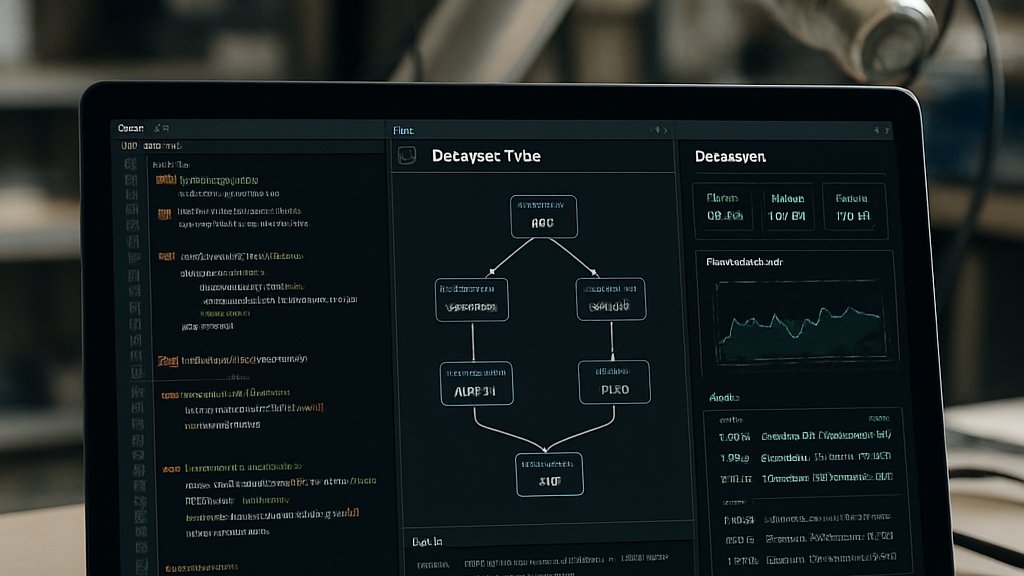
Behavior trees provide hierarchical, reactive control. Each node either executes a skill, checks a condition, or controls flow. Sequence, selector, and decorator patterns encourage modular reuse. Consequently, small updates never break unrelated branches. The contract lists permitted node types. Robot Coding Agents compose these nodes into complete plans. For example, a Move-Pick-Place tree includes recovery decorators that retry motion failures. Furthermore, engineers can visualize execution traces for quick debugging. Clear structure improves explainability for regulators. Meanwhile, the MCP server powers this composition workflow.
MCP Server Architecture Explained
The MCP server acts like a capability registry. It returns JSON schemas describing skills, parameters, and optional rootstock templates. Additionally, it tracks versions to guard against drift. Robot Coding Agents query the MCP endpoint using standard HTTP calls. During experiments, agents posted a /model-context query and received the contract in seconds. Consequently, latency from contract receipt to valid tree averaged only nine seconds. This speed meets many deployable robotics timing budgets.
Moreover, security analysts warn about context poisoning through compromised MCP servers. Governance layers must authenticate callers and sign contracts digitally. Overall, the MCP server standardizes reliable context delivery. Next, we review experimental evidence supporting the design.
Key Experimental Results Overview
The study evaluated two language models across 496 tasks. Core60 and Lang50 suites provided 440 simulations, while 56 trials ran on a Panther rover. Sonnet 4.6 achieved 98% Valid@1 and 93% task success in Core60 with the basic interface. Meanwhile, Gemma4:31b climbed from 50% to 83% success when rootstock templates were enabled. Furthermore, tree structures were always syntactically valid when Sonnet used contracts. Gemma produced 90% valid trees under the same constraints. The results confirm that smaller models benefit most from structural guidance.
- Sonnet M-Core: 100% valid, 97% success
- Gemma M-Core: 90% valid, 83% success
- Average tree synthesis latency: 5-10 seconds
Consequently, contract grounding improves reliability without heavy computation overhead. These numbers highlight tangible performance gains. However, benefits extend beyond raw success rates.
Benefits For Deployable Robotics
Safety tops the benefit list. Contract-validated trees prevent robots from executing unapproved motions. In contrast, prompt-only baselines lack such enforcement. Furthermore, inspectors can audit trees offline, satisfying emerging compliance rules. Behavior tree modularity aligns with functional safety frameworks like IEC 61508. Therefore, Robot Coding Agents accelerate certification readiness. Natural language control simplifies operator training, reducing the need for bespoke teach pendants.
Latency remains acceptable for warehouse, hospital, and field applications. Moreover, the approach scales to fleets because contracts travel with each robot. Engineers can validate skills through the AI Developer™ certification. Consequently, enterprises reduce integration cycles and labor costs. Together, these gains speed deployment at scale. Nevertheless, several hurdles remain before universal adoption.
Key Challenges And Risks
Contract quality dictates outcome quality. Poorly specified parameter ranges still misguide coding agents. Moreover, rootstocks can restrict flexibility, causing never-valid trees for novel tasks. Security researchers flag MCP attack surfaces and potential supply-chain poisoning. Consequently, robust authentication, signing, and monitoring become mandatory. Token overhead also grows when contracts expose large skill libraries. Scope limitations affect long-horizon autonomy. The paper evaluates single-episode tasks only, leaving continuous planning untested. These gaps motivate active community efforts. Subsequently, future work seeks broader capabilities.
Future Work Roadmap Ahead
Authors plan extended trials with dynamic task sequences. Furthermore, they will integrate online replanning inside behavior trees. Open benchmarks may include pick-and-place plus inspection loops lasting several hours. Contract authoring tools like Pact and Delegation Contract will mature. Consequently, non-experts might generate contracts via graphical wizards. Meanwhile, Robot Coding Agents will ingest richer sensory feedback for adaptive control. Natural language control interfaces could accept spoken corrections mid-mission.
Collaborative fleets of Robot Coding Agents could coordinate through shared cloud contracts. Finally, cross-vendor standardization of MCP server schemas remains crucial. Focused collaboration can address these roadmap goals. Therefore, the field advances toward trustworthy autonomous systems.
Contract-grounded synthesis marks a turning point for robotics development. Robot Coding Agents translate human intent into validated behavior trees within seconds. Consequently, success rates climb while safety audits simplify. An MCP server delivers authoritative context, and deployable robotics reap immediate rewards. Nevertheless, contract quality, security, and long-horizon planning still need research. Engineers should follow evolving standards. They can also gain practical skills via the AI Developer™ certification. Adopt these tools early, and shape the next generation of autonomous systems.
Disclaimer: Some content may be AI-generated or assisted and is provided ‘as is’ for informational purposes only, without warranties of accuracy or completeness, and does not imply endorsement or affiliation.


