

AI CERTS
1 week ago
Open Source AI Projects Battle Rising “AI Slop” Crisis
Furthermore, it highlights voices from frontline maintainers and platform executives. Meanwhile, developer overload now threatens volunteer retention rates. Readers will learn why simple volume metrics obscure deeper structural stress. Finally, we outline pragmatic steps developers can adopt today. Effective governance will decide whether collaborative software survives the present turbulence.
Bug Bounty Programs Collapse
January brought a blunt announcement from curl’s Daniel Stenberg. Moreover, he will end the project’s HackerOne bug-bounty program by 2026. Confirmed vulnerability rates plunged below five percent after AI slop inundated submissions.
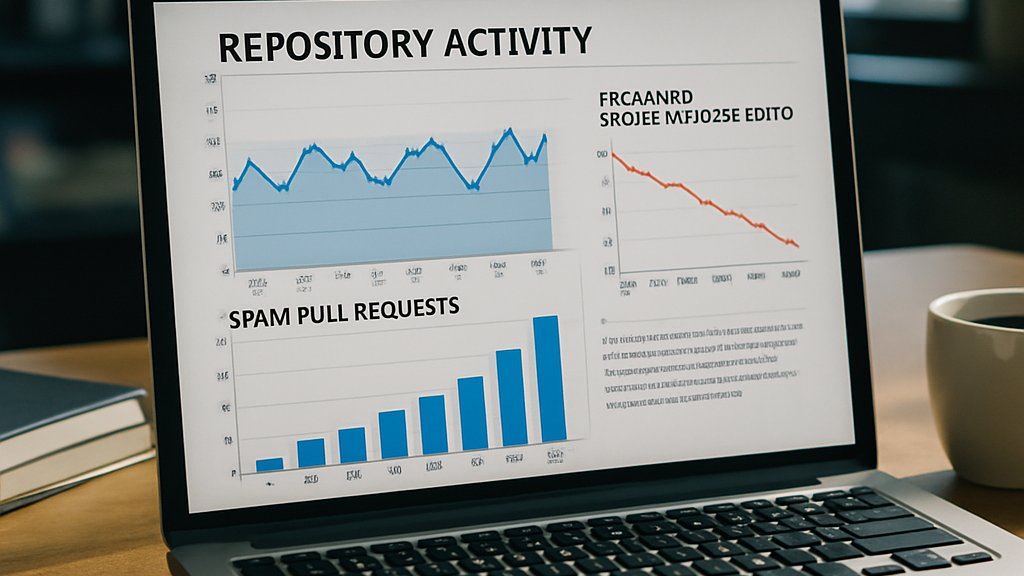
Similar patterns surfaced across other security programs. Ghostty and Jazzband each reported dozens of worthless reports per day. Consequently, rewards no longer justify triage hours.
Open Source AI advocates worry the backlash could chill responsible disclosure. Nevertheless, safety funding now flows through OpenSSF rather than direct bounty payouts.
Bug-bounty fatigue illustrates early casualties of unchecked AI-generated content. However, code hosting platforms now intervene upstream.
Repositories Raise Quality Bar
GitHub launched repository controls in February 2026. The switch lets project owners disable pull requests or demand stricter prereqs. In contrast, several teams simply closed public contribution windows entirely.
Godot’s Rémi Verschelde confessed exhaustion after waves of synthetic patches. Furthermore, he cited developer overload as an existential risk for Open Source AI maintainers. Community morale dipped as genuine newcomers met locked doors.
GitHub product managers admit the trade-off remains delicate. Consequently, optional attribution tags and AI detection pilots are under review. Maintainers hope the tools reduce review time without harming inclusivity.
Platform features show a willingness to protect code quality. Meanwhile, empirical data reveals just how vast the slop problem is.
Data Reveals Slop Scale
Independent tracker SlopWatch flagged about fifty thousand affected repositories this spring. Moreover, those projects received thirty-six million cumulative stars, underscoring ecosystem reach. TypeScript led language counts at thirty-seven percent, with Python close behind.
Podium telemetry estimated AI agent pull requests hit seventeen million monthly by March. Nevertheless, GitHub has not published official confirmation about the share of AI-generated content. Therefore, analysts treat these volumes as directional yet imperfect.
Another study calculated Claude Code emitting 2.6 million weekly commits. Consequently, roughly 4.5 percent of public commits carried synthetic fingerprints. Open Source AI metrics vary, yet every source signals exponential growth.
- SlopWatch flags 50k Open Source AI repositories.
- AI agent pull requests now reach 17M monthly on public mirrors.
- Confirmed vulnerability rate in curl fell below 5% amid Open Source AI noise.
The numbers highlight velocity more than veracity, inflating review queues. Up next, we examine human costs.
Human Burnout Intensifies Fast
Volunteer maintainers absorb most triage strain. Stenberg described “a serious mental toll” from never-ending slop submissions. Similarly, Godot leaders warn they may halt releases if pressure persists.
Academic surveys confirm rising emotional fatigue among OSS communities. Additionally, fewer veterans now mentor first-time contributors, weakening project continuity. Developer overload spills into daytime jobs as staff review evenings.
Lower code quality further frustrates reviewers when fixes outnumber faults. In contrast, some insiders argue automation still boosts repetitive task throughput. Yet those wins rarely offset triage chaos.
Contributor well-being is the pivotal sustainability metric. Consequently, new countermeasures focus on shifting work from humans to machines.
Countermeasures Enter Active Deployment
Projects now embed Anti-Slop GitHub Actions that auto-close suspicious pull requests. Furthermore, criteriabased gating enforces account age and issue linkage. Web-of-trust models let verified members vouch for newcomers.
Platforms propose mandatory provenance tags for AI-generated content. Nevertheless, critics fear false positives could block marginalized contributors. Balanced thresholds remain an open research topic.
Corporate funding aims to expand tooling. OpenAI, Anthropic, Google, and AWS pledged 12.5 million dollars through OpenSSF. Open Source AI stakeholders view the cash as seed capital for defensive tooling. Maintainers may pursue the AI Developer™ certification to master detection workflows.
Meanwhile, training budgets signal recognition that skills, not just switches, fix problems.
Technical and social safeguards now mature from experiment to production. Nevertheless, governance choices still shape future collaboration norms.
Balancing Innovation And Governance
Stakeholders agree legitimate AI assistance can accelerate routine maintenance. Moreover, responsible prompts improve code quality by highlighting edge-case tests. OSS communities must therefore reward diligence rather than raw volume.
Policy drafters suggest disclosure labels over outright bans. In contrast, some maintainers lobby for stricter identity verification. Industry leaders echo compromise, emphasizing transparent metrics and consented datasets.
Open Source AI stands at a governance crossroad today. Nevertheless, consensus will only emerge through continuous measurement of human toil. Subsequently, insights can refine automated filters and educational material.
Sustainable collaboration hinges on trust, transparency, and verified impact metrics. Consequently, the community now seeks a shared roadmap.
Way Forward For Contributors
The slop surge will not recede overnight. However, collective action can convert disruption into disciplined improvement. Open Source AI can still thrive if incentives align with measurable quality. Developers should validate patches locally, disclose tooling, and engage respectfully. Additionally, projects can adopt staged contribution gates and provide mentorship paths.
Professionals seeking deeper skills may explore the earlier linked AI Developer™ certification. Furthermore, sharing evidence-based practices across OSS communities magnifies impact.
Ultimately, quality signals, transparent governance, and sustained funding will decide open collaboration’s future. Take part now; shape tomorrow’s resilient, inclusive, Open Source AI ecosystem.
Disclaimer: Some content may be AI-generated or assisted and is provided ‘as is’ for informational purposes only, without warranties of accuracy or completeness, and does not imply endorsement or affiliation.


