

AI CERTS
5 days ago
Logistics Humanoid Robots Hit Postal Performance Milestone
Subsequently, extended 24-hour sessions reportedly processed 28,000 items. Meanwhile, China Post’s Jianggao postal hub introduced humanoid sorters rated at 1,200 parcels per hour. These numbers bring industrial scale within reach. Consequently, many executives now ask whether flexible bipedal systems can finally outpace fixed arms and autonomous mobile robots.
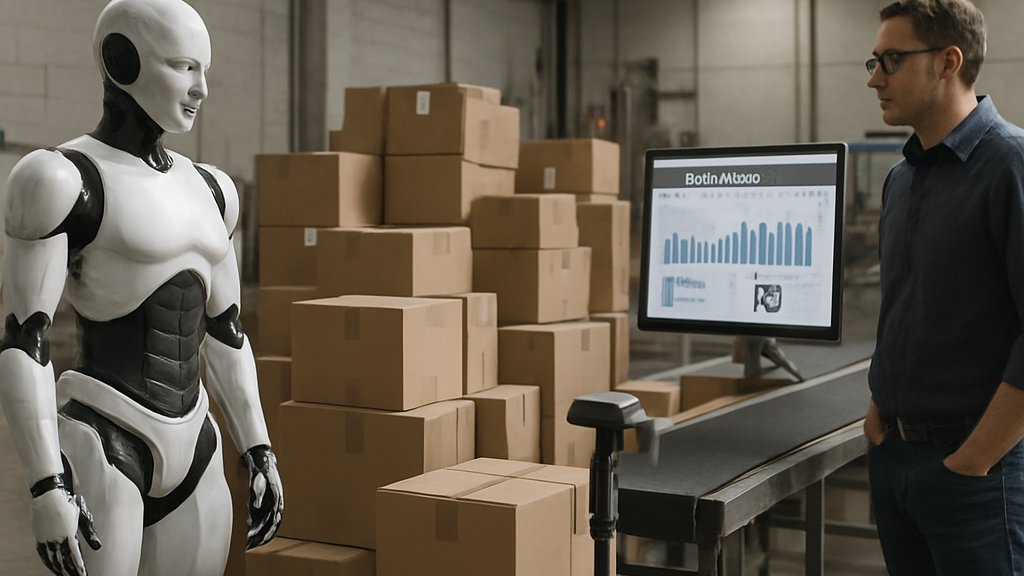
This article examines emerging data, expert opinions, and standards shaping the market. It also evaluates economics, risks, and next steps. Throughout, we reference Logistics Humanoid Robots developments, ensuring a balanced, data-driven view.
Market Momentum Builds
Investor excitement returned after a quiet 2024. Moreover, Roland Berger forecasts hundreds of billions in annual sales by 2035 under optimistic cases. Deloitte offers gentler curves, yet still sees steep adoption across warehouse automation segments.
Key drivers include rising e-commerce peaks, stricter service-level agreements, and tightening labor pools. Additionally, operator demand for retrofittable technologies favors bipedal machines that fit legacy conveyors and loading docks. As a result, venture funds poured billions into China robotics startups, mirroring US activity around Figure AI and Agility Robotics.
- Figure AI: ~3 sec/parcel, 28k items in 24 hours
- China Post: 1,200 parcels/hour at Guangzhou site
- Agility/GXO: 100k tote moves milestone
- Global parcel volume: 256 billion units projected by 2030 (Pitney Bowes)
These statistics highlight accelerating throughput gains. Nevertheless, many metrics remain vendor-reported. Independent benchmarks will clarify true capability. The surging capital influx underscores why Logistics Humanoid Robots attract strategic attention. However, proof of sustained uptime will determine real winners.
Investor sentiment sets the scene. Next, concrete performance numbers reveal practical progress.
Throughput Benchmarks Emerge
NIST released a draft Baseline Performance Benchmark in early 2026. Consequently, vendors finally face standardized gait, manipulation, and cycle-time tests. Fraunhofer IML applauded the move, noting that inconsistent claims slow purchasing decisions.
Figure AI positioned its demonstrations as human-parity evidence. Yet analysts caution that parcel mix, chute spacing, and vision lighting vary widely across sites. In contrast, Agility’s Digit achieved 100,000 tote transfers within a GXO warehouse automation pilot. Although the milestone proves durability, full-shift autonomy remains under evaluation.
Across Asia, China robotics companies such as UBTECH and Unitree race to publish similar numbers. However, few disclose mean-time-between-failure or maintenance hours. Therefore, total cost of ownership calculations stay cloudy.
Benchmark adoption will tighten messaging gaps. Subsequently, procurement cycles should shorten, benefitting operators and vendors alike.
Performance metrics illustrate rising capability. The next section explores China Post’s live deployment results.
China Post Deployment
State media images from Guangzhou’s Jianggao postal hub showed humanoid units gripping parcels and feeding high-speed chutes. Furthermore, the hub processes 6.5 million items daily, peaking at 10 million during holidays. Reported robot speed reached 1,200 parcels per hour, equaling seasoned workers.
Management noted minimal facility changes. Consequently, downtime linked to integration stayed low. Moreover, operators praised the robots’ ability to traverse standard stairs and dock plates, tasks difficult for wheeled automatons.
Nevertheless, maintenance engineers cited limited spare-part supply, a common China robotics challenge. Additionally, union representatives questioned long-term job displacement effects.
The Jianggao case validates end-to-end Logistics Humanoid Robots workflows. However, economic analysis still depends on extended run data.
China’s example spotlights positive early returns. Yet, broader ROI questions persist, as examined next.
ROI And Limitations
Fraunhofer IML’s March 2026 study lists key evaluation factors. Firstly, capex runs higher than articulated arms. Secondly, bipedal joints demand scheduled lubrication and shock monitoring. Moreover, battery swaps or fast charging add labor overhead.
Conversely, retrofit savings offset part of the premium. Operators avoid wholesale conveyor reconfiguration. Additionally, flexible task assignment reduces idle time relative to single-purpose machines.
Typical ROI models weigh:
- Shift length versus battery life
- Parcels per hour versus error rate
- Maintenance hours per thousand cycles
- Spare-parts inventory requirements
Experts advise piloting three roles—parcel sorting, palletizing, and cage unloading—before scaling fleets. Consequently, early adopters gather real cost curves. Professionals can deepen evaluation skills through the AI Supply Chain™ certification.
ROI analysis exposes both promise and risk. Therefore, standards and regulation play an outsized role, addressed next.
Standards Shape Validation
NIST proposes objective locomotion grades across terrain types. Meanwhile, manipulation tests score grasp speed, slippage, and wrist torque. Moreover, safety rules cover force limits and emergency stops.
Industry groups welcome clarity. However, some vendors fear public comparisons during early growth. Nevertheless, customers insist that claims meet audited benchmarks before purchase orders.
In Europe, insurance carriers already request NIST alignment for coverage of warehouse automation rollouts. Similarly, Asia-Pacific regulators draft guidelines on collaborative parcel sorting layouts.
Standardization will reduce hype and speed trust in Logistics Humanoid Robots. Subsequently, strategic planning moves from speculation toward contract negotiation.
With rules forming, companies refine roadmaps. The following section outlines strategic next steps.
Strategic Roadmap Ahead
Executives planning deployments should stage projects. Firstly, audit existing chutes, scanners, and racks. Secondly, run simulation models using NIST baseline assumptions. Additionally, secure cross-functional buy-in from safety, HR, and IT.
Moreover, establish service-level agreements with vendors covering uptime and parts availability. In contrast, ignore glossy demos lacking independent validation.
Forward-looking operators align robotics pilots with sustainability goals. Consequently, they measure energy per parcel and carbon intensity. Chinese firms already link China robotics initiatives to national green targets.
These actions convert early excitement into disciplined execution. Therefore, Logistics Humanoid Robots can transition from pilot curiosity to scalable asset class.
Strategic planning closes the analysis. The conclusion distills core insights and next moves.
Key Takeaways Summary
Logistics Humanoid Robots now show human-level throughput in live demos and selective deployments. Additionally, market forecasts predict steep revenue curves. Nevertheless, mechanical complexity and vague benchmarks cloud near-term ROI. Consequently, standards, certifications, and disciplined pilots remain critical.
Actionable Next Steps
Therefore, leaders should monitor NIST developments, pilot three use cases, and demand transparent metrics. Moreover, investing in specialist training, such as the AI Supply Chain™ program, ensures internal teams can vet vendor claims effectively.
These measures lay a sound foundation for future automation gains.
Conclusion
Humanoid designs have crossed an important threshold. Moreover, independent benchmarks promise to replace marketing claims with data. Consequently, early pilots already demonstrate flexible gains in parcel sorting and broader warehouse automation. Nevertheless, long-term reliability and cost discipline will decide ultimate winners. Forward-thinking leaders should track standards, engage in measured pilots, and cultivate internal expertise. Therefore, explore the linked certification to equip teams for the coming robotics wave.
Start assessing Logistics Humanoid Robots today, and position your operation for tomorrow’s competitive advantage.
Disclaimer: Some content may be AI-generated or assisted and is provided ‘as is’ for informational purposes only, without warranties of accuracy or completeness, and does not imply endorsement or affiliation.


