

AI CERTS
2 hours ago
Asia’s Medical Research AI Push Transforms Osteoarthritis Care
Consequently, researchers are rallying behind scalable imaging tools, mobile applications, and federated learning collaborations. This article unpacks the momentum, hurdles, and next steps for community health stakeholders following the AI study wave. Readers will gain data-driven insights, expert quotes, and practical recommendations for regional deployment. Furthermore, professionals can upskill through specialised credentials to steer these innovations responsibly. Let us explore where ambition meets evidence in the fast-evolving Asian osteoarthritis landscape.
Asia OA Research Surge
Across Asia, osteoarthritis publication counts have climbed steadily since 2010. Moreover, a bibliometric review on 30 April 2026 mapped vibrant China–South Korea collaboration networks. The review highlighted imaging-omics convergence as the hottest emerging topic. Meanwhile, Vietnam’s DIKOApp team advanced localisation by training on native radiographs for 89% accuracy. Seoul National University Hospital followed with a contralateral prediction model scoring roughly 69%.
However, only seven implementation evaluations were documented across the continent by early 2026. That gap signals opportunity yet underscores urgent evidence requirements. Consequently, policymakers in Singapore and Hong Kong are supporting multicenter registries to capture real-world outcomes. These movements confirm that Medical Research AI momentum is no longer confined to laboratories.
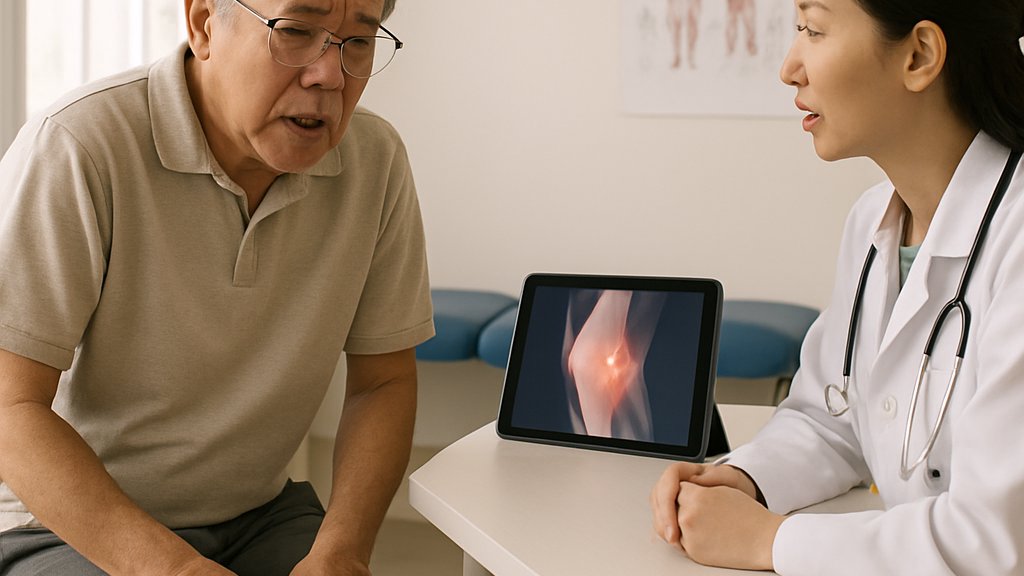
Asia’s publication surge illustrates remarkable scientific capacity. Nevertheless, translation into everyday clinics remains thin, propelling the next focus on predictive tools.
Predictive Models Rapidly Advance
Predictive imaging algorithms sit at the core of current AI study agendas. DIKOApp applies a convolutional backbone to Vietnamese X-rays and reaches an F1 score of 0.88. Moreover, the SNUH contralateral model combines demographics and radiographs to anticipate opposite-knee deterioration. Lead author Du Hyun Ro said the system could guide bilateral physiotherapy before pain escalates. Experts agree that integrating genomics, lifestyle, and MRI data will boost precision for osteoarthritis subtypes.
However, diverse datasets are essential to prevent bias against minority groups in Hong Kong and rural provinces. Medical Research AI teams therefore explore federated learning so hospitals retain sensitive images locally. In contrast, some groups prioritise explainable dashboards that visualise cartilage loss for clinician trust. Singapore start-ups already demo heat-map interfaces during radiology conferences.
These prediction advances promise earlier, cheaper triage. Consequently, attention shifts toward uptake within community health settings.
Community Trials Lag Behind
Despite technical progress, community pilots remain scarce across Asia. A 2026 systematic review located only seven implementation studies for osteoarthritis digital tools. Moreover, none reported referral speed, pain scores, or equity outcomes. Researchers blame funding cycles, workforce shortages, and unclear reimbursement policies. Meanwhile, primary care doctors express concern about workflow disruption.
- Limited broadband in rural clinics
- Fragmented electronic medical records
- Low AI literacy among nurses
- Uncertain regulatory approval timelines
Nevertheless, training programs can mitigate the literacy gap. Professionals can enhance expertise with the AI Nurse™ certification focusing on clinical integration. Singapore polyclinics are evaluating such curricula alongside pilot deployments this year. Macau community health centres plan similar staff workshops next quarter.
Implementation evidence remains the weakest link in Asia’s innovation chain. However, strategic workforce development may soon unlock broader community rollouts.
Privacy And Data Strategies
Data sovereignty concerns frequently stall cross-border image sharing. Federated learning offers a workaround by training distributed models without centralising files. Consequently, Chinese and Korean hospitals test secure aggregation methods on multi-institution MRI datasets. Medical Research AI developers must also satisfy emerging cybersecurity regulations across Southeast Asia. Moreover, explainable AI dashboards support regulatory audits by exposing feature importance maps.
Hong Kong regulators request post-market monitoring dashboards for every new AI study deployment. In contrast, Vietnamese pilots prioritise lightweight encryption to match limited hardware. These initiatives converge on a single aim: trustworthy, generalisable joint-degeneration tools for community health programs. Therefore, privacy engineering now ranks alongside algorithm accuracy when funders assess proposals.
Robust data strategies will determine future interoperability. Subsequently, attention turns to stubborn implementation roadblocks.
Implementation Barriers Remain Stubborn
Many pilot projects stall after research grants expire. Moreover, cost-effectiveness data for Medical Research AI solutions remain sparse. Procurement officers demand proof of reduced imaging backlog and quicker surgical referrals. Vietnamese teams now embed outcome tracking modules into DIKOApp to collect knee function scores. In contrast, Korean groups collaborate with insurers to design pay-for-performance bundles. Furthermore, patient engagement is critical because self-management exercises influence long-term cartilage preservation.
Taiwan hospitals experiment with gamified rehabilitation apps co-designed with community elders. Malaysia researchers evaluate chatbots that nudge daily walking goals. Medical Research AI dashboards feed these chatbots personalised risk trajectories. Nevertheless, sustained incentives must align across government, tech vendors, and frontline clinicians.
Implementation obstacles are multifactorial yet solvable. Consequently, regional collaboration frameworks are gaining momentum.
Future Collaboration Paths Emerge
Stakeholders now outline a three-pronged roadmap for 2027.
- Investigators will expand federated consortia covering at least five economies.
- Governments will tie reimbursement to demonstrable community health impact.
- Open dashboards will publish performance metrics and bias audits.
Moreover, the upcoming OARSI congress in Singapore intends to launch a regional registry portal. Medical Research AI researchers from Hong Kong, Vietnam, and Indonesia will present early federated results. Furthermore, venture investors watch closely because reimbursement clarity often sparks commercial scale-ups. Community health advocates demand accessible mobile interfaces supporting multiple dialects. In response, design teams run usability tests across Jakarta and rural Vietnam.
Collaborative infrastructure promises to convert prototypes into equitable services. Therefore, success will depend on sustained funding and transparent governance.
Asia stands at an inflection point for Medical Research AI powered joint care. Predictive accuracy, privacy engineering, and workforce capacity are aligning faster than before. However, sustained success demands rigorous implementation science and value-based reimbursement. Seoul and Jakarta now provide living laboratories that can validate operational benefits within months. Moreover, federated consortia will broaden demographic diversity and reduce model bias.
Professionals eager to lead Medical Research AI initiatives should pursue specialised training and cross-disciplinary partnerships. Consequently, the AI Nurse™ certification offers a fast track toward evidence-based deployment expertise. Visit our resources page, enrol, and help transform population outcomes today. The coming decade will judge which Medical Research AI projects truly deliver equitable value.
Disclaimer: Some content may be AI-generated or assisted and is provided ‘as is’ for informational purposes only, without warranties of accuracy or completeness, and does not imply endorsement or affiliation.


