

AI CERTS
2 hours ago
Anthropic’s ID Checks Spur AI Security Compliance Debate
Industry leaders therefore face a pivotal balancing act: block malicious actors without blocking legitimate innovators. This article unpacks the new Photo ID and selfie requirements, explains the underlying verification pipeline, and evaluates the broader compliance landscape. Readers will gain actionable insights and discover how certifications such as the AI Security Compliance™ credential can strengthen internal controls.
Moreover, teams preparing enterprise deployments must map each requirement to regional data laws before adoption. The following sections break down the facts, controversies, and next steps for responsible builders. Subsequently, you can benchmark internal policies against Anthropic's approach and close remaining governance gaps.
Rollout Overview And Impacts
The company began limited verification prompts on 15 April 2026, updating its Safeguards documentation the same day. Furthermore, media outlets quickly amplified user screenshots showing requests for a government Photo ID and a live selfie. Consequently, forum threads filled with privacy concerns and reports of failed camera checks within hours. The vendor frames the move as a narrow response to evolving abuse patterns and new regulatory expectations. Nevertheless, the opaque list of gated capabilities leaves developers guessing whether sudden lockouts will hit production workflows.
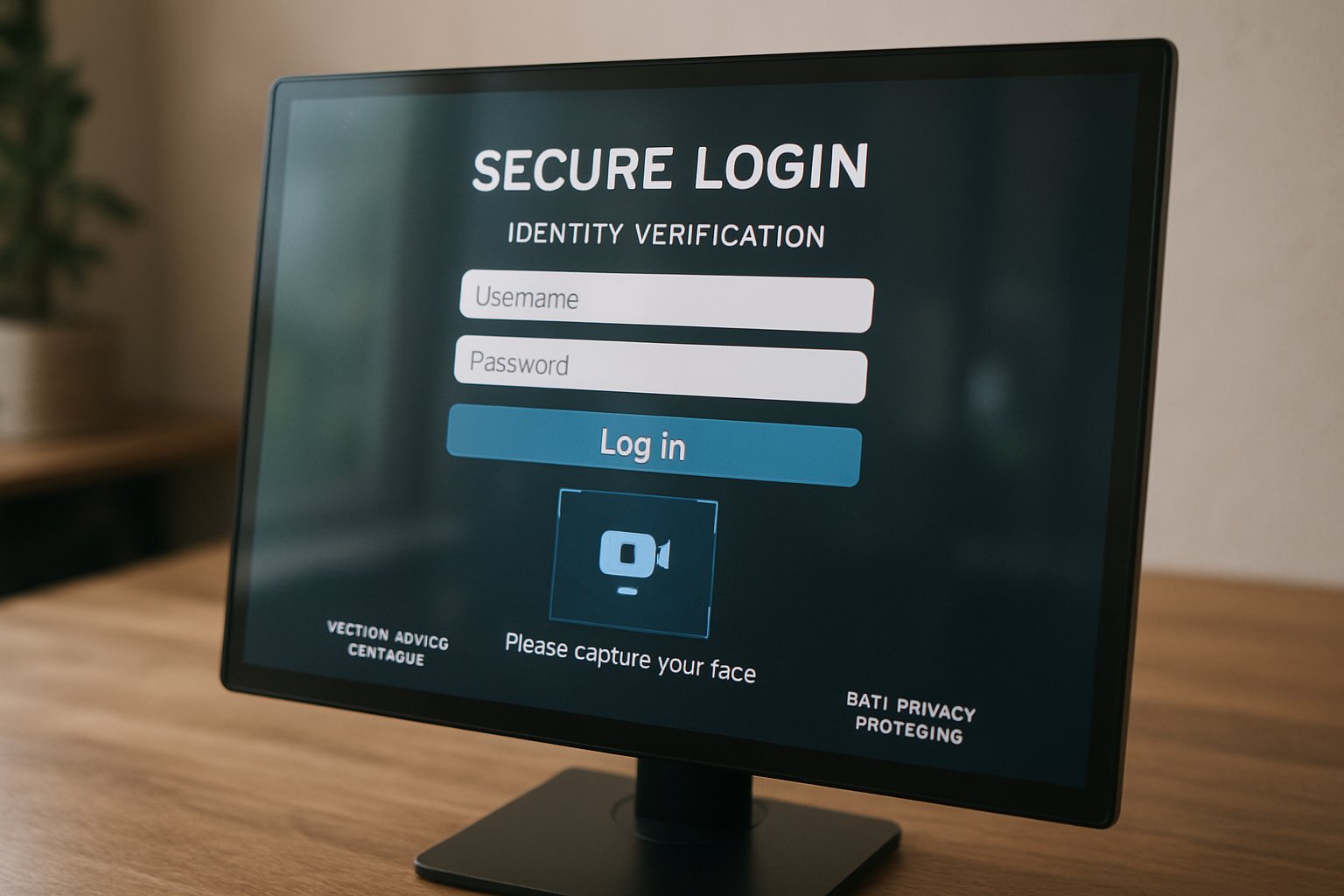
These early reactions reveal AI Security Compliance stakes. However, understanding the flow itself clarifies several misconceptions.
Verification Flow In Depth
Persona Identities manages the process on the provider’s behalf using its hosted web SDK. First, users photograph a valid government ID document. Then, they capture a selfie so Persona can match facial geometry to the document. Moreover, device fingerprints and inferred geolocation accompany the images for fraud signals. The provider states typical completion requires under five minutes.
- Trigger event occurs (capability access or integrity check).
- User submits passport, driver's license, or national ID.
- Persona extracts text, facial geometry, and device metadata.
- Algorithmic match returns pass or fail verdict.
- The platform receives status only, not raw images.
Consequently, the platform can lock or restore access based on the verdict while offering appeals when mismatches appear. Therefore, the design theoretically supports AI Security Compliance without feeding personal imagery into Claude.
The workflow mirrors standard fintech KYC playbooks. Yet, data handling promises deserve closer scrutiny.
Data Handling Assurance Claims
The provider declares itself the data controller and limits Persona to processor duties. Moreover, the help page stresses, “We are not using your identity data to train our models.” Persona’s April 2026 privacy policy echoes that promise, stating no biometric data feeds any algorithm training. In contrast, the policy also notes customers may request longer retention for fraud or legal obligations. The provider has not published its chosen retention window, leaving observers unsure whether Persona deletes records immediately. Therefore, executives should request written confirmation of deletion schedules and audit rights under any enterprise contract.
Vendor statements sound reassuring on first read. Nonetheless, researcher findings complicate the picture.
Researcher Findings Raise Questions
Independent analysts reviewed Persona’s public code in 2025 and flagged hidden capabilities. For example, modules could file Suspicious Activity Reports directly with FinCEN or link IDs to crypto wallets via Chainalysis. Additionally, researchers spotted parameters allowing indefinite storage of government ID scans despite deletion defaults. Persona later clarified that customers control retention and that default deletion applies unless overridden. Nevertheless, the mere presence of extended retention code signals audit duties for any serious AI Security Compliance program. Consequently, teams integrating Claude must verify which Persona configuration flags are active inside their tenant.
Research shows policy language may not capture technical reality. However, operational friction also matters for adoption.
Operational Friction For Users
Live selfie capture fails on some corporate webcams because of strict browser permissions. Meanwhile, developers without passports or driver’s licenses report immediate lockouts from premium Claude tools. Moreover, global teams working from sanctioned regions fear extra scrutiny when uploading national Identity documents. The provider offers appeals, yet unresolved cases can stall production deployments for days. Therefore, product managers should stage verification dry-runs during testing and include alternative access paths for blocked engineers.
- Create sandbox accounts to rehearse verification flow.
- Document accepted Photo ID types for each jurisdiction.
- Store fallback content generation pipelines offline.
Smooth onboarding reduces costly downtime. Next, leaders must actively manage residual compliance risk.
Risk Mitigation Best Practices
Effective AI Security Compliance demands proactive measures beyond vendor assurances. Firstly, negotiate explicit deletion timelines within the master service agreement and reference Persona’s processor obligations. Secondly, request quarterly audit logs confirming that government ID images and selfie biometrics are purged as agreed. Moreover, insist on immediate breach notifications and predefined remediation playbooks for any Identity data incident. Consequently, your organization retains control and meets regulators’ expectations for accountability. Professionals can deepen skills by pursuing the AI Security Compliance™ certification, which teaches rigorous assessment frameworks. Additionally, integrate continuous monitoring tools to flag anomalous access patterns post-verification.
Layered controls transform a vendor process into a robust shield. Finally, leaders should absorb strategic lessons for 2026 and beyond.
Strategic Takeaways For Leaders
Anthropic’s move signals that large-language-model providers will increasingly embed KYC style checkpoints. Therefore, boards should anticipate similar demands from other vendors and allocate resources accordingly. In contrast, overzealous verification can erode adoption if privacy anxieties spread unchecked. Subsequently, aligning transparent communication with stringent AI Security Compliance will become a competitive differentiator. Moreover, early investment in staff education builds internal champions who can decode evolving regulatory language.
Strategic readiness offsets looming disruption. The conclusion distills key points and urges decisive action.
Anthropic’s Photo ID and selfie checks exemplify a broader shift toward identity-anchored guardrails. However, vendor statements alone cannot guarantee compliance. Consequently, technology leaders must validate deletion timelines, monitor retention flags, and rehearse fallback workflows. Moreover, balancing privacy expectations with abuse prevention protects brand trust while satisfying regulators. The AI Security Compliance mindset provides the required blueprint, emphasising vendor audits, breach readiness, and staff training. Professionals pursuing the AI Security Compliance™ credential gain structured methodologies that translate directly into stronger governance. Therefore, now is the ideal moment to benchmark your stack against emerging standards and secure future resilience.


