

AI CERTS
3 hours ago
Agentic SOC Tools Redefine AI Security Operations at RSAC 2026
This article unpacks that debate, spotlighting top launches and lingering technical gaps. Moreover, it outlines how practitioners can prepare their SOC teams for an agent dominated future. Expect concise analysis grounded in vendor statements and independent reporting. Importantly, every sentence stays under twenty words for rapid consumption. Transition words appear frequently, ensuring smooth flow between ideas. Let us begin with the conference surge that made headlines worldwide.
RSAC Showfloor Surge
RSAC 2026 drew almost 44,000 attendees and 600 exhibitors, dwarfing earlier years. Agentic tooling dominated hallway chatter and keynote narratives. Additionally, security startups filled an entire expo zone dedicated to AI Security Operations.
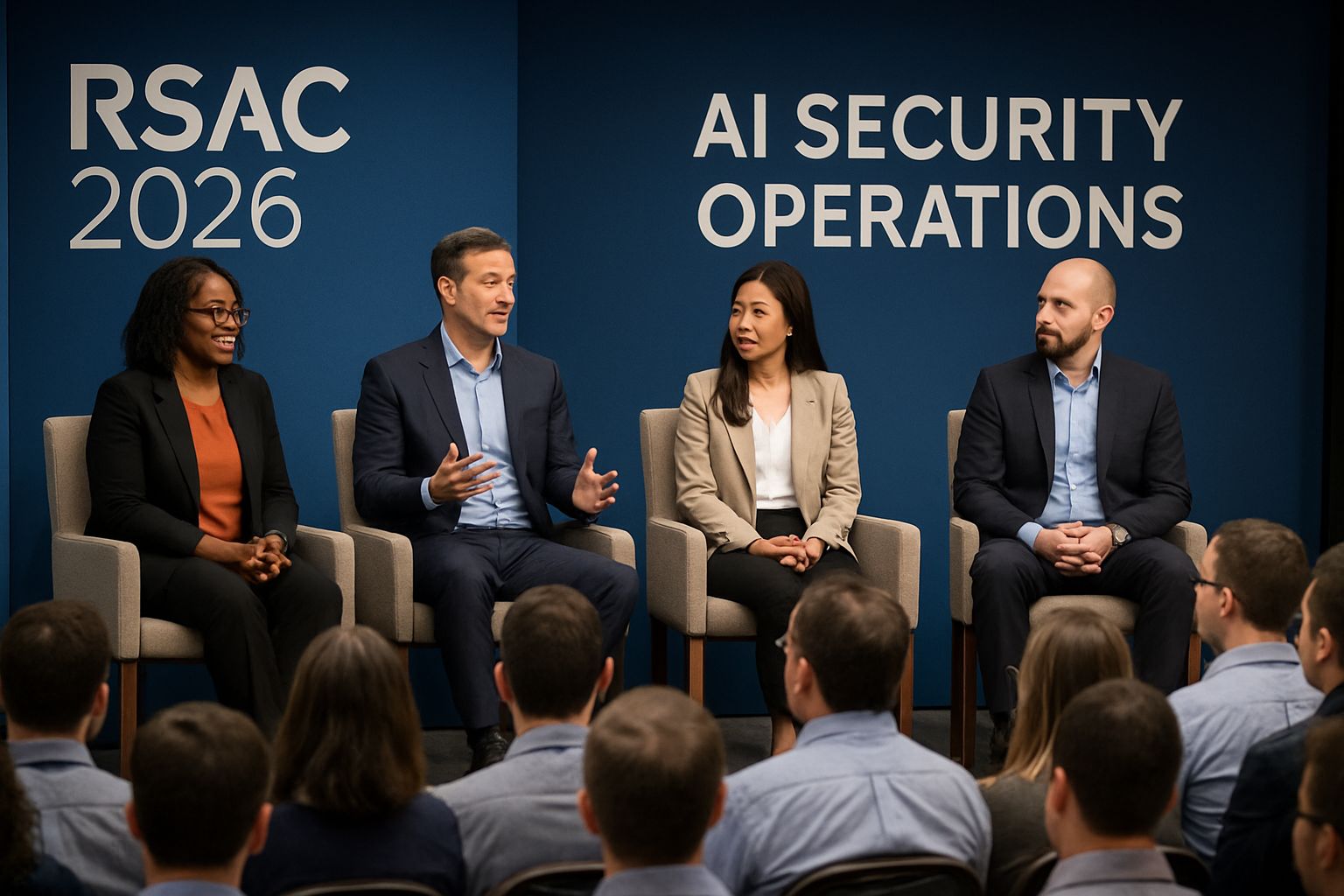
Microsoft, CrowdStrike, and Cisco commanded standing room only sessions on agent orchestration. Meanwhile, analysts cited IDC forecasts showing 1.3 billion agents by 2028. Consequently, conference conversations focused on how such scale reshapes budgeting and risk management.
RSAC numbers proved intense market interest in agent based defenses. However, statistics alone cannot explain the rapid vendor pivot discussed next.
Defining Agentic SOC Tech
An agentic operations center uses autonomous or semi-autonomous agents to extend analyst reach. These entities interpret alerts, query data, and propose responses without constant human typing. Furthermore, platforms like Microsoft Agent 365 treat each agent as a managed identity.
First, embedded agents live inside SIEMs, such as Sumo Logic’s new Analyst Agent. Second, upstream pipeline models filter telemetry before analysts ever see it.
Moreover, both designs aim to cut mean time to respond by automating repetitive checks. Vendors argue this realignment frees staff for deeper threat hunting within AI Security Operations. Nevertheless, definitions vary, complicating procurement decisions.
Understanding these models clarifies capability roadmaps and risk profiles. Consequently, the next section examines concrete product launches.
Notable RSAC Vendor Launches
Multiple heavyweights showcased production ready agent ecosystems during the week. Below, key announcements illustrate competitive direction.
- CrowdStrike launched Charlotte AI AgentWorks, framing an "Agentic Security Workforce" across the Falcon platform.
- Microsoft expanded Security Copilot and debuted Agent 365 control plane for broad AI Security Operations governance.
- Palo Alto Networks delivered Prisma AIRS 3.0 featuring runtime protections, agent identity, and red-teaming hooks.
- Cisco integrated specialized AI agents into Splunk Enterprise Security, promising faster root-cause analysis.
- Sumo Logic extended Dojo AI with a SOC Analyst Agent recommending one-click containment actions.
Moreover, smaller firms like Torq, Zenity, and ReliaQuest previewed agent frameworks targeting niche workflows. Nevertheless, observers noticed a consistent omission across all demos. Consequently, unified AI Security Operations dashboards became a selling point in almost every booth.
The launches confirmed accelerated investment from CrowdStrike, Cisco, and peers. However, missing safeguards surfaced clearly in technical deep dives addressed next.
Persistent Agentic Security Gaps
Analysts repeatedly flagged agent observability as the primary unresolved challenge. In contrast, basic host logging feels mature compared with agent behavioral baselining. Consequently, distinguishing malicious agent drift from normal learning remains difficult.
CrowdStrike executives admitted behavioral baselines require more telemetry and community benchmarks. Meanwhile, Microsoft insisted an identity centric control plane will mitigate many failures. However, early adopters still lack standard metrics for agent accuracy, drift, and hallucinations.
Key unresolved risks include:
- Prompt injection manipulating sensitive commands.
- Malicious plugins escalating agent privileges.
- Shadow agents operating without audit trails.
These gaps could undermine AI Security Operations and broaden the SOC attack surface if overlooked. Therefore, governance economics deserve detailed scrutiny next.
Economic And Governance Impacts
Vendors pitch cost savings, yet hidden expenses emerge around control plane licensing and insurance. IDC projects 1.3 billion agents by 2028, implying exponential identity management overhead. Moreover, boards now request line-item visibility into AI Security Operations budget forecasts.
Governance frameworks like the MITRE ATLAS extensions and Microsoft Agent 365 introduce compliance mappings. Additionally, insurers want proof of deterministic guardrails before renewing cyber policies. Professionals can validate practices through the AI Security Compliance™ certification.
Economic realities force quantified governance choices alongside technical decisions. Subsequently, workforce upskilling becomes the next strategic puzzle.
Upskilling Future SOC Workforce
Human analysts remain essential despite dramatic automation. In contrast, their responsibilities shift toward supervising and fine-tuning agent behaviour. Therefore, training now covers prompt engineering, policy writing, and agent chain debugging within AI Security Operations.
CrowdStrike’s Daniel Bernard stressed that agents amplify, not replace, human intuition. Meanwhile, Cisco advocates cross-skilling network teams to read agent telemetry feed. Moreover, certifications such as the earlier linked program demonstrate verified competence to hiring managers.
Effective upskilling aligns culture with rapid product cycles. Consequently, organizations gain resilience before adopting wider agent fleets.
Strategic Takeaways And Outlook
Agent driven tooling already reshapes AI Security Operations at leading enterprises. Nevertheless, observability and governance gaps temper immediate production rollouts. Boards, vendors, and practitioners must act collaboratively to standardise metrics and controls.
First, demand transparent baselines from suppliers. Second, adopt a layered control plane before connecting autonomous response. Third, invest in accredited workforce development tied to measurable business outcomes.
These steps transform hype into sustained defensive advantage. Meanwhile, continuous research will refine agent safety patterns throughout 2026.
RSAC 2026 underscored that agentic design now anchors the security mainstream. Vendors like CrowdStrike, Cisco, and Microsoft accelerated competition through headline launches. However, observability, identity, and cost management questions persist. Consequently, executives should evaluate agent behaviour baselines before committing budget. Moreover, rigorous training keeps human analysts central within AI Security Operations. Professionals can formalize skills through the linked compliance certification. Act now, pilot cautiously, and measure outcomes relentlessly. Future breaches will not wait.


