

AI CERTS
2 hours ago
AI Drug Discovery Gets Lab Boost From OpenAI Chemist
Industry leaders wonder how agentic models will reshape reaction planning, lab testing, and molecule design. Therefore, this article unpacks the data, methods, and business implications behind OpenAI’s experiment. Moreover, the piece reviews expert critiques and highlights concrete next steps for pharma teams. Finally, readers receive guidance on upskilling to stay competitive as algorithms enter wet labs.
Meanwhile, all statements follow strict journalistic standards and leverage only the published preprint and blog. Consequently, the word count aligns with professional briefing expectations. Readers should expect concise, data-rich reporting throughout the article.
Inside OpenAI Lab Workflow
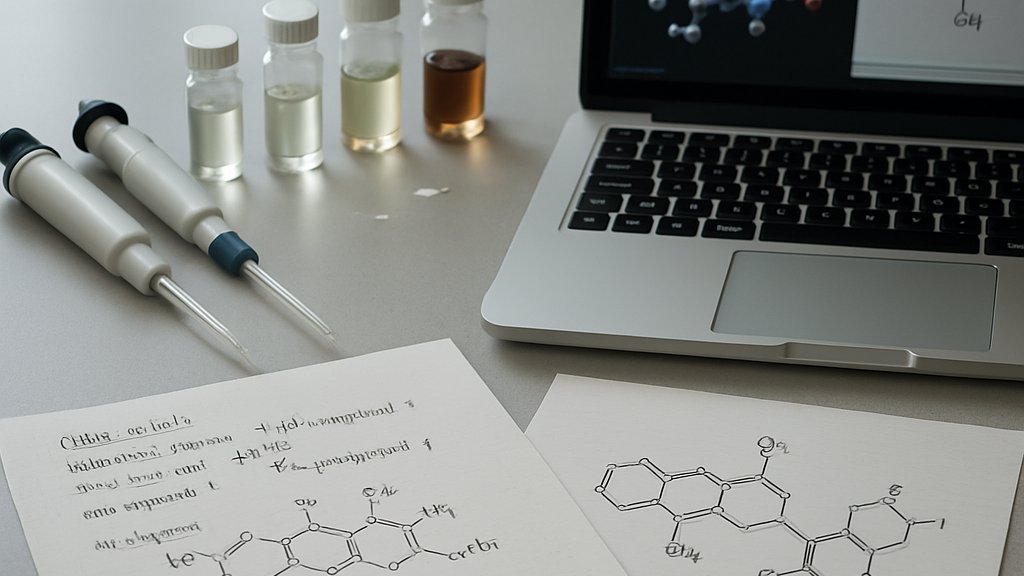
The AI Drug Discovery workflow relied on three tightly coupled agents. GPT-5.4 generated thousands of experimental ideas inside a controlled proposal harness. Subsequently, human chemists graded those suggestions and approved the most promising sets. Maria then translated the winning plans into precise robotic instructions for microliter reactors. Meanwhile, high throughput rigs executed 10,080 reactions between March and May 2026.
After each campaign, structured data flowed back to GPT-5.4 for statistical analysis. Consequently, the model refined hypotheses and suggested follow-up screens without manual coding. Despite the automation, human supervisors retained control over chemical inventory and safety gating. In contrast, many earlier closed-loop systems required continuous scripting or rigid templates.
The architecture mixed generative reasoning, execution, and evaluation within one feedback loop. However, humans still directed pace and medicinal chemistry scope. Next, we examine how that loop improved yields.
Results Redefine Reaction Yields
Most commentators focused on the quantitative gains. Specifically, product yields rose significantly once TEMPO entered the reaction matrix.
- Mean yield climbed from 16.6% to 25.2%.
- Reactions exceeding 30% yield jumped from 15.6% to 37.5%.
- Yields improved for 88% of boronic acids and 83% of sulfonamides.
- Eight of eleven validated pairs showed over twofold improvements.
These improvements underscore AI Drug Discovery potential for reaction optimization. Moreover, 88% of boronic acids and 83% of sulfonamides showed individual improvement. Bench chemists confirmed gains for 11 of 14 substrate pairs, eight exceeding twofold increases. Therefore, the workflow delivered reproducible benefits beyond microliter plates. Nevertheless, the scope remains one reaction family under tightly defined parameters.
The numbers prove tangible efficiency jumps. However, broader generalization still awaits independent labs. Understanding those caveats is vital for strategic planning. Importantly, gains emerged across subclasses relevant to medicinal chemistry programs. Such productivity gains can accelerate general drug discovery timelines.
Industry Impact And Limitations
Pharmaceutical teams pursue shorter design-make-test-analyse cycles. Consequently, agentic workflows promise faster medicinal chemistry iteration and cost savings. Early adopters could screen condition space at scales once reserved for multinational portfolios. Furthermore, hypothesis generation may widen chemical diversity during molecule design. Strategists see AI Drug Discovery as a pathway to reduce attrition later in pipelines.
Yet several obstacles temper enthusiasm. Automated hardware, expert prompts, and data engineering demand capital and rare talent. In contrast, most biotech startups still depend on manual lab testing infrastructure.
- Microliter scale may not predict kilogram reactors.
- Safety policies restrict potentially harmful transformations.
- Regulatory agencies need validated analytical trails.
Moreover, OpenAI stressed the system is not fully autonomous and rejects harmful requests. Therefore, governance and audit frameworks must evolve alongside technical capacity. Opportunities and risks march together. Nevertheless, calculated investment can yield competitive advantage. The discussion now shifts toward benchmarking.
Implications For AI Benchmarks
OpenAI released LifeSciBench simultaneously with the chemistry report. The benchmark covers 750 realistic life-science tasks curated by 173 scientists. Consequently, vendors finally share a common yardstick for model evaluation across drug discovery workflows. GPT-5.4 scored among the top performers in evidence handling and reaction planning. However, the organization deliberately withheld unpublished private data to deter score gaming. Meanwhile, academic groups can propose extensions for molecule design or toxicology.
Benchmark scores will guide AI Drug Discovery investment decisions across big pharma. Standardized tasks should accelerate transparent progress. However, metrics must remain aligned with industrial realities. Future research questions emerge from this need.
Future Roadmap And Research
Independent labs are preparing confirmatory runs on diverse reaction classes. Subsequently, mechanistic chemists will probe how TEMPO suppresses oxidative deboronation. Process engineers also plan scale-up trials that integrate inline lab testing loops. Moreover, teams intend to test agentic workflows for early hit identification in AI Drug Discovery campaigns. In contrast, computational researchers aim to move beyond reaction planning toward whole-pathway optimization. Therefore, strategic collaborations between platform providers and pharma will shape the next AI Drug Discovery milestones.
Upcoming validations will define credibility. However, success could compress project timelines dramatically. Skills development becomes the logical response. Open benchmarking will clarify transferability to early drug discovery steps. Ultimately, executive teams will measure AI Drug Discovery value by fewer failed batches and faster submissions.
Upskilling For Competitive Edge
Talent shortages already constrain many digital chemistry programs. Consequently, scientists should strengthen data fluency, automation literacy, and AI Drug Discovery fundamentals. Professionals can upskill via the AI Pharma™ Certification. Moreover, cross-functional managers should grasp automation costs, risk controls, and scaling logistics.
Recruiters already list AI Drug Discovery experience in senior job descriptions. Therefore, early adopters will command premium compensation and project ownership. Continuous learning remains essential. Nevertheless, structured credentials speed hiring decisions.
In summary, the OpenAI study demonstrates measurable, though narrow, performance gains from agentic chemistry. Key hurdles involve hardware access, replication, and safe governance. Yet, momentum toward automated, data-driven labs appears irreversible. Consequently, now is the moment to master tools and secure accredited recognition. Explore the certification above and position yourself at the forefront of automated chemistry.
Disclaimer: Some content may be AI-generated or assisted and is provided ‘as is’ for informational purposes only, without warranties of accuracy or completeness, and does not imply endorsement or affiliation.


