

AI CERTS
5 months ago
Hologic Genius Tool Reshapes Women Health AI Diagnostics
Recent studies presented at SBI and RSNA revealed that the algorithm detected cancers radiologists first missed. Moreover, Northwestern researchers reported similar performance across major racial groups, easing bias concerns. These findings emerge as radiology workloads rise and reimbursement margins tighten. Therefore, decision makers crave tools that increase sensitivity without lengthening reading sessions.
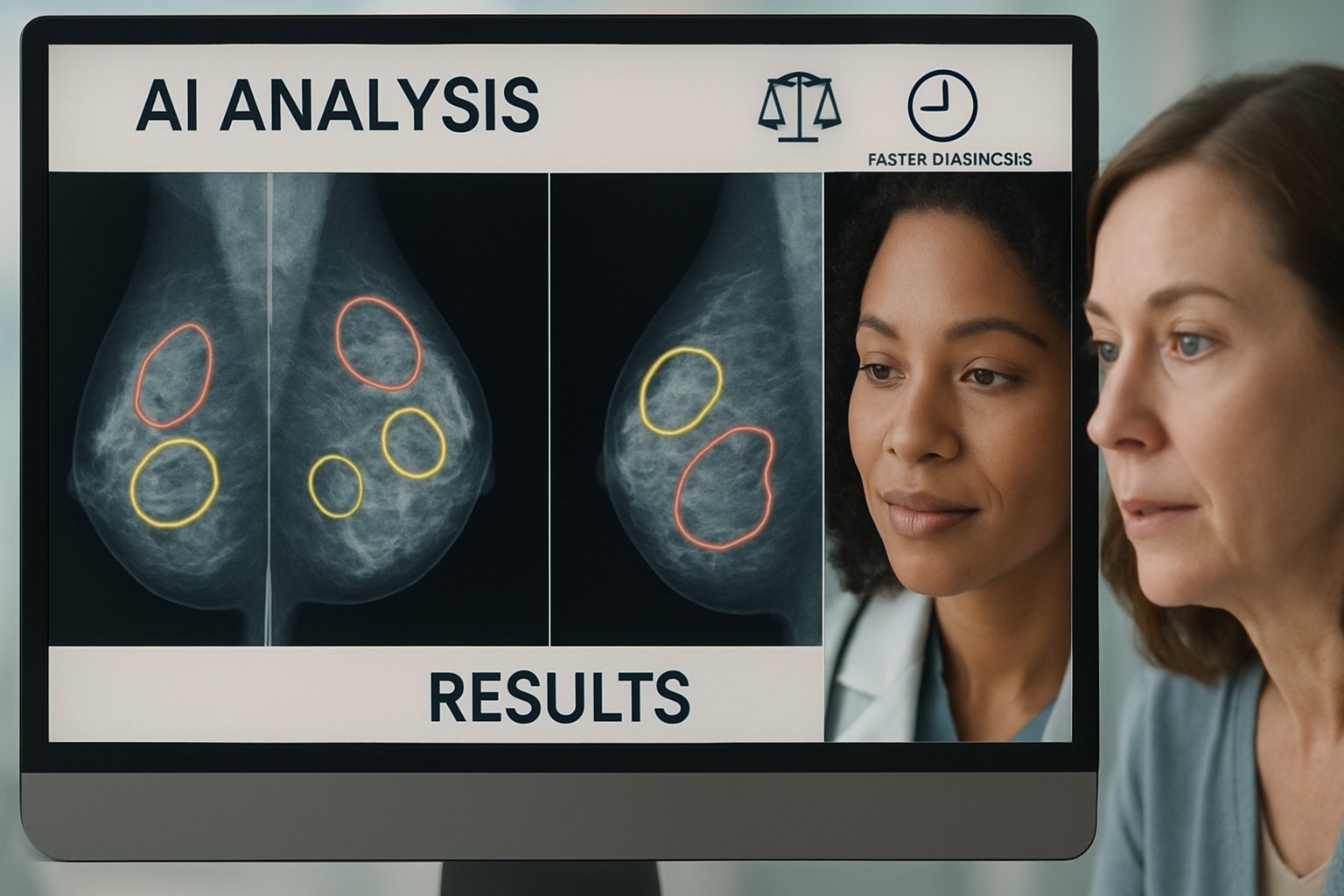
Meanwhile, Genius AI Detection PRO adds triage, prior comparisons, and automated reporting to the mix. Additionally, MedTech Breakthrough recently named the system “Best New Imaging Technology.” Such validation is useful yet not sufficient alone. Consequently, this article dissects evidence, benefits, and challenges so that executives can place the innovation within broader Women Health AI strategy.
Market Forces Accelerate Adoption
Healthcare systems feel dual pressures. Firstly, breast cancer incidence climbs as populations age. Secondly, workforce shortages limit reading capacity. Moreover, digital breast tomosynthesis volumes outpace 2D mammography because payers increasingly cover 3D screening. Consequently, administrators demand tools that maintain throughput.
Market researchers value the global AI breast imaging segment at roughly USD 700 million by 2032. Furthermore, compound annual growth estimates exceed 25 percent. In contrast, capital budgets flatten in many radiology departments. Therefore, solutions delivered as subscriptions suit tight cash cycles. Women Health AI vendors, including Hologic, increasingly bundle analytics, training, and cybersecurity assurances.
Greater cancer burden and limited staff push buyers toward AI. Rising subscription models ease acquisition barriers. Next, we examine how the algorithm actually operates.
How Genius AI Works
Genius AI Detection analyzes the slice stack generated during digital breast tomosynthesis. Initially, the software assigns each exam a case priority score. Additionally, it highlights suspicious regions with color-coded outlines and probability values. Radiologists can adjust sensitivity thresholds within the viewer, reducing false positives compared with legacy CAD.
The newer PRO release, developed with Therapixel, adds density scoring, image-quality checks, and automated report fields. Moreover, the program compares current and prior exams to flag interval growth. Consequently, preliminary findings appear in the structured report, saving dictation time. Hospitals may deploy the engine on-premise or through Hologic’s Envision cloud depending on security policies.
Within the Women Health AI toolkit, Genius AI occupies the concurrent-assist position. Concurrent analysis supports radiologists rather than replacing them. Automated triage further streamlines daily worklists. The next section reviews evidence supporting these claims.
Assessing Robust Clinical Evidence
Several recent studies underpin marketing narratives. At Massachusetts General Hospital, researchers retrospectively evaluated about 5,000 exams acquired between 2016 and 2019. Remarkably, the algorithm localized nearly all 100 cancers initially overlooked during manual reads. Consequently, sensitivity reached 94 percent, echoing Hologic’s promotional figure. Independent reviewers call the project a milestone for Women Health AI research.
Meanwhile, Northwestern Feinberg investigators tested 7,519 exams from diverse racial groups. Moreover, algorithm sensitivity ranged from 88.6 percent in Black patients to 95.2 percent in Asian patients. Sarah M. Friedewald, MD, stated that equitable outcomes increase clinical confidence. Stakeholders see such datasets as pillars for scalable Women Health AI regulation.
Key performance metrics reported by Hologic include:
- 94 % overall sensitivity for Genius AI Detection
- >70 % reduction in false-positive markings per case compared with ImageChecker CAD
- 24 % decrease in radiologist reading time within PRO workflow
- 510(k) clearance numbers K230096 and K240301 for 2.0 and PRO respectively
Nevertheless, experts note that most data come from retrospective, single-center assessments. Therefore, prospective, multi-site trials remain necessary before widespread reimbursement.
Early evidence looks promising but still preliminary. Independent, population-level validation is the next hurdle. Understanding benefits and caveats together provides balanced perspective.
Key Benefits And Caveats
Radiologists cite three immediate benefits. Firstly, fewer false marks reduce recall stress during mammography screening days. Secondly, shorter reading sessions free time for complex diagnostics like MRI correlation. Moreover, equitable performance supports institutional diversity goals. Successful pilots will set best-practice blueprints for broader Women Health AI initiatives.
However, automation bias could nudge clinicians toward over-dependency. In contrast, under-trust might waste algorithm potential. Training modules and real-time performance dashboards mitigate both extremes. Lessons from cervical cancer AI deployment show that early metric tracking prevents silent performance drift.
Potential adoption challenges include:
- Limited prospective evidence in population screening cohorts
- Model drift as software updates roll out
- Cybersecurity compliance for protected health data
- Integration with existing PACS and reporting templates
Professionals can enhance implementation expertise with the AI Network Security™ certification, which covers privacy controls for cloud workloads.
Benefits span accuracy, workflow, and equity. Yet responsible deployment demands governance and education. Operational considerations follow next.
Practical Implementation And Oversight
Deploying Genius AI requires cross-functional planning. Initially, informatics teams must map data routing from acquisition consoles to inference servers. Additionally, physicists should verify image quality metrics after installation.
Meanwhile, compliance officers review 510(k) indications to ensure intended-use alignment. Furthermore, hospitals should establish dashboards that track sensitivity, specificity, and recall rates monthly. Consequently, deviations trigger retraining or vendor consultation.
Such oversight embeds Women Health AI programs within continuous-improvement cycles, mirroring laboratory quality management. Lessons learned from cervical cancer triage show similar principles.
Robust oversight protects patients and reputations. Continuous monitoring also strengthens payer negotiations. Finally, we evaluate market trajectory.
Strategic Market Outlook Ahead
Competitive activity remains fierce. Besides Hologic, vendors such as iCAD, Lunit, and ScreenPoint hunt for global tenders. Moreover, large modality manufacturers embed native algorithms, shrinking standalone runway. Strategists must track Women Health AI policy shifts.
Nevertheless, Hologic enjoys a sizable installed base of 3Dimensions systems. Consequently, incremental software upgrades require less capital and fewer integration headaches.
Industry analysts expect Women Health AI adoption to expand beyond mammography into ultrasound and cervical cancer diagnostics within five years. Therefore, executives should craft roadmaps that prioritize scalable platforms, open APIs, and transparent update policies.
Market leadership will favor vendors offering evidence, workflow gains, and sustainable economics. Strategic diligence today safeguards future growth. With these dynamics in mind, let us summarize key insights.
Women Health AI is no longer a distant vision; concrete performance numbers now guide procurement decisions. Moreover, Hologic’s Genius AI Detection demonstrates how targeted algorithms can elevate mammography screening accuracy while reducing radiologist fatigue. Nevertheless, retrospective evidence and automation bias remain notable hurdles. Therefore, organizations should pair careful oversight with staff training and certification. Consequently, early adopters can unlock improved diagnostics and equitable outcomes. Finally, executives seeking competitive advantage should pilot solutions, monitor metrics, and refine governance models continuously. Explore certifications and expert content to accelerate your Women Health AI journey today.
Disclaimer: Some content may be AI-generated or assisted and is provided ‘as is’ for informational purposes only, without warranties of accuracy or completeness, and does not imply endorsement or affiliation.


