

AI CERTS
2 hours ago
Aina Secures $5.5M to Pioneer AI Agent Devices Wearables
Meanwhile, engineers in San Francisco and Bengaluru are racing to perfect the company’s flagship AI interface. Investors hope the gamble pays before incumbents lock down the space.
Understanding this deal demands a close look at funding signals, founder pedigree, market size, competitive dynamics, engineering hurdles, and strategic outlook. Therefore, the following analysis unpacks each layer while grounding hype in verified numbers.
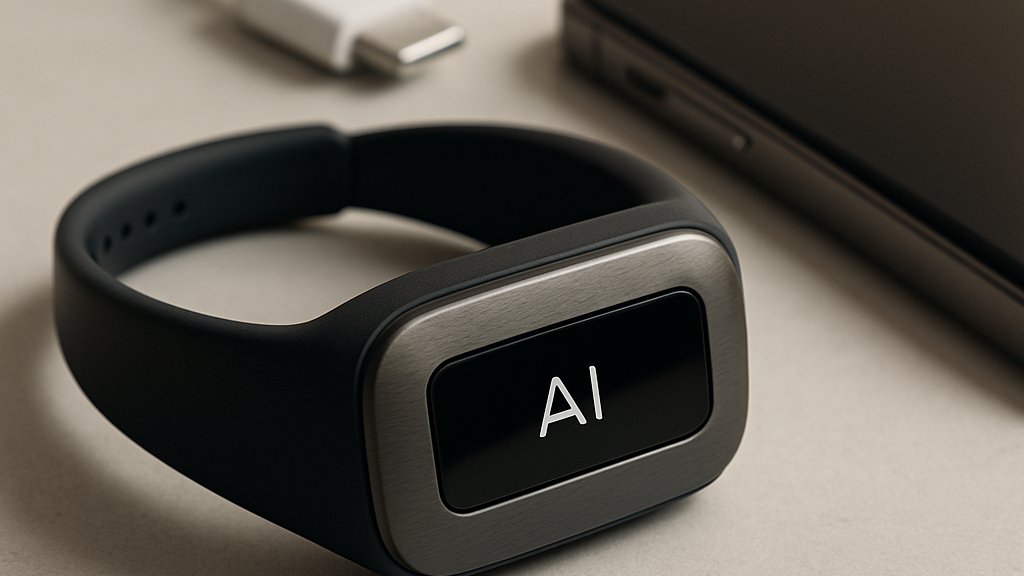
Funding Signals Market Confidence
Redstart Labs and 360 ONE Asset co-led the seed, with MIXI Global, Antler, and Blume Founders Fund joining. Additionally, angel backers include Kunal Shah, Razorpay’s cofounders, and other serial operators. Sources say term sheets closed quickly once prototypes demonstrated reliable agent control. The cash will finance manufacturing setups in Bengaluru, assist firmware sprints, and expand user pilots.
India’s overall hardware funding environment cooled last year. However, investors still chase differentiated silicon or interface bets tied to ambient computing. Aina’s round, though modest, landed during a quarter when many consumer deals stalled. Consequently, analysts view the raise as a confidence signal for early-stage AI Agent Devices.
The new capital also funds regulatory testing across multiple markets. In contrast, rival Humane required larger checks to clear certification hurdles post-launch. Therefore, Aina’s leaner model may stretch runway further.
Funding validates early traction. However, scaling will test burn discipline next. These pressures lead naturally to the founder’s hardware track record.
Founder Brings Hardware Experience
Chief executive Apoorv Shankar previously built LazyCo, later sold to healthtech brand Ultrahuman. Subsequently, he served as VP Hardware, shipping sensors under tight timelines. Moreover, the team now counts 35 employees split across design, firmware, and supply-chain roles. That footprint positions the wearable startup to iterate quickly inside India’s maturing component ecosystem.
Early this year, Aina shipped “Dune,” a three-key programmable pad for Mac power users. Although only “hundreds” reached customers, usage logs supplied valuable data on agent control latency and haptic cues. Furthermore, CES showcased two additional demos—Radiance and Shift—that refined gesture libraries for future AI interface modules.
Most importantly, Shankar stresses human-in-the-loop design. “The missing piece today is an easier way to capture human approval,” he said. Consequently, every prototype emphasized quick confirmations that align with emerging AI Agent Devices protocols.
The founder’s résumé de-risks execution. Nevertheless, market headwinds could overwhelm even seasoned builders. The next section quantifies opportunity size.
Market Growth Metrics Surge
Grand View Research projects India’s AI hardware revenue will expand from USD 6.08 billion in 2025 to USD 46.52 billion by 2033. Moreover, global wearable AI could rocket from USD 56.6 billion in 2026 to USD 310.6 billion in 2033. Those numbers translate to compound growth near 28 percent—higher than most consumer electronics segments.
The following figures frame potential upside:
- 27.8 percent CAGR for global wearable AI through 2033
- Asia-Pacific forecast to lead shipments by volume
- Sensors and on-device inference driving margin expansion
- Developer spend on AI interface SDKs rising annually
Additionally, intelligence commoditization favors slim hardware layers that harvest context. Consequently, devices like Aina’s could sit atop existing cloud agents without chasing model wars. Meanwhile, brands that nail power efficiency may capture first-mover stickiness.
Still, rosy projections cannot mask execution risk. Therefore, assessing rivals provides needed caution before enthusiasm outruns reality.
Growth projections excite investors. However, stiff competition shapes go-to-market playbooks next.
Competitive Landscape And Risks
Humane’s AI Pin and Rabbit’s R1 launched with fanfare yet endured poor battery life, laggy agent control, and limited integrations. Consequently, reviewers panned everyday utility. In contrast, big platforms—Meta, Apple, Google—invest heavily in glasses, earbuds, and chipsets, creating high entry barriers.
Aina claims its general-purpose AI interface will avoid first-gen missteps by narrowing scope: capture context, surface micro-confirmations, then hand off heavy reasoning to remote models. Nevertheless, incumbents could rapidly copy tactile shortcuts once user demand hardens. Moreover, sustained hardware funding access may hinge on early unit economics, not vision alone.
Regulatory scrutiny presents another hazard. Meanwhile, privacy advocates question always-listening wearables even when on-device encryption reduces exposure. Therefore, transparent data policies will prove critical for all AI Agent Devices.
Risks underscore why careful engineering choices dictate survival. The following section dives into those tradeoffs.
Technical Challenges And Choices
Designing sub-20 gram form factors forces brutal compromises. Battery chemistry, thermal envelopes, and antenna tuning clash inside miniature casings. Additionally, on-device neural processing boosts speed yet drains cells rapidly. Consequently, Aina prototypes reportedly offload large language queries to the cloud while reserving sensor fusion locally.
Developers also need robust APIs. Furthermore, partner services demand secure agent control hooks to avoid random actions. Aina says its SDK will expose intent signals while allowing enterprise overrides. Nevertheless, the roadmap lacks public release dates.
Component supply poses further risk. In contrast to U.S. fabs, India’s assembly lines still rely on imported microcontrollers. However, Bengaluru’s manufacturing cluster shortens shipping loops, trimming iteration lag for the wearable startup.
Professionals can deepen their domain mastery via the AI Agent Specialist™ certification. Completing this course sharpens skills in sensor fusion, privacy design, and ambient computing workflows—competencies vital to launching reliable AI Agent Devices.
Engineering hurdles remain steep. However, focused strategy may tilt odds toward success, examined next.
Strategic Outlook For Aina
Aina’s first commercial launch targets productivity power users who juggle frequent micro-tasks. Moreover, pilot waitlists prioritize Mac and Windows creators already familiar with shortcuts. That niche limits volumes initially yet sharpens feedback loops for the emerging AI interface.
Partnerships loom large. Consequently, discussions with calendar, note-taking, and payment platforms could embed deep agent control primitives. Meanwhile, workplace security buyers value on-device encryption, offering enterprise upsell paths.
The company also bets on India’s cost advantage. Furthermore, Bengaluru manufacturing reduces bill-of-materials while keeping engineers near factory floors. Lower capex eases future hardware funding dependence if adoption slows.
Finally, management hints at modular accessories—rings, desk buttons, or car mounts—that share firmware. Such diversification creates multiple entry points within broader ambient computing ecosystems and reinforces the family of AI Agent Devices.
Strategy blends niche focus with scalable ambition. Consequently, execution over the next 18 months will reveal if theory meets reality.
Aina earned investor trust through credible prototypes and a veteran founder. Meanwhile, massive market growth forecasts reward bold bets on tactile ambient computing. Nevertheless, engineering, privacy, and competition risks remain acute. Therefore, professionals following this space should track pilot feedback, SDK releases, and future funding milestones. Interested readers can sharpen expertise through the AI Agent Specialist™ program and stay ready for the next interface shift.
Disclaimer: Some content may be AI-generated or assisted and is provided ‘as is’ for informational purposes only, without warranties of accuracy or completeness, and does not imply endorsement or affiliation.


