

AI CERTS
1 hour ago
Roblox Mobile Push Redefines AI Game Creation at Scale
Moreover, safety advocates question whether AI generated scenes can meet Roblox’s strict moderation standards. This article unpacks Build’s technology, business impact, and competitive context for professionals. Readers will also find data-driven insights on user economics, potential risks, and certification paths. Consequently, you can assess whether Roblox’s mobile shift signals a broader wave for interactive platforms.
Mobile Creation Revolution Rises
Smartphones dominate online time for Gen Z players, yet most creation suites remain desktop bound. Therefore, Roblox designed Build as a native tab within its iOS and Android apps. Users aged nine or older can type a prompt and instantly explore a playable prototype.
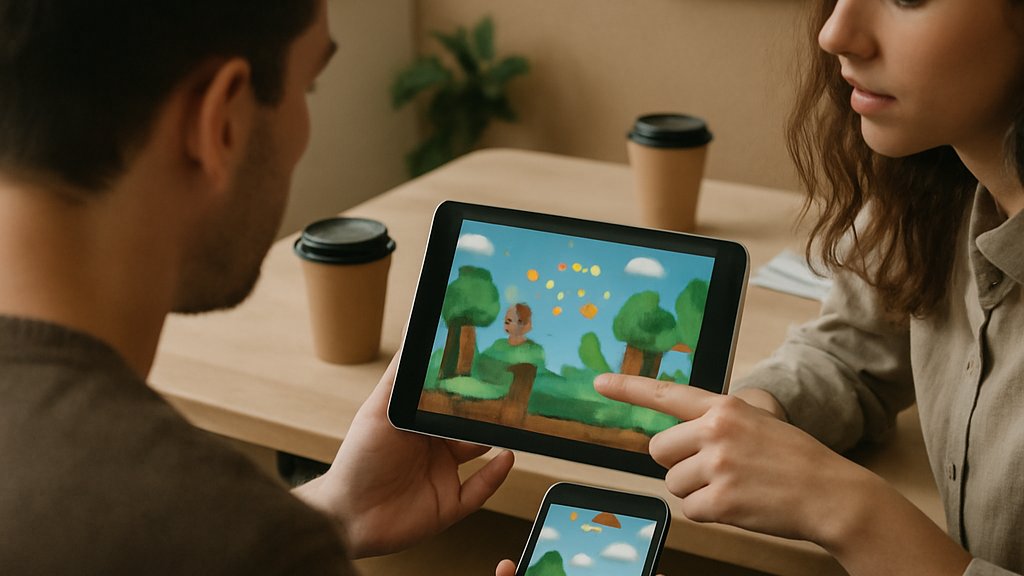
Additionally, Build layers buttons for materials, terrain, lighting, and monetization on a thumb-friendly ribbon. In contrast, classic Roblox Studio demands mouse precision, multiline scripting, and larger screens. Early testers praise Roblox AI for parsing casual language into coherent layouts. Industry watchers label this zero-install approach a decisive leap for mobile game tools.
Roblox reports 132 million daily active users and 31 billion quarterly hours engaged. Consequently, even modest creator uptake could flood the catalog with fresh experiences. MacRumors and Engadget already call Build the platform’s “TikTok moment” for rapid publishing.
Build positions Roblox as the first major platform to mainstream smartphone prototyping. However, understanding its AI stack clarifies how that promise becomes reality.
Inside Roblox Build Tools
Every Build session starts with a conversational text box capped at 200 characters. Subsequently, Roblox AI maps nouns to mesh templates, applies materials, and arranges spatial anchors. The Cube foundation model, trained on billions of labeled assets, handles the heavy lifting.
Moreover, procedural models add trees, crowds, and particle effects through probabilistic rules. Assistant agents then run a silent playtest, seeking spawn-point traps and unreachable items. Consequently, creators receive plain-language bug reports and slider recommendations.
AI Game Creation also integrates analytics and experimentation agents that suggest A/B monetization tweaks. Meanwhile, plain dashboards reveal retention dips after cut-scenes or paywalls. Such insight previously required spreadsheet exports and third-party plug-ins.
Key technical facts include:
- Inference latency for AI Game Creation averages 2.3 seconds on mid-tier phones.
- Cube model compresses 20 million parameters for on-device rendering.
- Assistant usage already spans 44% of top 1,000 creators.
- Build alpha launches July 28 for age-checked New Zealand users.
Together, these modules convert fleeting ideas into structured, measurable games within minutes. Consequently, Studio upgrades extend those gains for power users.
Agentic Studio Upgrades Explained
Roblox Studio still anchors serious game development on desktop. However, new agentic workflows shrink iteration loops dramatically. Creators prompt the Assistant to “add multiplayer lobby” and watch code, assets, and UI appear.
Additionally, a Test agent spawns bots that traverse maps and log collision data. In contrast, earlier versions required manual QA sessions that consumed countless hours. Assistant adoption already touches 44 percent of top thousand creators, according to Nick Tornow.
Roblox AI also plugs into the Managed Creator Platform, letting Unity or Blender plugins access the same models. Moreover, third-party vendors can commercialize niche asset generators without hosting their own inference stack. This ecosystem strategy mirrors open-core playbooks seen in broader generative gaming circles.
AI Game Creation now spans mobile Build and desktop Studio, giving teams unified version control. Consequently, knowledge transfers seamlessly when projects graduate from phone edits to advanced Lua scripting.
Agentic upgrades compress production cycles while widening participation. Nevertheless, the economics for new entrants deserve equal scrutiny.
Opportunities For Creator Economy
Roblox paid out roughly $740 million to creators in 2025 and expects higher 2026 figures. Therefore, lowering entry barriers could expand the creator economy far beyond today’s 1.9 million payers. Small studios can test concepts during school commutes and iterate after dinner.
Additionally, AI Game Creation removes early engineering costs, letting teams focus on narrative and community. Mobile game tools further shorten time-to-market, boosting retention metrics that drive Roblox’s bookings. Consequently, revenue share might tilt toward micro-hit makers rather than a few blockbuster tycoons.
Professionals can enhance their expertise with the AI Gaming certification. Moreover, such credentials validate workflow knowledge across AI pipelines and platform policies. Certified creators may gain priority placement in talent marketplaces serving enterprise brand partnerships.
Platform assistants democratize revenue potential while spawning new service industries. However, scaling benefits also magnifies platform risks.
Risks And Policy Hurdles
Generative gaming often spawns low-effort clones dubbed “AI slop” by critics. Meanwhile, Build’s safety pipeline must block copyrighted textures and hate symbols. Roblox promises human review before global publishing for users under sixteen.
Furthermore, moderation delays could frustrate creators expecting instant deployment. Legal experts also cite unresolved IP provenance questions around model training data. Consequently, litigants may test Roblox’s indemnification clauses once AI Game Creation scales.
In contrast, child labor allegations from 2026 underscore labor fairness issues in the creator economy. Regulators may scrutinize Build’s monetization tiers for exploitative patterns. Therefore, transparent pricing and parental controls remain critical.
Quality, safety, and compliance challenges could slow adoption if mishandled. Nevertheless, competitive pressure ensures constant iteration.
Competitive Generative Gaming Landscape
Alphabet’s Playables, Unity Muse, and several startups chase similar text-to-world dreams. However, none match Roblox’s integrated social graph and payment rails. Consequently, first-mover advantage on mobile may widen Roblox’s moat.
Generative gaming innovation also appears in Fortnite Creative and Meta Horizon. Additionally, cross-platform portability remains an open battlefield. Game development leaders vie to own creator mindshare before user loyalty crystallizes.
Roblox AI pushes ahead with 4D generation that outputs animated cut-scenes from single prompts. Moreover, Cube’s tight coupling with Lua physics produces assets ready for immediate simulation. That velocity differentiates AI Game Creation from generic art models.
Competition validates market demand for frictionless creation. Therefore, developers should watch pricing and latency benchmarks closely.
Next Steps For Developers
Interested teams should enroll for New Zealand’s alpha or join the waitlist via the Developer Forum. Meanwhile, gathering diverse prompt libraries will improve model outputs during early sprints. Mobile game tools benefit from concise verbs, clear genre tags, and scale references.
Additionally, studios can prototype monetization flows using the analytics agent before committing premium art. Game development veterans may compare retention curves against benchmark dashboards provided by Roblox AI. Moreover, early feedback loops help Roblox refine guardrails and economic levers.
AI Game Creation should appear in enterprise RFPs once Build matures. Consequently, professionals who secure certification now will command higher rates later. Developers must also prepare compliance documentation to address global regulators.
Practitioner readiness determines who captures the next growth wave. In contrast, passive observers risk irrelevance.
Roblox’s Build roll-out signals a profound shift from consumption toward participatory design. Moreover, AI Game Creation now meets players on the devices they already clutch daily. Consequently, mobile game tools and agentic workflows could unlock a broader creator economy. Nevertheless, sustained success will depend on moderation rigor, transparent terms, and high-quality assets. In contrast, rivals will keep iterating, pushing Roblox to refine AI Game Creation for performance and trust. Professionals should experiment early, pursue the linked certification, and position themselves for the next content boom.
Disclaimer: Some content may be AI-generated or assisted and is provided ‘as is’ for informational purposes only, without warranties of accuracy or completeness, and does not imply endorsement or affiliation.


