

AI CERTS
1 hour ago
Evolving MRI Report AI for Brain Oncology
Moreover, hospitals demand workflows that fit regulatory guardrails and busy reading rooms. This article unpacks the latest science, benchmarks, and implementation lessons shaping next-generation MRI Report AI.
Evolving MRI Report AI
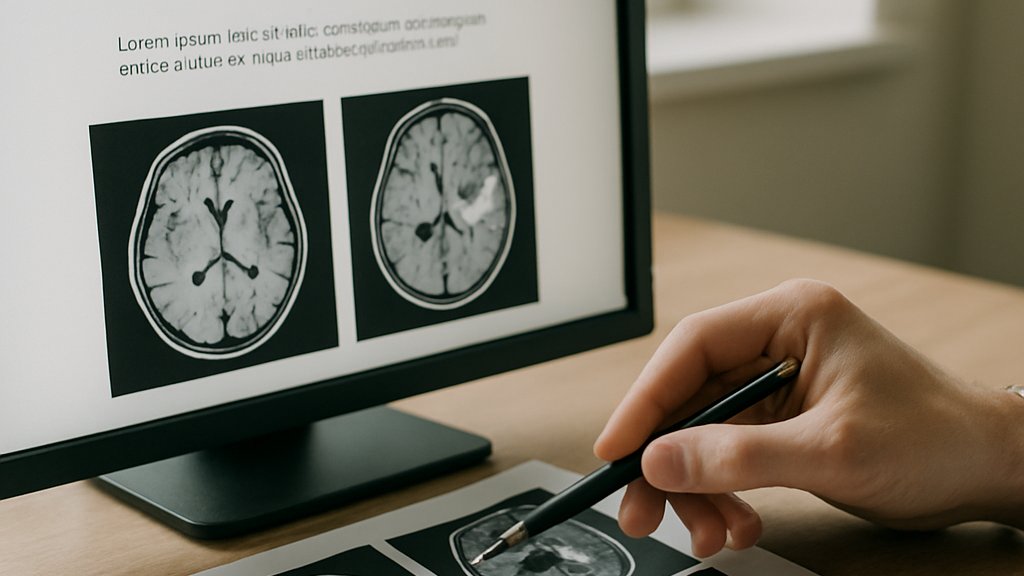
Brain oncology imaging once relied solely on descriptive dictation. Subsequently, template-based radiology reporting emerged to reduce ambiguity. Now, multimodal transformers promise another leap. The primary catalyst is MRI Report AI, which couples image encoders with medical language models to generate structured findings, impressions, and even differential diagnoses.
MM-NeuroOnco, released in February 2026, offered 24,726 slices and 200,000 instruction pairs for visual instruction tuning. Meanwhile, Sungkyunkwan University introduced a collaborative framework where ChatGPT-4o-mini drafts reports and peer models—Claude, Gemini, DeepSeek—vote on refinements. Consequently, their 3D VLM achieved 80.61 BERT-F1 on BraTS2021, far surpassing 2D baselines.
Feasibility trials extend beyond metrics. In March 2026, European investigators found Sonnet 3.5 described glioma anatomy flawlessly but struggled with lesion sizing. Nevertheless, trainees improved diagnostic accuracy by up to 19.4 percentage points when assisted by medical language models.
These advances mark a turning point. However, persistent hallucinations, limited external validation, and regulatory uncertainty temper immediate deployment.
Key insights underscore the landscape. Nevertheless, deeper pipeline mechanics merit inspection.
Inside Multi-LLM Pipeline
The collaborative pipeline begins with synthetic 3D MRI–text pair generation. Firstly, a vision encoder tokenizes volumes via VQ-GAN. Secondly, ChatGPT-4o-mini produces an initial draft conditioned on those tokens. Furthermore, reviewer LLMs critique style, factuality, and measurement fidelity. A voting scheme then fuses accepted spans, reducing single-model bias.
Visual instruction tuning aligns the fused text with latent image tokens. Consequently, the 3D VLM learns to map tumor margins, peritumoral edema, and postoperative cavities to precise lexical tokens. During inference, the model answers targeted VQA prompts or drafts full reports without external reviewers.
Performance highlights include 91.69% VQA accuracy on BraTS2021 and 88.95% on BraTS2023. Moreover, BLEU, ROUGE, and METEOR metrics all improved versus 2D LLaVA-Med and M3D baselines.
- BLEU 11.72 versus 7.56 (baseline)
- ROUGE 43.57 versus 29.13
- METEOR 33.59 versus 20.02
Nevertheless, authors caution that automated metrics correlate imperfectly with clinical correctness. Therefore, human QA remains mandatory. These mechanics inform dataset strategies, examined next.
The pipeline efficiencies depend on abundant, diverse data. Consequently, researchers pursue expansion tactics.
Dataset Expansion Strategies Explained
Scarcity of paired 3D MRI and expert reports once throttled progress. However, three complementary approaches now dominate. First, synthetic pairing uses MRI Report AI to draft provisional text for legacy scans lacking documentation. Second, weak supervision repurposes PACS meta-data, extracting tumor labels to create structured prompts. Third, cross-institution sharing pools anonymized studies through federated learning, sidestepping governance obstacles.
MM-NeuroOnco illustrates synthetic scale. Additionally, BTReport-BraTS packages domain-tuned instruction pairs that pretrained medical language models can consume directly. In contrast, federated consortia, such as the European Brain Tumor Federation, test secure gradient sharing to preserve privacy.
Consequently, dataset volume and heterogeneity improve, which boosts generalizability across scanners, protocols, and demographic factors. Nevertheless, increased size alone does not nullify hallucination risk. Closing that gap requires clinical reader studies.
Expanded data fuel better models. However, impact on practicing clinicians determines true value, explored next.
Clinical Reader Impact Findings
Radiology, in May 2026, reported that AI assistance most benefits less-experienced readers. Neurology residents improved top-3 differential accuracy from 41.8% to 61.2%. Moreover, radiology residents gained 14.7 percentage points, while neuroradiologists gained 4.4.
Interestingly, accuracy uplift correlated inversely with user expertise. Consequently, oversight importance grows as expertise wanes. Authors noted unchanged interpretation time, indicating smooth workflow fit.
Another study evaluated open-ended reports on 38 glioma follow-ups. Sonnet 3.5 achieved 100% anatomy identification yet only 76.32% pathology detection. GPT-4o trailed at 55.26%. Both models mis-estimated lesion size in 24% of cases.
Nevertheless, structured prompts and human-in-the-loop editing reduced major errors to clinically tolerable levels. Therefore, combining AI drafts with targeted verification delivers tangible value.
These findings clarify benefits but highlight risk. Subsequently, balancing pros and cons becomes critical.
Benefits And Persisting Risks
Advantages of MRI Report AI span efficiency, scalability, and educational utility. Drafting times drop from minutes to seconds, freeing radiologists for consultative tasks. Standardized terminology also enhances longitudinal consistency within clinical imaging archives.
Furthermore, multi-LLM ensembles reduce single-model hallucinations by leveraging complementary strengths. Consequently, report similarity and VQA accuracy reach near-expert levels in benchmark settings. Additionally, structured outputs feed downstream analytics, aiding clinical trial enrollment and tumor board preparation.
However, risks remain. Hallucination rates of 15–22% persist in prospective reviews. Moreover, lesion measurement inaccuracies threaten treatment planning. In contrast, narrow benchmark gains may not reflect real-world heterogeneity. Regulatory ambiguity and liability exposure further complicate adoption.
Experts therefore advocate retrieval-augmented generation, provenance tagging, and mandated human sign-off. These measures curb misleading content while preserving productivity gains.
Benefit-risk equilibrium shapes implementation roadmaps, addressed in the next section.
Implementation And Regulatory Path
Hospitals exploring MRI Report AI face technical, operational, and legal hurdles. Firstly, latency must remain under 30 seconds to fit busy reading rooms. Secondly, protected health information requires on-premises or hybrid deployment with strict audit trails. Thirdly, radiology reporting systems need API hooks for seamless draft ingestion.
From a regulatory standpoint, the FDA has cleared many image-analysis algorithms but no fully autonomous report generator. Consequently, vendors pursue decision-support labeling and demand explicit human confirmation before final sign-off.
Clinicians seeking structured upskilling can validate competencies through the AI Doctor™ certification. This program covers medical language models, visual instruction tuning, and governance principles.
Implementation blueprints often follow a phased approach:
- Pilot on retrospective cases with parallel human reporting.
- Deploy live drafts for resident review under attending oversight.
- Expand to full service lines after prospective audit success.
Nevertheless, continuous monitoring, version control, and feedback loops remain essential. Therefore, governance committees should oversee AI lifecycle management.
These pathways bridge research and practice. Yet, future horizons invite even broader transformation.
Future Outlook And Actions
Research momentum shows no sign of slowing. Moreover, neuro-oncology groups plan multi-center trials that measure patient outcomes, not just report fidelity. Concurrently, hybrid agents that combine retrieval, segmentation, and reasoning promise further gains.
Standards bodies, including DICOM WG-23, draft metadata schemas for AI provenance. Consequently, automated attribution of MRI Report AI contributions will support auditability. Additionally, open benchmarks such as MM-NeuroOnco-v2 will evaluate robustness against unseen scanners and rare pathologies.
Industry watchers expect first FDA clearances for decision-support LLMs within two years. However, fully autonomous radiology reporting for clinical imaging may remain longer-term. Professionals should therefore engage now, test prototypes, and refine human-in-the-loop designs.
These steps will steer responsible innovation while ensuring patients benefit safely and promptly.
Conclusion And Next Steps
MRI Report AI now delivers higher accuracy, faster drafts, and educational gains for brain oncology imaging. Multi-LLM refinement, visual instruction tuning, and expanding datasets drive the progress. Nevertheless, hallucinations, measurement errors, and regulatory gaps demand vigilant governance.
Hospitals should pilot decision-support workflows, enforce human oversight, and pursue structured training. Consequently, clinicians can harness AI strengths while protecting patients. Ready to lead the change? Explore the linked certification and begin shaping the future of radiology reporting today.
Disclaimer: Some content may be AI-generated or assisted and is provided ‘as is’ for informational purposes only, without warranties of accuracy or completeness, and does not imply endorsement or affiliation.


