

AI CERTS
3 hours ago
Vision Language Action: CLAP Models Redefine Robot Control
In contrast, the second team preserves pretrained semantics with a simple language prefix. Both groups report record scores on the LIBERO benchmark. Additionally, preliminary hardware trials show encouraging pick-and-place success. Yet, robustness questions persist because adversarial tests often reveal brittleness. Nevertheless, community code releases enable rapid validation. Therefore, industry stakeholders must understand the technical nuances, limitations, and commercial implications. The following analysis unpacks the dual CLAP proposals, benchmarks, and future directions for autonomous manipulation.
From VLMs To VLA
Foundation models that fuse images and text already power search and captioning. However, manipulation demands additional predictions. Consequently, researchers extend vision-language models toward motor commands, creating vision-language-action systems. This transition, named VLA, requires careful VLM adaptation so semantic capacity survives fine-tuning. Furthermore, successful pipelines must deliver low-latency control on embedded processors. Robust action grounding is equally critical because numeric outputs must match joint limits and safety margins.
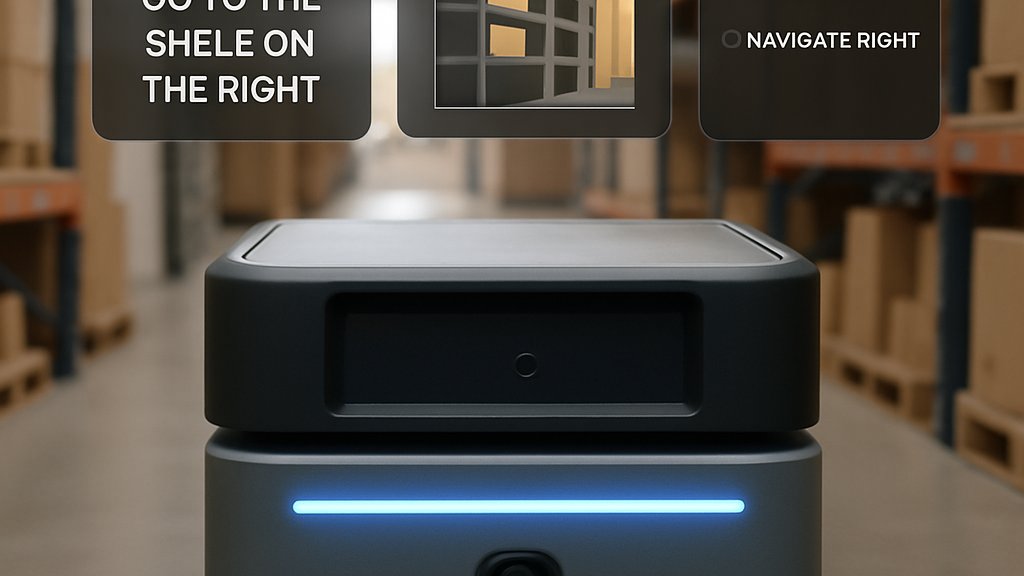
Previously, engineers relied on behavior cloning with small robot datasets. Meanwhile, unlabeled web videos exploded in volume. The CLAP proposals exploit this abundance by translating diverse demonstrations into a discrete action space understood by robots. These ideas inspired an industry debate on how embodied models can benefit from multimodal agents originally built for chat or perception. As we examine each CLAP variant, specific trade-offs emerge.
CLAP arises from the need to retain language understanding while injecting precise control. Consequently, the next section details the contrastive pipeline.
Contrastive CLAP Training Pipeline
The contrastive CLAP paper introduces Act-VAE to learn latent tokens from robot trajectories. Subsequently, human video transitions are aligned to these tokens with a contrastive loss. Therefore, human clips become pseudo-labeled demonstrations without expensive motion capture. This clever VLM adaptation step keeps semantic features intact while adding motor context. Moreover, the model trains two policy heads: CLAP-NTP for high accuracy and CLAP-RF for real-time deployment.
When deployed, the resulting policy processes Vision Language Action sequences at 15 frames per second on a single GPU, enabling responsive pick-and-place.
- LIBERO success: 97.2% average, outperforming baselines by 14.3 points.
- Robustness under shifted backgrounds: 70.0% versus baselines at 56.7% and 16.7%.
- Real robot pick-and-place: 62.7% mean success, surpassing earlier π0 and π0.5 controllers.
- OOD Make Bouquets task improved from 10% to 45% with human video pretraining.
These figures illustrate strong action grounding and generalization. Nevertheless, benchmark gains do not equal safety. Authors acknowledge that more exhaustive trials on open-ended robot control scenarios remain necessary.
Importantly, the team emphasizes that every Vision Language Action token triple remains interpretable, aiding debugging and compliance.
Contrastive CLAP leverages abundant video to bootstrap embodied models efficiently. However, another group pursued a lighter fine-tuning recipe, described next.
Causal CLAP Prefix Technique
The causal CLAP paper keeps the backbone frozen yet prepends a short language phrase before each numeric action token. Consequently, every prediction step stays closer to the original language distribution. Researchers report single-epoch convergence, reducing power bills and development time. Moreover, semantic retention helps multimodal agents answer task clarification questions during execution, a valuable safety feature.
After integrating the prefix, a 2 billion parameter policy achieved 90.8% LIBERO performance in six hours on eight GPUs. Meanwhile, smaller 0.8 billion variants reached competitive scores. These results underline how Vision Language Action potential scales with efficient conditioning. Additionally, action grounding remained stable because numeric tokens were unchanged.
The simple prefix strategy also reduces catastrophic forgetting during VLM adaptation. Therefore, downstream dialog, scene reasoning, and action planning coexist within one checkpoint. Such flexibility benefits industrial robot control pipelines that must execute tasks while answering operator questions.
Because the prefix is readable, operators can audit Vision Language Action sequences before execution.
Causal CLAP shows that thoughtful prompting can outperform heavier retraining. Consequently, evaluation details deserve closer inspection, particularly regarding robustness.
Benchmark Results And Limits
Both CLAP variants dominate the standard LIBERO leaderboard. However, external studies using LIBERO-Plus expose fragilities under linguistic paraphrase and visual noise. In contrast, baseline scores drop only slightly when tasks remain within distribution. These findings indicate that embodied models still overfit benchmark phrasing.
Moreover, independent researchers showed multimodal agents misinterpret ambiguous commands, leading to unsafe motions. Consequently, action grounding verification remains a priority before factory deployment. Nevertheless, public checkpoints accelerate community stress testing. LIBERO-Plus stresses each Vision Language Action policy with lighting noise, revealing important failure modes.
- Naming ambiguity: multiple CLAP acronyms confuse newcomers.
- Real-world robot control still demands latency optimizations.
- Safety certification: no standard currently confirms fail-safe behavior.
High scores excite investors yet mask unresolved reliability issues. Therefore, practical adoption strategies must address these gaps, as explored next.
Implications For Robot Control
Manufacturers crave adaptable automation that handles novel parts and instructions. The dual CLAP research suggests a scalable route for robot control. Furthermore, latent token policies compress high-dimensional actions, easing deployment on limited hardware. Additionally, language prefixes enable on-the-fly clarification, improving human-robot collaboration.
By treating instructions, images, and motions as a unified Vision Language Action stream, engineers gain flexibility. They can update skills through cloud data without rewiring control stacks.
However, meeting production standards requires validation. Consequently, companies explore digital twins combined with CLAP policies for accelerated testing. Professionals can enhance their expertise with the AI-Context Engineering™ certification. This program teaches risk analysis for advanced Vision Language Action deployments.
Such progress positions embodied models as flexible coworkers across manufacturing, logistics, and healthcare.
Strategic certification and simulation mitigate many hurdles. Nevertheless, ongoing research promises further improvements, discussed below.
Next Steps And Research
Upcoming work targets stable open-world generalization. Therefore, authors plan expanded datasets featuring weather shifts and adversarial objects. Meanwhile, community forks already integrate tactile sensing, turning CLAP into richer multimodal agents.
Researchers also investigate continual learning to update policies without forgetting old tasks. Such methods would let Vision Language Action systems evolve alongside factory lines. Additionally, tighter coupling between simulation and reality could cut demonstration costs.
Finally, standardization bodies discuss formal test suites for motion safety. Consequently, the industry may soon mirror automotive ISO standards. Until then, transparent benchmarks and open-source checkpoints remain vital.
Future studies will determine whether CLAP variants mature into dependable production tools. However, early momentum appears strong.
Conclusion And Strategic Outlook
The evidence shows steady progress toward unified Vision Language Action autonomy. Contrastive and causal CLAP variants each advance VLM adaptation, multimodal agents, and action grounding. Moreover, record LIBERO scores indicate rapid performance gains, while real-world trials hint at commercial viability. Nevertheless, robustness gaps and safety certification remain unresolved. Therefore, professionals should monitor benchmark updates and pursue structured training. Consequently, readers are encouraged to explore the linked certification and join community replication efforts to shape the next generation of robot control platforms.
Disclaimer: Some content may be AI-generated or assisted and is provided ‘as is’ for informational purposes only, without warranties of accuracy or completeness, and does not imply endorsement or affiliation.


