

AI CERTS
1 hour ago
One Shot Robotics: Force-Constrained Maps Reshape Learning
The technique operates in a true One Shot Robotics setting, needing only one demonstration. Moreover, experiments across two robot platforms confirmed safety as peak forces fell by 84 percent. These results matter for assembly, packaging, and many other industrial robotics deployments. The following analysis unpacks the algorithm, numbers, benefits, and business impact.
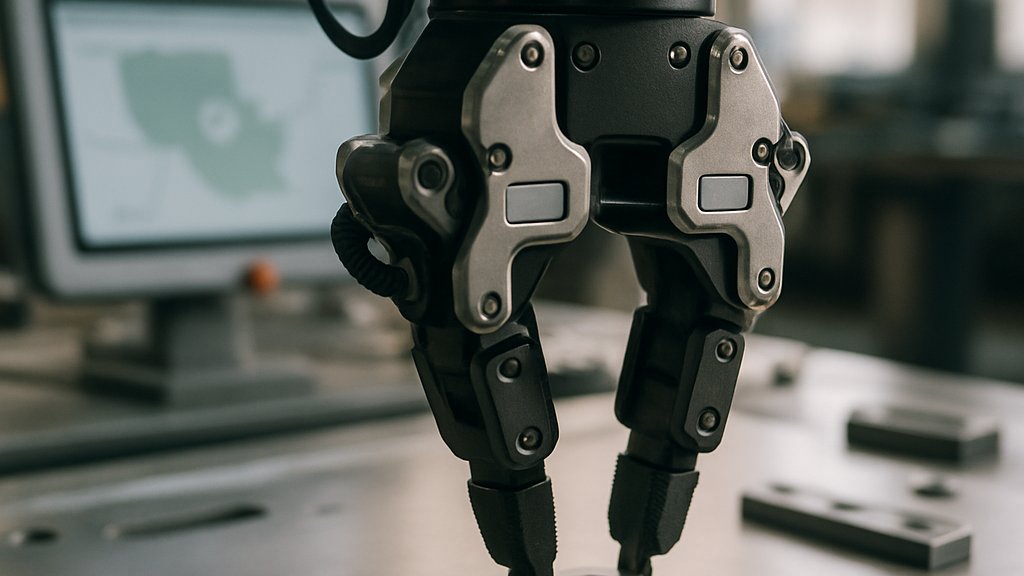
Why Forces Really Matter
Historically, imitation frameworks track only position trajectories. However, contact tasks rely on precise force modulation to avoid chatter, slip, or breakage. In contrast, skilled humans subconsciously blend pose and pressure.
Ignoring forces therefore restricts deployment in polishing, pressing, and insertion. Hybrid force control can address that gap yet requires manual subspace design. The new method embeds forces directly into the learned map. Consequently, robots reproduce demonstrated wrench profiles alongside motion. The resulting policy preserves compliance even when fixtures shift slightly.
Force inclusion unlocks delicate yet reliable behavior. Subsequently, the article moves deeper into the map formulation. Additionally, lower contact variance simplifies downstream quality assurance. Such stability proves vital for food and medical regulations.
Inside Force Elastic Maps
Elastic maps model demonstrations as graphs of spring-connected nodes. Each node aligns to the original trajectory while the springs penalize stretching and bending. Furthermore, force-constrained elastic maps add vector approximation weights shaped by measured wrenches.
This design converts external forces into extra springs, enabling One Shot Robotics deployments. During reproduction, convex optimization solves for a path that minimizes geometric and force errors. Moreover, a multimodal probabilistic segmentation first separates motion primitives whenever force or position patterns shift.
Adaptive weighting between modalities yields segments aligned with pressing, sliding, or free-space travel. Consequently, each segment receives a tailored controller selecting either position or force control emphasis. The framework completes with a one-shot demonstration pipeline requiring no iterative tuning.
Elastic graph physics captures both shape and pressure elegantly. Therefore, understanding the experimental evidence becomes essential. Meanwhile, convexity guarantees solver speed within milliseconds. Therefore, embedded controllers can run the optimizer at 250 Hz on edge CPUs.
Experiment Highlights And Statistics
The authors validated the method on five real manipulation tasks. Tasks included whiteboard erasing, peg insertion, and delicate pressing. Meanwhile, two hardware stacks evaluated cross-platform generality.
A UR5e with wrist sensing handled factory-style pushes. In contrast, a Kinova Gen3 with fingertip sensors tackled object squeezing.
Key Performance Numbers Reported
- Peak pressing force reduced by 84.35% using One Shot Robotics method.
- Average force cut up to 66.6% across tasks.
- One-shot demonstration reproduced successfully on both robots.
- Per-axis finger force closely matched demonstrations, per Table IV.
Moreover, position accuracy stayed within 2 millimeters despite the softer contact profile. Fast adaptation emerged because no retraining occurred when swapping grippers. Consequently, industrial robotics integrators can envision rapid line changeovers.
The study repeated each skill five times and observed consistent reductions. Nevertheless, demonstrations triggering emergency stops were discarded, showing some safety dependence on instructor quality. Researchers reported average solving times below 5 milliseconds on standard desktops. Therefore, cycle times matched existing industrial PLC requirements.
Numbers confirm that force guidance improves both safety and fidelity. Subsequently, benefits and open limitations deserve scrutiny.
Benefits And Remaining Limits
Advantages begin with data efficiency. One Shot Robotics practitioners save time because only a single trial is required. Additionally, the convex optimizer delivers predictable convergence.
Safety gains appear impressive, with force peaks falling below damaging thresholds. Moreover, multimodal imitation captures critical contact transitions automatically. The cross-platform results show One Shot Robotics scalability across sensors.
Nevertheless, reliance on calibrated force sensing remains a vulnerability. No public code currently exists, hindering independent validation. Furthermore, inheriting flaws from a single demonstration can still happen. A noisy one-shot demonstration may encode unwanted jerks or misaligned frames.
Industrial robotics teams should therefore curate demos carefully. These factors outline both strengths and gaps. Consequently, market adoption will depend on mitigation strategies discussed next.
Overall, benefits outweigh the current limitations for many contact tasks. Therefore, forecasting impact offers helpful context.
Industrial Impact And Forecast
Manufacturers crave solutions that cut programming downtime. One Shot Robotics with force-aware maps promises exactly that. Moreover, fast adaptation allows tool swaps without rewiring motion plans.
System integrators can now quote shorter commissioning schedules. In contrast, vision-only learners often require days of retraining. Hardware costs also drop because safer forces reduce reinforced fixturing needs.
Additionally, regulatory compliance improves when peak loads stay lower. Analysts expect early pilots inside electronics assembly, food packaging, and medical device kitting. Gartner already projects a 25 percent rise in compliant industrial robotics investments by 2028.
Nevertheless, sensor calibration services will grow alongside deployment. These market signals indicate growing demand for skills discussed below.
Adoption curves appear steep once reliability concerns ease. Subsequently, engineers should examine available training paths.
Upskilling Paths For Engineers
Robotics professionals supporting One Shot Robotics must blend control theory with data science. Multimodal imitation workflows demand understanding of probabilistic segmentation. Furthermore, force control tuning remains indispensable for final validation.
Engineers seeking rapid credibility can pursue specialized certifications. Professionals can pursue the AI+ Robotics™ certification. Moreover, vendor courses now emphasize fast adaptation and safe compliance.
Workshops often provide low-cost force sensors for take-home practice. Consequently, talent pipelines will expand quickly. Targeted education makes emerging tools productive sooner. Therefore, we conclude with practical next steps.
Conclusion And Next Steps
Force-constrained maps bridge the gap between vision imitation and reliable contact work. One Shot Robotics now looks attainable for many factories with existing six-axis arms. Moreover, the presented framework delivers fast adaptation without sacrificing accuracy.
Multimodal imitation, segmentation, and convex optimization converge into a single pipeline. However, wide rollout demands cheaper, rugged force sensors and public code releases. Professionals can prepare by refining force control skills and earning respected certifications.
Consequently, early adopters will enjoy shorter changeovers, higher yield, and safer cells. Explore One Shot Robotics further and secure your competitive edge today. Start prototyping One Shot Robotics solutions before your competitors learn the trick.
Disclaimer: Some content may be AI-generated or assisted and is provided ‘as is’ for informational purposes only, without warranties of accuracy or completeness, and does not imply endorsement or affiliation.


