

AI CERTS
59 minutes ago
Robot Action Learning: Actor-Critic Transformers Explained
Transformers Meet Robotic Policy
Decision and Action Chunking Transformers convert sequences into control. Moreover, they compress several future commands into short chunks, lowering compounding error. The new PAC-ACT framework fine-tunes these pretrained blocks using actor-critic learning. Researchers reported Contour success jumping from 60% to 100% after only hours of post-training.
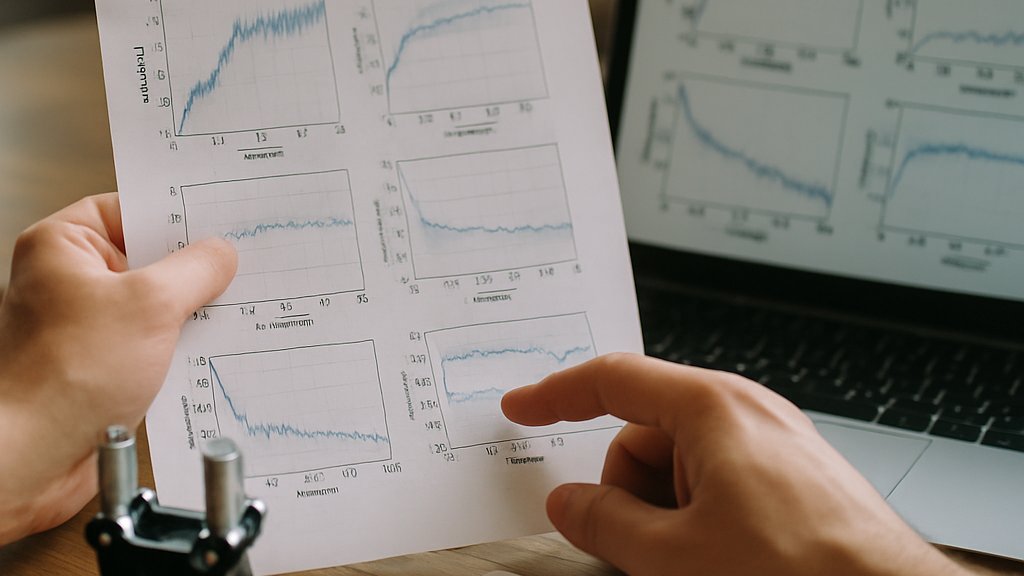
In contrast, T-SAC keeps a one-step actor but inserts a Transformer critic. This critic scans short trajectory windows and returns multi-step value estimates without importance sampling. Consequently, sparse reward tasks like Meta-World Box-Pushing reached 60% success under sparse feedback.
Robot Action Learning benefits because transformers capture long-range dependencies, while critics inject reward structure. Therefore, pairing both tools accelerates adaptation in unseen setups.
These architectural shifts establish the technical base. Nevertheless, understanding why actor-critic matters remains crucial. Let’s examine its role next.
Why Actor Critic Matters
Actor-critic learning splits decision making and evaluation. The actor proposes moves; the critic judges them. Additionally, value estimates shape gradients, enabling policy optimization beyond simple cloning.
Google DeepMind’s February 2024 study scaled offline actor-critic to 700-million-parameter Perceiver models. Results beat behavior cloning on 132 locomotion and manipulation tasks. Moreover, scaling laws mirrored supervised trends, guiding compute budgets.
Robot Action Learning gains stability through KL regularization toward offline data. Meanwhile, multi-task critics share representations, lifting sample efficiency across related duties.
- Performance: Average success improved by 18% versus cloning baselines.
- Data reuse: Offline datasets support repeated updates without new rollouts.
- Generalization: Cross-attention fused vision, force, and proprioception signals.
These numbers underscore why critics deserve attention. However, safety remains the next frontier, especially in contact-rich industries.
Actor-critic foundations set performance expectations. Subsequently, we explore post-training gains for safer manipulation.
Post-Training Safety Gains Explained
PAC-ACT introduces reward shaping for force minimization. Consequently, median peak force fell from 105.4 N to 20.74 N during Square Assembly. Importantly, the ratio of force readings above 60 N dropped forty-sixfold.
This post-training occurs after supervised pretraining. Therefore, engineers avoid collecting new collisions while still upgrading performance. Furthermore, a behavior prior preserves the original action distribution, preventing drastic deviations.
Robot Action Learning now reaches difficult corners of industrial assembly that once required meticulous programming. Additionally, the framework keeps inference latency unchanged because only training changes.
These safety metrics answer regulatory pressures. Nevertheless, scaling such methods needs careful analysis, which we address next.
Scaling Laws For Robots
Large transformers usually reward more data and parameters. The Perceiver actor-critic paper quantified this for continuous control. Performance followed a power-law with respect to parameter count until hardware saturation.
Moreover, mixed-precision training and sequence distillation controlled costs. Consequently, Robot Action Learning projects can budget resources predictably.
Action chunking changes the picture slightly. Chunk size influences latency and memory. Meanwhile, critic window length trades off credit assignment depth against compute.
These scaling patterns provide blueprints for CTOs planning fleet upgrades. However, deployment faces non-trivial obstacles, which we now review.
Deployment Challenges And Fixes
Real plants impose limited sensors, network delays, and strict uptime targets. Nevertheless, recent studies outline mitigation strategies.
Firstly, transformer robots can freeze critics after convergence, reducing runtime demand. Secondly, KL regularization guards against reward hacking during online fine-tuning. Additionally, hierarchical action chunking shortens sequences, keeping control loops responsive.
Key unresolved issues include multi-step return variance and unknown object surfaces. In contrast to simulation, real materials vary widely. Consequently, teams integrate tactile arrays and domain randomization for robustness.
These countermeasures shrink risk envelopes. Therefore, equipping staff with specialized credentials becomes the next logical step.
Certification Paths For Engineers
Technical leaders must translate research into production. Professionals can enhance their expertise with the AI Engineer™ certification.
The curriculum covers policy optimization, safe post-training, and transformer deployment. Moreover, hands-on labs feature action chunking tasks on simulated arms. Consequently, graduates drive Robot Action Learning initiatives from prototype to factory floor.
Additional credentials in safety analysis, cloud orchestration, and reinforcement learning complement this path. Furthermore, vendors increasingly require documented proficiency before granting system access.
Structured training closes the talent gap. Ultimately, certified engineers accelerate reliable automation rollouts.
These programs empower practitioners to implement the ideas discussed. However, continuous research will still shape future standards.
Conclusion And Next Steps
Actor-critic transformers now redefine Robot Action Learning by uniting temporal reasoning with reward feedback. PAC-ACT delivers post-training safety gains, while T-SAC improves sparse tasks through sequence-conditioned critics. Scaling studies reveal predictable returns on larger models, yet deployment demands careful engineering.
Additionally, certifications like the linked AI Engineer™ course provide structured routes for upskilling. Consequently, teams can translate academic advances into safe, efficient factories.
Adopt these frameworks, measure forces, and refine critics. Then share your findings and elevate robotics together.
Disclaimer: Some content may be AI-generated or assisted and is provided ‘as is’ for informational purposes only, without warranties of accuracy or completeness, and does not imply endorsement or affiliation.


