

AI CERTS
2 hours ago
Inverse Physics AI Revolutionizes Chaotic Flow Modeling
Moreover, new studies from 2026 demonstrate speedups exceeding 2,000× on standard CPUs. These gains invite serious attention from engineers designing sensors, control systems, and digital twins.
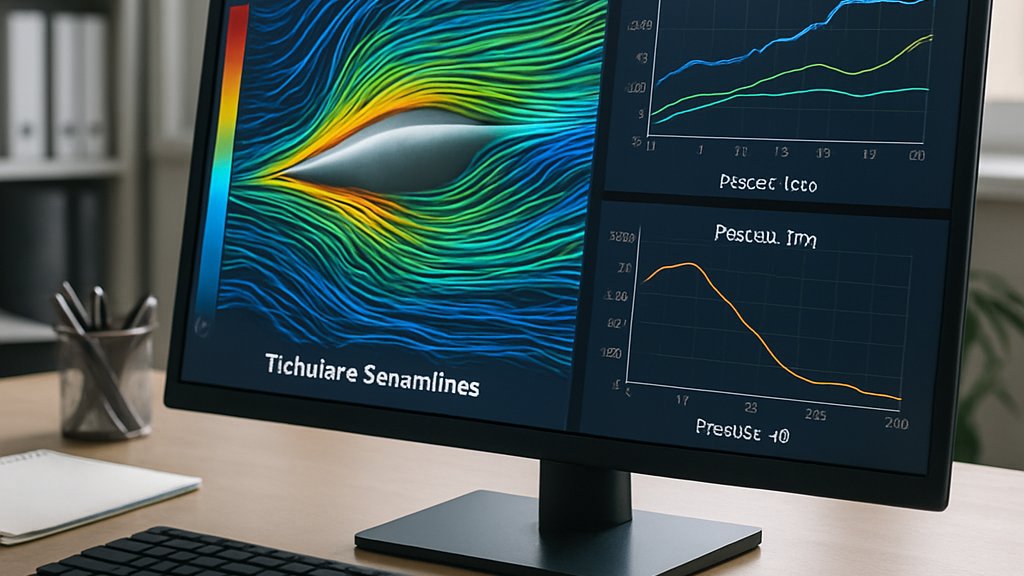
However, chaotic systems have long defeated conventional data assimilation, making the recent advances newsworthy. Reports on conditional flow matching now reveal robust uncertainty estimates and physics-faithful reconstructions. Therefore, enterprises exploring scientific AI see an opening to accelerate design cycles while cutting compute budgets.
This article dissects the techniques, benchmarks, and caveats behind the fast-moving field. Throughout, we will refer to Inverse Physics AI achievements and future outlook for professionals. Finally, we highlight upskilling paths, including an industry certification linking theory with production practice.
Why Flow Matching Matters
Flow matching learns a velocity field that pushes samples from a simple source to complex data. Unlike diffusion models, the method trains by direct regression, avoiding stochastic score estimation. Therefore, gradients stay stable even in high dimensions, a vital feature for Inverse Physics AI.
The ODE sampler further allows step sizes to adapt without violating learned manifolds. Consequently, physical constraints such as mass conservation remain intact during reconstruction. Researchers see this property as crucial when handling chaotic systems with sensitive dependence on inputs.
Lipman and colleagues formalised the idea in 2024 through the D-Flow project. Subsequently, several teams extended the formulation to inverse problems, culminating in conditional flow matching. Their momentum set the stage for recent performance leaps described next.
Taming Chaotic Physics Today
Chaotic dynamics amplify small measurement errors, frustrating classic variational assimilation. Therefore, obtaining reliable posterior statistics for Lorenz-63 or Kuramoto-Sivashinsky once required heavy MCMC sampling. Inverse Physics AI now integrates flow matching priors with smarter source-space samplers to overcome that barrier.
Parikh’s D-Flow SGLD algorithm illustrates the shift. Moreover, the team produced 100 posterior trajectories of the KS system in 578 seconds on a workstation. In contrast, deterministic optimization needed almost 12,000 seconds for the same ensemble.
Dasgupta's conditional flow matching model attacked Lorenz-63 with relative parameter errors near 1.5 percent. Consequently, practitioners get accurate forecasts even when sensors fail or noise rises sharply. Such resilience proves invaluable for weather agencies that routinely confront chaotic systems in operational pipelines.
Flow-based samplers dramatically cut runtime while respecting physical chaos. These wins prepare the ground for deeper algorithmic explanations ahead.
Conditional Models Explained Clearly
Conditional flow matching augments the velocity field with embedded observation vectors. Consequently, integrating the ODE yields samples that already satisfy measurement constraints. This trick converts Bayesian inversion into a deterministic feed-forward pass.
Researchers contrast three conditioning strategies in current literature. Guidance perturbs trajectories using likelihood gradients but risks off-manifold drift. D-Flow optimizes the source for each case; D-Flow SGLD strolls through the source posterior.
Meanwhile, conditional flow matching trains a single network that can sample in one shot. However, the model ties itself to the forward operator used during training. Therefore, new sensor layouts might necessitate retraining, imposing data collection costs.
Understanding these mechanics empowers engineers to choose paths that balance accuracy, compute, and flexibility. The next section reviews benchmark evidence supporting each approach.
Scientific AI Benchmarks Surge
Quantitative studies now underpin the hype with hard numbers. OpenReview reports Inverse Physics AI delivering 2,000× CPU speedups over MCMC on canonical inverse tasks. Moreover, relative errors fell to 1.5 percent on parameter recovery benchmarks.
Parikh’s turbulence inpainting preserved turbulent kinetic energy spectra under sparse probes. Consequently, the reconstructed fields matched high-fidelity DNS within engineering tolerance. Such fidelity matters when aerospace teams rely on scientific AI to validate design margins.
- 578 s vs 12,000 s ensemble generation for KS trajectories (D-Flow SGLD)
- 50 % RMSE reduction in soft-robot control with flow models
- 2,000× faster inference plus 1.5 % error on Bayesian benchmarks
These statistics showcase consistent gains across domains, from fluids to robotics. Consequently, enterprise leaders now budget for flow-based pipelines within digital twin roadmaps.
Benchmark wins validate the emerging paradigm. However, application diversity becomes clearer in the robotics discussion that follows.
Real World Robotics Gains
Yang’s group reframed soft-robot inverse dynamics as conditional flow matching. Therefore, their controller achieved sub-millisecond latency and halved trajectory errors. Inverse Physics AI again demonstrated real-time viability in hardware loops.
Additionally, peak end-effector velocity reached 1.14 m/s without sacrificing stability. Such figures exceed many reinforcement learning baselines while using modest compute. Consequently, manufacturers eye the technique for delicate surgical robots and agile grippers.
Robotics success underscores cross-domain transferability of the flow framework. Nevertheless, scaling to tens of limbs or hybrid actuators remains an open research question. These challenges segue into the broader risk landscape.
Soft-robot wins prove practicality yet also hint at remaining obstacles. The next section scrutinizes those limitations.
Current Limits And Risks
No technology is flawless, and flow models are no exception. Finite data can induce variance collapse, leading to selective memorization. Consequently, posterior uncertainty shrinks artificially, misleading decision makers.
Guidance based conditioning sometimes pushes samples off the learned manifold. In contrast, source-space sampling preserves latent structure but increases runtime per sample. Therefore, teams must weigh speed against physical fidelity for each project.
Compute budgets also remain significant during large-scale prior training. Nevertheless, amortized sampling eventually repays that investment when ensemble sizes grow. Moreover, reproducibility suffers because benchmark scripts differ across laboratories.
Understanding these hazards enables proactive mitigation plans. Subsequently, we outline skill paths and resources that support responsible adoption.
Skills And Next Steps
Professionals need cross-training in physics, generative modeling and parallel computing. Therefore, many practitioners pursue external credentials to validate their expertise. Engineers can enhance qualifications through the AI Data Robotics™ certification.
Additionally, reading original preprints deepens theoretical insight into conditional flow matching and chaotic systems. Hands-on projects, such as turbulence inpainting demos, build intuition quickly. Meanwhile, open-source libraries like FM-JAX simplify prototype deployment in scientific AI pipelines.
Upcoming conferences will likely publish replication studies and large-scale benchmarks. Consequently, staying engaged with these communities ensures skills remain current. Inverse Physics AI adoption will then spread across climate science, energy, and advanced manufacturing.
Skill development bridges theory with operational impact. Finally, we close with overarching conclusions and a direct call to act.
Inverse Physics AI has moved from promising concept to production-ready tool within two short years. Consequently, flow matching and source-space sampling now reconstruct chaotic systems with unprecedented speed. Benchmarks confirm parameter errors below two percent alongside 2,000× compute savings.
Moreover, robotics demonstrations underscore real-time control viability for delicate manipulators. Yet finite-data pitfalls and training compute still challenge widespread scientific AI deployments. Therefore, continuous skill growth in generative modeling and numerical analysis remains essential.
Professionals should explore the linked certification and experiment with open tools to secure early advantage. Adopt Inverse Physics AI today and shape the next generation of digital engineering. Your mastery of Inverse Physics AI and advanced modeling will position you at the forefront of innovation.
Disclaimer: Some content may be AI-generated or assisted and is provided ‘as is’ for informational purposes only, without warranties of accuracy or completeness, and does not imply endorsement or affiliation.


