

AI CERTS
3 hours ago
Energy Grid AI Powers Digital Twins for Coastal Wave Energy
The partnership signals a turning point for renewable power just as coastal compute demand surges. However, pilots sit at only 100 kilowatts today, highlighting commercial obstacles yet to be cleared. This article unpacks the strategy, the technology, and the hurdles shaping the next tide. Moreover, it explains why infrastructure analytics will decide who rides, and who misses, the wave. Professionals will find actionable insights, emerging standards, and a direct certification path into sustainable AI operations.
Expanding Wave Energy Opportunity
Global interest in wave energy has intensified over the past year. Consequently, Eco Wave Power reports a 404.7-megawatt pipeline spanning ports from Tel Aviv to Los Angeles. In contrast, the firm’s current U.S. pilot tops out at 100 kilowatts. That gap illustrates both promise and pressure. Moreover, the U.S. Energy Information Administration estimates theoretical wave resources at 2.64 trillion kilowatt-hours annually.
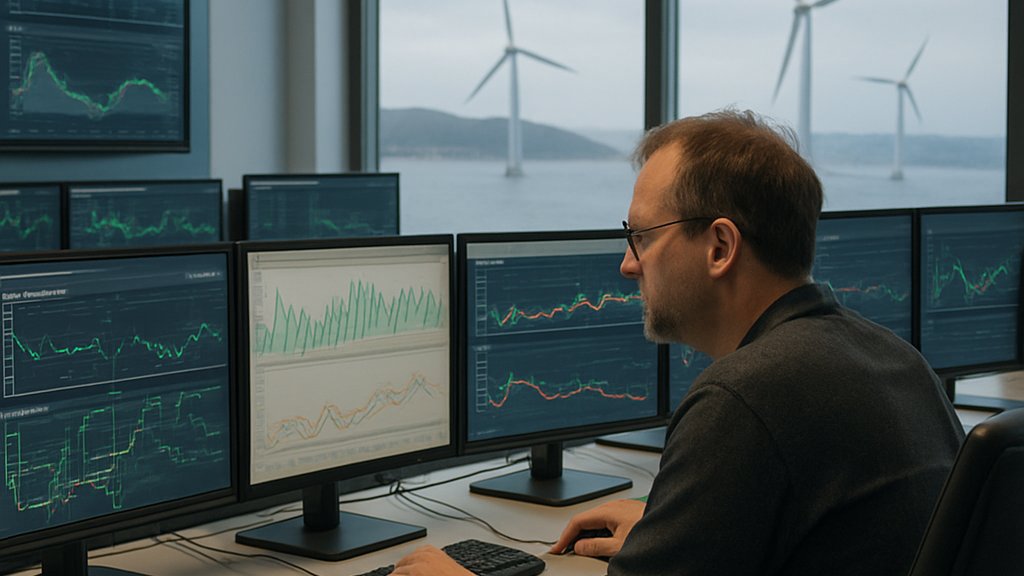
- Wave resource equals 63% of 2023 U.S. utility generation.
- Onshore design keeps electronics out of corrosive seawater.
- Proximity to ports slashes transmission costs and latency.
Nevertheless, conversion efficiency and permitting bottlenecks still cap practical extraction. Therefore, coupling rigorous modeling with Energy Grid AI becomes essential for bankable projections.
Wave energy offers vast theoretical capacity yet remains commercially nascent. However, digital twins promise faster learning curves, a theme explored next.
Role Of Digital Twins
Digital twins mirror each floater, hydraulic circuit, and grid interface in real time. Furthermore, the virtual copy ingests sensor feeds at millisecond resolution using NVIDIA GPUs. Engineers can subsequently simulate rogue-wave impacts, valve fatigue, or firmware updates without halting production. Consequently, maintenance can shift from scheduled to predictive, trimming unplanned downtime.
Core Digital Twin Functions
The WaveGPT research team lists four core functions.
- Short-term wave forecasting for dynamic renewable power dispatch.
- Anomaly detection that alerts operators within seconds.
- Predictive maintenance scoring component health.
- Workload orchestration aligning data-center compute with generation peaks.
Moreover, each function feeds aggregated insights into infrastructure analytics dashboards for executives. Those dashboards, powered by Energy Grid AI, convert physics models into dollar metrics.
Digital twins tighten feedback loops from months to minutes. Therefore, the next section examines how Energy Grid AI transforms those insights into automated control.
Optimizing Through Energy Grid AI
Energy Grid AI sits atop the twin, crunching wave spectra, power curves, and pricing signals concurrently. Additionally, reinforcement models search dispatch policies that balance battery cycling with contractual export limits. Machine reasoning therefore selects pump pressures within seconds to maximize delivered kilowatt-hours.
Eco Wave’s engineers highlight three early paybacks.
- 5-8% generation uplift during moderate seas.
- 40% reduction in reactive maintenance hours.
- Improved confidence for investors reviewing digital twins in due diligence.
Meanwhile, coastal data centers crave predictable megawatts plus cold seawater for heat rejection. Consequently, aligning compute queues with forecasted wave peaks raises renewable power utilization above 90%. Such orchestration underlines the strategic marriage of wave energy and cloud workloads.
Energy Grid AI turns sensor deluges into real-time cash flows. However, scaling that intelligence across oceans demands robust infrastructure analytics, addressed next.
Infrastructure Analytics For Scale
Infrastructure analytics aggregates project, finance, and regulatory data into a single view. Moreover, executives track key performance indicators against pipeline milestones in dashboards built with Omniverse widgets. Subsequently, deviations trigger automated what-if simulations inside the virtual model.
Standard metrics include levelized cost, carbon intensity, and permit lead times. In contrast, legacy spreadsheets rarely update quickly enough for capital partners. Therefore, Energy Grid AI feeds live outputs into the analytics layer, giving lenders trusted evidence.
Nevertheless, cyber-risk governance must rise alongside connectivity. Eco Wave says security reviews now run parallel to environmental impact studies.
Infrastructure analytics provides the system-level compass for expansion. Next, we assess persistent commercial and regulatory challenges.
Key Challenges Facing Commercialization
Wave power faces multi-agency permitting, uncertain tariffs, and demonstration funding hurdles. Additionally, component supply chains remain thin, inflating spare part costs. Investors therefore demand credible pathways from 100-kilowatt pilots to multi-megawatt arrays.
NIST guidance on digital twins is still evolving, creating data-model interoperability gaps. Consequently, industry consortia are drafting open schemas for marine renewables. Nevertheless, adoption timelines may stretch, especially for smaller suppliers.
Financial execution risk persists, as filings carry standard forward-looking caveats. In contrast, larger offshore wind projects now attract institutional capital routinely.
Commercial obstacles remain real but not insurmountable. Subsequently, targeted training and certifications can strengthen talent pipelines to accelerate adoption.
Next Steps And Certifications
Professionals eyeing this field should deepen domain, data, and sustainability competencies. Furthermore, executives note a shortage of engineers comfortable with marine hardware and Energy Grid AI coordination.
Practitioners can validate skills through specialised programs. One option is the AI Sustainability Specialist™ certification, which covers lifecycle assessments, infrastructure analytics, and adaptive control.
Moreover, universities collaborating on WaveGPT intend to launch micro-credential tracks soon. Therefore, early movers will command premium salaries as marine renewables scale.
Targeted education closes the expertise gap and de-risks projects. Consequently, the industry can march faster toward bankable gigawatt portfolios.
Eco Wave Power’s story illustrates how Energy Grid AI, digital twins, and advanced analytics converge to unlock ocean energy. Furthermore, reinforcement models already boost generation and investor confidence, even at pilot scale. Nevertheless, permitting, supply chains, and financing demand coordinated attention. Therefore, professionals who pair marine engineering insight with AI fluency will shape the next renewable power frontier. Take the next step by exploring the linked certification and position yourself at the crest of the wave.
Disclaimer: Some content may be AI-generated or assisted and is provided ‘as is’ for informational purposes only, without warranties of accuracy or completeness, and does not imply endorsement or affiliation.


