

AI CERTS
3 hours ago
Schneider, Foxconn Push AI Data Infrastructure Deployment
Moreover, the announcement highlights a broader surge in AI Data Infrastructure investments. Industry observers see the move as a blueprint for rapid global rollouts. This article unpacks the technical, commercial, and strategic stakes.
Partnership Sparks Major Shift
Schneider Electric brings decades of power and cooling experience. Meanwhile, Foxconn contributes massive manufacturing scale and server integration know-how. Together, they will co-develop standardized reference architectures for AI facilities. Consequently, customers could shorten data center buildout cycles that often stretch 24 months. These joint strengths signal a structural pivot for AI Data Infrastructure. Subsequently, the following section explores the modular design approach.
Modular Reference Design Approach
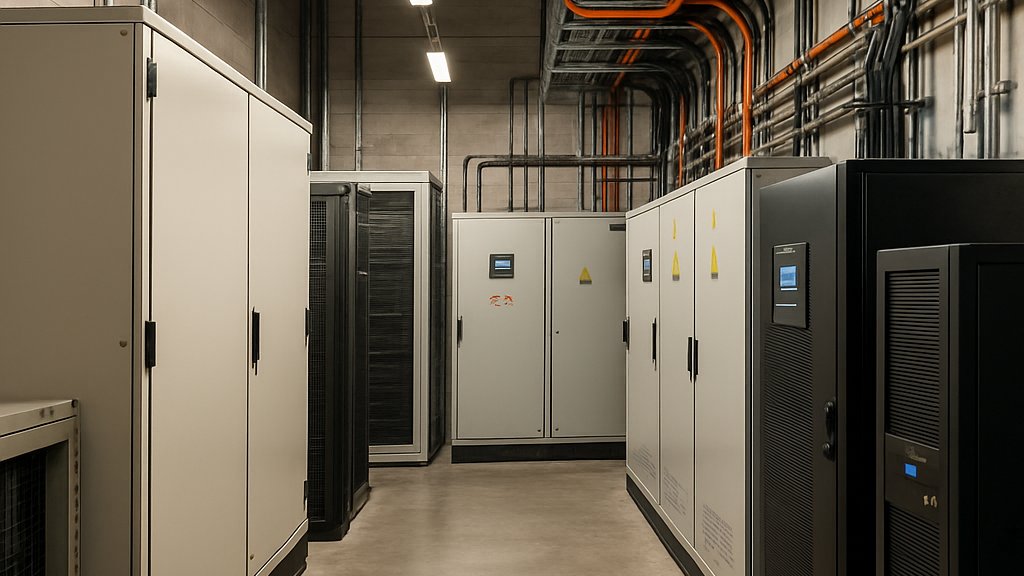
The plan centers on factory-built skids for power, cooling, and network distribution. Additionally, each block ships fully tested, reducing onsite labor and commissioning risk. Direct-to-chip liquid cooling appears in the reference stack, supporting racks above 80 kW. In contrast, legacy air systems struggle beyond 20 kW. The vendor says digital twins will verify performance before shipping. Foxconn expects volume manufacturing to start later this year inside undisclosed plants. Therefore, enterprises could receive repeatable AI facilities within months, not years. Faster delivery eases AI Data Infrastructure scaling during compute booms.
- Lead times cut by up to 50%
- PUE targets below 1.2 with liquid cooling
- Plug-and-play power systems sized for 100 kW racks
- Integration aligned with NVIDIA and other GPU roadmaps
Those benefits depend on real-world validation. However, energy efficiency remains the decisive metric, discussed next.
Energy Efficiency Core Focus
Energy costs dominate AI operating budgets. Consequently, the partners prioritize aggressive cooling gains and smart power systems. Industry cases show 20-30% cooling energy cuts after liquid upgrades. Moreover, the EcoStruxure platform monitors loads, automates battery dispatch, and refines PUE over time. The manufacturer will embed sensors on racks, enabling closed-loop fan and pump control. Such telemetry feeds AI algorithms that predict faults and optimize capacity.
AI Data Infrastructure players chase PUE numbers near 1.1, yet climates vary. Optimizing AI Data Infrastructure also cuts operating risk. Therefore, independent audits remain vital before carbon claims reach investors. Energy efficiency advances lower emissions but also lighten regional grid stress. These technical levers bolster environmental narratives. Nevertheless, market scale intensifies the discussion covered in the following section.
AI Data Infrastructure Market
S&P Global pegs 2025 AI infrastructure revenue at $337 billion. Furthermore, analysts project inferencing revenue will compound sharply through 2030. Such forecasts fuel data center buildout momentum across continents. Hyperscalers, telecoms, and sovereign clouds all seek specialized AI facilities within constrained timelines. Modular power systems promise predictable budgets for finance teams. Schneider Electric positions the collaboration as a turnkey template for that demand. Foxconn echoes the message, citing its Kaohsiung advanced computing center with 4,608 GPUs.
Young Liu stated that the industry needs faster, smarter deployment at scale. Therefore, standardized blocks could unlock extensive AI Data Infrastructure expansion. Market numbers illustrate explosive growth potential. In contrast, several risks could hinder execution.
Risks And Open Questions
Grid capacity remains the loudest concern. Moreover, simultaneous projects can strain regional transformers and transmission corridors. National Grid studies warn of multi-gigawatt spikes near London AI facilities clusters. Vendor lock-in also worries buyers who fear single-stack dependence. Schneider Electric and Foxconn must publish verifiable KPIs to reassure skeptics. Additionally, promised efficiency percentages differ widely across climates and workloads. Independent labs should certify PUE and cooling effectiveness before mass adoption. Consequently, regulators may push for audits tied to incentives or permits. The partnership faces technical and geopolitical hurdles. Nevertheless, strategic moves indicate confidence, explored next.
Strategic Outlook Moving Ahead
Early production lots will likely target reference pilot sites in Asia. Subsequently, North America and Europe could follow once energy codes align. Foxconn might bundle GB200 servers with the modular blocks, simplifying procurement. Furthermore, the energy specialist may integrate grid-interactive UPS and microgrid controls. Therefore, the partnership could evolve into an end-to-end supply chain play. Investors will watch execution speed and margins closely. Long term, AI Data Infrastructure will underpin national competitiveness. These projections underline future opportunities. Finally, professionals can upskill to join the wave.
Certification Pathways For Leaders
Talent shortfalls threaten timely data center buildout programs worldwide. Moreover, executives need supply-chain literacy, energy fluency, and AI governance skills. Professionals can enhance their expertise with the AI Supply Chain™ certification. Such credentials align with leading vendor ecosystems, boosting career prospects. Consequently, early adopters gain credibility when pitching AI Data Infrastructure strategies. Certification closes the skills gap. Next, a concise recap underscores major insights.
Two industrial giants aim to accelerate modular AI facilities deployment at unprecedented scale. Their standardized skids, liquid cooling, and smart power systems could slash timelines and emissions. Nevertheless, grid constraints, vendor concentration, and unverified PUE targets require careful oversight. Ultimately, booming demand for AI Data Infrastructure will favor players who validate efficiency and scale responsibly. Readers should follow production milestones and consider advancing skills through specialized certifications.
Disclaimer: Some content may be AI-generated or assisted and is provided ‘as is’ for informational purposes only, without warranties of accuracy or completeness, and does not imply endorsement or affiliation.


