

AI CERTS
6 hours ago
Strange Allies Shape Washington’s AI Regulation Debate
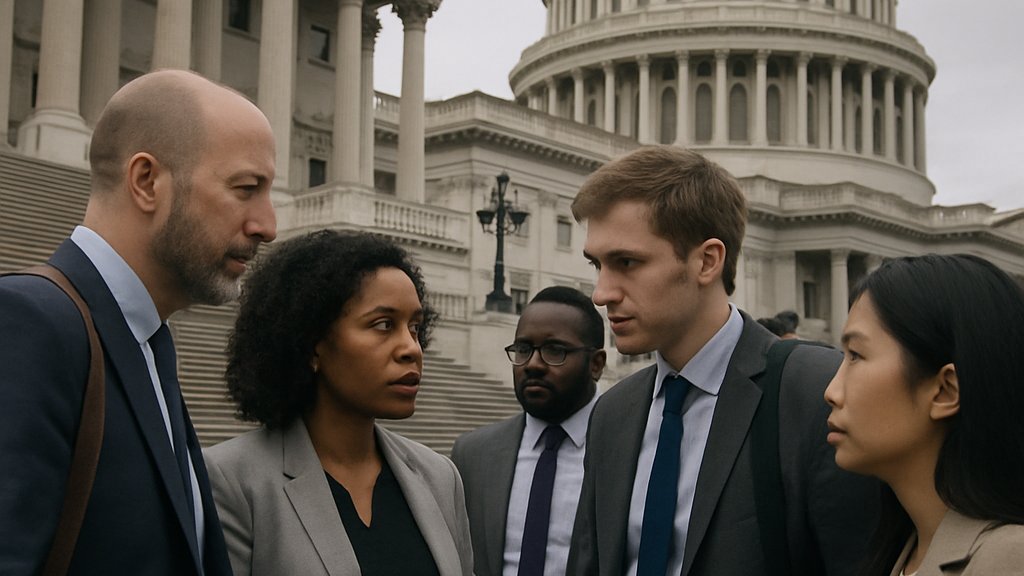
This article unpacks how those forces shaped today’s governance fight over artificial intelligence. Moreover, we explore economic stakes, litigation risks, and evolving safety policy tools. Readers will learn which political coalitions dominate the discussion and where fault lines remain. Therefore, technology executives can better anticipate compliance costs and strategic opportunities.
Shifting D.C. Power Map
Washington has witnessed rapid repositioning since the March 20 framework appeared. Initially, Science Adviser Michael Kratsios framed the plan as a competitiveness measure.
Subsequently, the administration linked preemption to national security testing of frontier models. Industry coalition AI Progress, whose members include OpenAI and Microsoft, echoed that narrative. In contrast, Democrats from tech-heavy states withheld endorsement, citing consumer protections.
Nevertheless, House leaders advanced hearings on two discussion drafts mirroring executive language. These maneuvers illustrate a rare political coalitions convergence around federal uniformity. However, the convergence remains fragile as bill text evolves.
Observers tracking the AI Regulation Debate notice unusual endorsements from libertarian think tanks. Stakeholders now share tactical goals despite divergent motives. Next, we examine why industry cheers the preemption push.
Preemption Spurs Industry Cheers
Big-tech firms argue that one statute simplifies audits across fifty jurisdictions. Moreover, executives warn that conflicting state requirements could derail deployment timelines.
Consequently, the AI Regulation Debate became a banner issue for lobbying disclosures. Google and Amazon referenced PwC’s $15.7-trillion forecast to justify urgent passage. Additionally, the companies cite litigation fears if state privacy rules diverge.
Uniform federal language, they say, lowers compliance overhead and attracts global capital. Trade groups therefore spent millions on adverts praising the framework’s regulatory sandboxes.
Professionals can enhance their expertise with the AI Policy Maker™ certification. Such credentials bolster credibility when advising boards on fast-moving policy details.
Industry enthusiasm rests on cost, speed, and predictability. However, state leaders present a stark counterpoint.
States Mount Fierce Resistance
California, New York, and Illinois have drafted tougher transparency statutes. Meanwhile, several attorneys general formed a multistate task force to defend their laws.
They claim federal preemption would weaken hard-won consumer rights. In contrast, the White House calls some state rules ideological and burdensome. The ACLU warned that Congress cannot grant corporations a blank check.
Consequently, litigation appears inevitable once any bill passes. Observers expect the governance fight to begin in the Ninth Circuit within months. Additionally, governors argue local innovations often pioneer best practices later adopted federally.
State pushback keeps negotiations fluid. Legal uncertainty now takes center stage.
Legal Uncertainty And Risk
Courts must weigh the scope of congressional commerce powers against traditional state police powers. Harvard scholars note preemption doctrine remains unsettled in emerging technology contexts.
Therefore, companies planning multibillion-dollar rollouts demand clarity before scaling sensitive systems. The AI Regulation Debate highlights potential dormant-commerce challenges if wording remains broad.
Moreover, opponents could invoke both First Amendment and privacy provisions to stall enforcement. Subsequently, investors may delay capital deployment until court signals stabilize expectations.
Key legal flashpoints include:
- Definition of “undue burden” within preemption clause.
- Liability safe harbors for model developers and deployers.
- Enforcement authority split among sectoral agencies.
Each item will shape ultimate compliance obligations across industries. Ambiguous language increases litigation probability. Next, economic incentives drive stakeholder behavior.
Economic Stakes And Innovation
PwC projects artificial intelligence could add $15.7 trillion to global GDP by 2030. Therefore, policymakers fear fragmented oversight could discourage critical infrastructure investments.
Washington advocates frame preemption as essential for securing that upside. Furthermore, venture capitalists argue uniform rules support faster exit timelines. Nevertheless, critics worry weak standards entrench incumbents and dampen competition.
The AI Regulation Debate surfaces this tension between speed and accountability. Consequently, analysts urge balanced incentives combined with measurable safety policy benchmarks.
Political coalitions may splinter if economic predictions disappoint local workforces. Massive sums sharpen rhetoric on both sides. Attention now shifts toward concrete safety mechanisms.
Safety Oversight Still Evolving
Administration officials propose audits, red-team exercises, and tiered disclosure for frontier models. Moreover, firms have begun voluntary briefings with national security agencies.
Safety policy provisions remain skeletal within current drafts, according to DLA Piper analysis. Consequently, negotiators debate whether existing regulators possess adequate technical capacity.
In contrast, some senators seek a dedicated AI Safety Bureau housed at NIST. The AI Regulation Debate now centers on how quickly those structures can scale.
Governance fight dynamics could intensify if a major model failure occurs before enactment. Effective oversight demands resources, expertise, and transparency. Leaders therefore require actionable guidance for near-term planning.
Strategic Takeaways For Leaders
Executives should map pending federal language against their current compliance matrices. Additionally, they must track state dockets and possible injunction timelines.
Early scenario planning reduces surprise costs once final rules arrive. Companies engaging constructively in the AI Regulation Debate earn reputational dividends with policymakers.
Washington contacts indicate markup sessions may accelerate after summer recess. Moreover, cross-sector political coalitions offer valuable intelligence on amendment prospects.
Professionals may deepen policy fluency through the earlier mentioned AI Policy Maker™ credential. Such preparation strengthens board confidence during budgeting and product roadmap approvals.
Proactive engagement guards competitive positioning. Finally, we recap pivotal insights and next steps.
Washington’s push for a single rulebook has reordered alliances across technology and ideology. Consequently, the AI Regulation Debate intertwines economic ambition, legal complexity, and public trust.
States vow resistance, ensuring courts will referee early rounds of the governance fight. Meanwhile, investors weigh vast opportunities against uncertain safety policy frameworks.
Nevertheless, uniform standards could unlock transformative value if crafted with accountability measures. Therefore, leaders should monitor legislative text, nurture broad political coalitions, and upskill through recognized certifications.
Take initiative now, and explore the linked AI Policy Maker™ program to stay ahead.
Disclaimer: Some content may be AI-generated or assisted and is provided ‘as is’ for informational purposes only, without warranties of accuracy or completeness, and does not imply endorsement or affiliation.


