

AI CERTS
3 hours ago
VivaTech 2026 Highlights Enterprise AI Trends Pivot
Furthermore, it outlines how Enterprise AI Trends shape buying decisions and boardroom priorities. Read on to map opportunities, challenges, and certification paths for competitive advantage. Meanwhile, investors will watch for proof that deployment beats experimentation. Therefore, understanding the forces converging at VivaTech can anchor any forward-looking executive strategy.
Market Signal Shifts Observed
OpinionWay’s Confidence Barometer offers hard numbers. Moreover, 89% of surveyed leaders trust AI for decision guidance. Additionally, 87% plan higher spending, with 53% intending significant boosts. These figures confirm that Enterprise AI Trends now drive budgets rather than pilots. In contrast, consumer hype receives scant mention in board agendas.
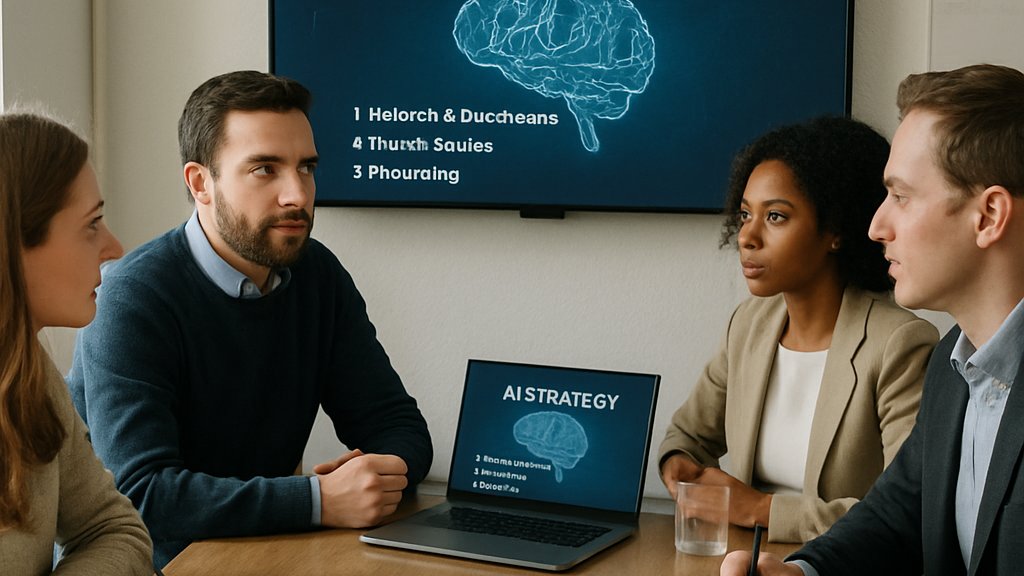
TechCrunch notes the pivot from experimentation to production at scale. Consequently, vendors must prove compliance, uptime, and integration speed. VivaTech becomes the proving ground for such claims.
These statistics illustrate bullish sentiment. However, enterprises still fear integration debt. Subsequent sections explore how platforms tackle that bottleneck.
Event Scale Metrics
VivaTech expects over 180,000 visitors, reflecting 300% growth since 2016. Furthermore, Hall 7 expansion adds 30% extra floor space. The platform already lists 15,000 startups alongside 1,500 demos.
Key partners include NVIDIA, Adobe, and PwC. Meanwhile, speakers range from Jensen Huang to Yann LeCun. Their presence underscores the seriousness of Enterprise AI Trends.
- 4,000 scheduled business meetings target tangible procurement.
- Youth festival and public takeover broaden community interest.
- Platinum sponsors anchor deep-pocket enterprise buyers.
Such scale accelerates matchmaking between startups and established B2B software buyers. Therefore, exhibitors must prepare concise ROI pitches.
The event metrics show unprecedented reach. Nevertheless, attendance alone will not guarantee deals if integration challenges persist.
Sovereign Infrastructure Push
NVIDIA headlines infrastructure news with Nemotron models and DGX Cloud Lepton. Moreover, partnerships with European builders promise regional sovereignty. Jensen Huang claims Europe’s diversity feeds stronger AI ecosystems.
LightOn and Domyn will demo localized language stacks. Consequently, regulated industries can address data-residency mandates. These announcements align with Enterprise AI Trends that prioritize governance.
However, sovereign stacks may increase costs versus global clouds. In contrast, hybrid deployments can balance compliance and scale. Decision makers must weigh both paths within broader executive strategy.
Infrastructure choices set the stage for integration success. Subsequently, attention shifts to measurable returns and governance models.
Governance And ROI
Enterprises crave frameworks that convert pilots into production. Additionally, consultancies like PwC and Capgemini showcase playbooks for secure rollouts. Their offerings bundle tooling, policy templates, and change management.
Integration debt still looms. Nevertheless, agentic orchestration reduces manual stitching of point solutions. Automation pipelines trigger data workflows, audits, and alerts.
Furthermore, the EU AI Act heightens compliance urgency. Therefore, enterprise AI deployments require transparent audit trails. Boardrooms link such controls to risk mitigation and faster approval cycles.
Governance efforts can unlock value quickly. Yet, weak ownership models still derail many B2B software programs. The next section weighs persisting threats.
Risks And Tradeoffs
Analysts warn of over-branding. Moreover, too strict a focus on safe solutions may stifle exploration. Integration debt also compounds when siloed pilots proliferate.
Sovereign models deliver compliance but risk fragmentation. Consequently, firms could miss frontier innovations unless interoperability standards evolve.
Security remains a constant battle. Meanwhile, accelerated adoption enlarges attack surfaces. Vendors must embed zero-trust architectures and automated incident handling.
These risks demand proactive executive strategy. However, balanced portfolios can hedge against stagnation. Effective monitoring frameworks support adaptive responses.
Tradeoffs define deployment realities. Subsequent insights highlight actionable priorities for 2026 roadmaps.
Strategic Takeaways 2026
Enterprise buyers should align roadmaps with three pillars. Firstly, choose infrastructure that satisfies sovereignty and scalability. Secondly, embed governance from day one using standardized templates. Thirdly, measure ROI with clear productivity baselines.
Additionally, leaders can reinforce skills via the AI Executive Essentials™ certification. Such programs nurture cross-functional literacy and accelerate automation outcomes.
Moreover, startups must quantify benefits in financial language. Consequently, Enterprise AI Trends become tangible when linked to cost avoidance or revenue gains.
Key priorities now appear clearer. Nevertheless, disciplined execution will decide lasting advantage.
ROI Measurement Checklist
• Track cycle-time reductions across automated workflows.
• Compare pre- and post-launch error rates.
• Calculate incremental revenue from smarter recommendations.
The checklist offers practical guidance. Therefore, enterprises can benchmark progress during and after VivaTech engagements.
Enterprise AI Trends demand structured approaches. Meanwhile, certifications supply leadership foundations.
Conclusion
VivaTech 2026 elevates Enterprise AI Trends from hype to operational reality. Market data, sovereign infrastructure, and rigorous governance signal a maturing landscape. Moreover, balanced risk management and measurable ROI now guide budget decisions.
Consequently, executives must refine automation plans, reinforce B2B software integration, and craft resilient executive strategy. Professionals can deepen expertise through the linked certification while monitoring event announcements for actionable insights.
Adopt these strategies, embrace continuous learning, and lead your organization toward sustainable enterprise AI success.
Disclaimer: Some content may be AI-generated or assisted and is provided ‘as is’ for informational purposes only, without warranties of accuracy or completeness, and does not imply endorsement or affiliation.


