

AI CERTS
3 hours ago
Home Care Robots Near Mass Adoption
Moreover, investors see synergy with consumer robotics, cloud AI, and insurance reimbursement pilots. The following analysis distills fresh data, market forecasts, and strategic guidance for decision makers.
Market Momentum Builds Fast
A surge in demand marked the past year as UBTECH opened pre-sales for its U1 household humanoid. Meanwhile, Mordor Intelligence projects personal service robot revenue to double between 2026 and 2031. Grand View Research forecasts elder-care assistive tech spending reaching US$9.8 billion by 2033, a 14.2 percent CAGR.
- Robotic vacuum shipments showcase mainstream trust in household autonomy.
- Robot-as-a-Service plans cut upfront costs for Home Care Robots.
- Cheaper sensors and edge AI deliver richer domestic automation functions.
Collectively, these numbers illustrate breakneck commercial progress. Market confidence is rising even before volume shipments of humanoids. Nevertheless, understanding the forces behind adoption clarifies the road ahead.
Drivers Behind Adoption Boom
Consequently, declining lidar and actuator prices lower hardware bills for ambitious startups. In contrast, powerful edge processors compress vision and speech workloads inside compact chassis. Furthermore, 5G and Wi-Fi 7 links enable over-the-air feature drops that keep units fresh.
Demographic pressure adds urgency because global elders will outnumber youths by 2030. Moreover, families pursuing elder support prefer Home Care Robots that respect privacy while offering continuous oversight. Insurers in Japan and Europe already reimburse fall-detection subscriptions, signaling payer involvement.
These drivers converge to create fertile commercial soil. Affordability, connectivity, and demographics together strengthen adoption intent. Next, we examine how households actually use the machines.
Key In-Home Use Cases
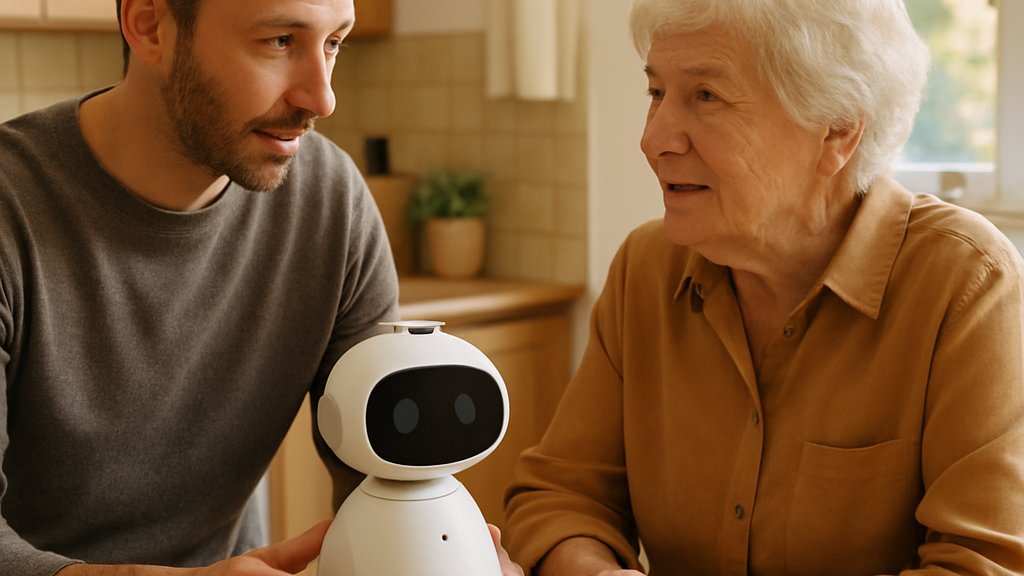
Households currently deploy Home Care Robots for three broad tasks: social engagement, health adherence, and physical assistance. Socially assistive tech platforms like ElliQ play music, deliver reminders, and converse to reduce isolation. Meanwhile, telepresence units provide flexible in-home care by enabling remote visits from clinicians and relatives.
Physically capable consumer robotics solutions fetch objects, open doors, and may eventually manage transfers. Domestic automation routines integrate lighting, thermostats, and medication lockers through standard APIs. Moreover, UBTECH's U1 promises light meal carrying, aligning with elder support requirements.
- Companionship bots improve medication adherence in randomized pilot studies.
- Fall detection and alert dispatch shorten emergency response times.
- Telepresence robots cut travel costs for rural specialists.
- Home Care Robots enable safer nighttime mobility through ambient lighting triggers.
Early pilots demonstrate measurable psychosocial and safety benefits. Nevertheless, deployment still faces notable barriers. The following section unpacks those challenges in detail.
Barriers And Ongoing Risks
Privacy remains the loudest consumer worry because cameras and microphones patrol intimate spaces. Moreover, researchers warn that companionship illusions could compromise dignity when users mistake robots for humans. Safety and liability questions grow once heavier arms attempt lifting or mobility aid.
Additionally, high upfront prices persist for advanced Home Care Robots; the U1 preorder sits near US$15,000 before subscriptions. In contrast, Robot-as-a-Service offerings spread cost but demand reliable broadband and responsive field service. Regulatory frameworks covering consumer robotics, medical devices, and data protection still overlap inconsistently.
Collectively, these issues pause some buyers. Nevertheless, vendors and policymakers are addressing gaps through standards and insurance pilots. Understanding the competitive landscape reveals who leads that effort.
Competitive Player Landscape Evolves
UBTECH commands headlines with its UWORLD brand and the full-size U1 companion. Intuition Robotics markets ElliQ, a desktop unit optimized for elder support and medication coaching. Groove X's Lovot focuses on emotional bonding, while OhmniLabs targets telepresence for in-home care settings.
Furthermore, fast moving Chinese manufacturers like Unitree scale actuator production for global domestic automation startups. Industrial robotics incumbents adapt proven safety stacks to Home Care Robots, seeking new consumer revenue. Meanwhile, academic labs and EU projects shape human-robot interaction benchmarks and ethics checklists.
Competition spans software, hardware, and services. Consequently, strategic positioning today influences market share through 2033. Next, we outline projections and milestones.
Strategic Outlook Through 2033
Grand View Research models suggest a 14.2 percent CAGR for elder-care assistive tech through 2033. Moreover, Mordor Intelligence expects the broader personal service segment to reach US$41 billion by 2031. Analysts agree that robust assistive tech ecosystems will differentiate winners.
Consequently, cost parity with premium smartphones could arrive by 2029 for entry-level Home Care Robots. Simultaneously, regulators will likely finalize data privacy rules and mechanical safety certifications by 2028. Subsequently, insurers may expand reimbursement, unlocking additional in-home care demand.
Forecasts anticipate rapid growth tempered by policy milestones. Stakeholders should synchronise product roadmaps with regulatory calendars. The final section offers practical actions for leaders.
Actionable Next Steps Forward
Product teams should conduct rigorous ergonomics testing with mixed-ability users before full release. Furthermore, partnerships with home health agencies can validate in-home care workflows under real conditions. Moreover, executives can deepen skills via the AI+ Robotics Professional™ certification.
- Map product features to caregiver pain points for clear messaging.
- Align cyber-security controls with emerging consumer robotics standards.
- Aim domestic automation integration with lighting, HVAC, and security platforms.
- Home Care Robots roadmaps should align with reimbursement milestones.
Focused execution accelerates time-to-value for companies and families. Structured learning ensures teams navigate technical and ethical hurdles. We conclude with key reflections and a call to action.
Home Care Robots stand at the edge of mainstream visibility, backed by strong economics and demographic need. Nevertheless, privacy, safety, and regulatory clarity will decide ultimate winners. Consequently, leaders must balance innovation speed with responsible design. Moreover, equipping teams with recognized credentials strengthens stakeholder confidence. Professionals ready to shape this future should explore the linked certification and join the movement driving smarter, kinder domestic automation.
Disclaimer: Some content may be AI-generated or assisted and is provided ‘as is’ for informational purposes only, without warranties of accuracy or completeness, and does not imply endorsement or affiliation.


