

AI CERTS
2 hours ago
Jensen Huang’s Bold AI Stock Investment Strategy Amid Market Dip
Furthermore, the analysis explores how AI Stock Investment decisions interplay with infrastructure spending, antitrust scrutiny, and geopolitical forces. The following sections break down each deal, quantify the risks, and extract actionable insights for disciplined allocators. Readers will leave prepared to evaluate similar opportunities when the next market dip arrives.
AI Dip Buying Context
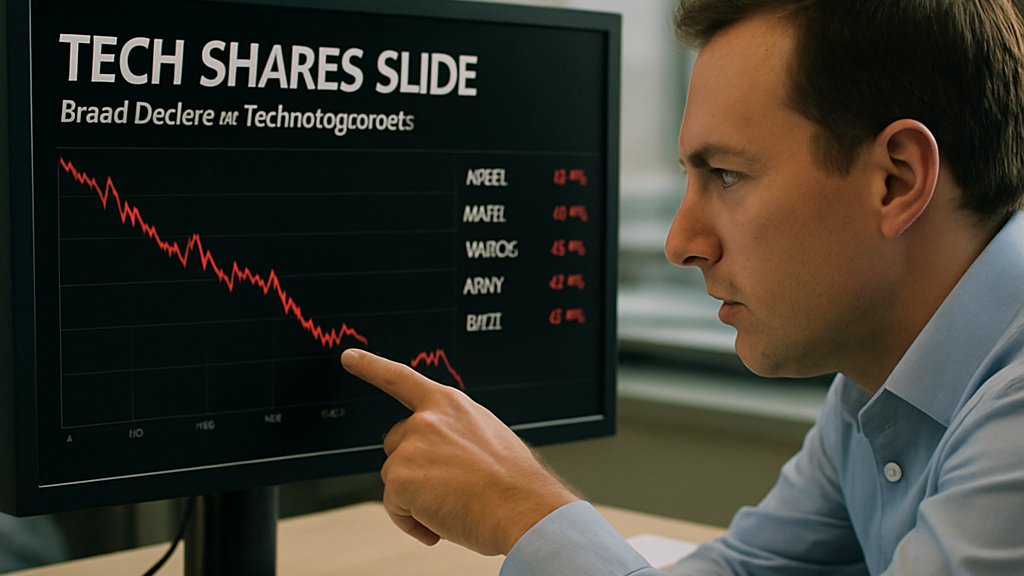
Buy-the-dip tactics involve deploying capital during periods of weakness. Consequently, acquirers secure assets at lower implicit valuations. In late 2025, the Nasdaq plunged amid rising rates and export controls, triggering the current tech rout. Nevertheless, Huang saw an opening. The AI Stock Investment climate remained attractive because training demand stayed intact. Meanwhile, inference workloads exploded in volume, pressing capacity everywhere.
Market analysts cite four supportive factors:
- Data-center revenue at Nvidia reached $51.2 billion in Q3 FY2026.
- Export exemptions kept shipments flowing despite geopolitical friction.
- Hyperscalers rushed to secure supply amid component shortages.
- Cost of capital stayed low relative to projected returns.
These tailwinds built a cushion of market resilience. Consequently, Huang could pursue targets without jeopardizing balance-sheet flexibility. This contrarian stance underpins the remaining transactions. However, strategy alone is not enough; execution matters next.
Nvidia Strategic Shopping Spree
Nvidia executed three headline deals within one quarter. Firstly, it structured a $20 billion license-plus-talent transaction with Groq. Secondly, it committed $2 billion to Nebius for cloud infrastructure spending. Thirdly, it quietly bought Kumo AI for at least $400 million. Collectively, those moves reinforced Huang’s vision for an integrated training and inference stack.
Moreover, analysts observe that each purchase targeted a different layer. Groq supplies inference hardware. Nebius extends distribution reach. Kumo adds enterprise models. Therefore, the spree exemplifies disciplined vertical integration. Additionally, the pattern shows how an AI Stock Investment thesis can pivot from pure chip sales toward recurring platform revenue.
Momentum still depends on seamless team absorption. Nevertheless, Huang’s track record suggests cultural integration can succeed when missions align. The next section dissects the most controversial piece: Groq.
Groq Deal Mechanics Explained
The Groq agreement employed a non-exclusive IP license plus selective hiring. Consequently, Jensen Huang avoided a conventional merger subject to Hart-Scott-Rodino thresholds. Senators Warren and Blumenthal questioned whether the structure sidestepped antitrust review. In contrast, Nvidia argued it did not acquire Groq; it only licensed assets.
Regulators now face a novel test. Moreover, antitrust scholars call the arrangement a “reverse acqui-hire.” Such devices can shift effective control without triggering statutory notifications. Therefore, the outcome will shape future AI Stock Investment templates.
From an engineering view, Groq’s LPU accelerates low-latency inference. Consequently, Nvidia plugs a gap between GPU training and real-time deployment. Market resilience improves because customers can keep workloads on one vendor. However, legal uncertainty could slow similar deals elsewhere.
Nebius Cloud Expansion Play
On 11 March 2026, Nvidia injected $2 billion into Nebius. The venture funds hyperscale “AI factories” across Europe and Asia. Furthermore, it complements earlier stakes in CoreWeave. Infrastructure spending of that size signals conviction regarding demand longevity. Subsequently, Huang projected at least $1 trillion in cumulative orders for Blackwell and Vera Rubin platforms.
Strategically, Nebius offers regional neutrality. Consequently, Jensen Huang reduces exposure to U.S. export controls. Moreover, the cloud partnership accelerates time-to-deployment for new software bundles. Such positioning turns an AI Stock Investment concept into an end-to-end service narrative.
Still, capacity build-out requires disciplined scheduling and sustained demand. Nevertheless, early bookings suggest customers prefer vertically optimized stacks. The Kumo acquisition reinforces that thesis, examined next.
Kumo AI Acquisition Signals
Reports on 3 June 2026 revealed Nvidia paid at least $400 million for Kumo AI. The startup specialized in structured-data foundation models for supply-chain optimization. Consequently, Huang gained domain experts who can tailor micro-models for enterprise clients. Moreover, the move aligns with growing infrastructure spending on specialized inference workloads.
Industry observers connect this purchase to market resilience trends. Corporations still invest in efficiency tools even during a tech rout. Therefore, integrating Kumo strengthens value propositions beyond raw compute. Additionally, the deal demonstrates that an AI Stock Investment does not always chase size; strategic fit matters.
Team assimilation continues quietly, avoiding the publicity of Groq. Nevertheless, success metrics will hinge on cross-selling wins inside Nebius data centers. Regulatory concerns are lower here, yet policy scrutiny overall is intensifying.
Regulatory Risks Looming Ahead
License-plus-talent structures draw antitrust attention. Consequently, lawmakers worry about concentration in critical compute pathways. Jensen Huang must now provide detailed explanations to the Senate. Moreover, legal commentators predict guidance updates on reportability thresholds. Meanwhile, European regulators monitor similar patterns in cloud services.
Compliance risk feeds directly into AI Stock Investment valuation models. Investors must discount potential fines, divestitures, or integration delays. However, historical precedent shows enforcement timelines stretch over years. Therefore, near-term earnings effects remain muted unless formal injunctions emerge.
Professionals can bolster strategic oversight skills through the Chief AI Officer™ certification. Consequently, board advisors gain frameworks for navigating regulatory flux. These capabilities become essential as deal creativity rises.
Regulatory scenarios form the final uncertainty layer. Nevertheless, the underlying demand narrative stays compelling, as summarized next.
Key Investment Takeaways Summary
Several signals stand out for disciplined portfolio managers:
- Nvidia remains cash-generative, enabling opportunistic spending during any tech rout.
- Vertical integration across hardware, cloud, and models supports durable market resilience.
- Infrastructure spending commitments indicate management confidence in sustained AI workloads.
- Regulatory scrutiny poses manageable, yet real, headline risk.
Consequently, the broader AI Stock Investment theme benefits from Huang’s execution roadmap. Moreover, peers like AMD and Google may emulate similar playbooks. Investors should track deal cadence, antitrust rulings, and capacity utilization metrics.
These insights help refine exposure sizing. However, constant diligence remains vital because policy shifts can upend assumptions.
Overall, Huang’s aggressive positioning during a downturn underscores that conviction capital still shapes outcomes. Therefore, market observers gain a living case study of contrarian strategy in action.
Conclusion
Jensen Huang transformed short-term volatility into strategic advantage. Moreover, his Groq, Nebius, and Kumo moves illustrate disciplined asset selection, sizable infrastructure spending, and unwavering market resilience. Consequently, the narrative strengthens confidence in the broader AI Stock Investment landscape. Nevertheless, antitrust clouds require monitoring, and execution risks persist. Investors should watch regulatory filings, integration milestones, and demand forecasts.
Professionals aiming to guide boards through similar decisions can deepen expertise with the Chief AI Officer™ certification. Take charge of your learning journey now, and position yourself to navigate the next market dip with authority.
Disclaimer: Some content may be AI-generated or assisted and is provided ‘as is’ for informational purposes only, without warranties of accuracy or completeness, and does not imply endorsement or affiliation.


