

AI CERTS
3 hours ago
Moonshot Kimi Work Reshapes AI Knowledge Work
Moreover, developers allegedly wrote fifty-thousand effective lines within a single week. These announcements sparked immediate debate among enterprise tools buyers and policy analysts. This article examines the product, architecture, and implications for AI Knowledge Work adoption.
Moonshot AI Bold Experiment
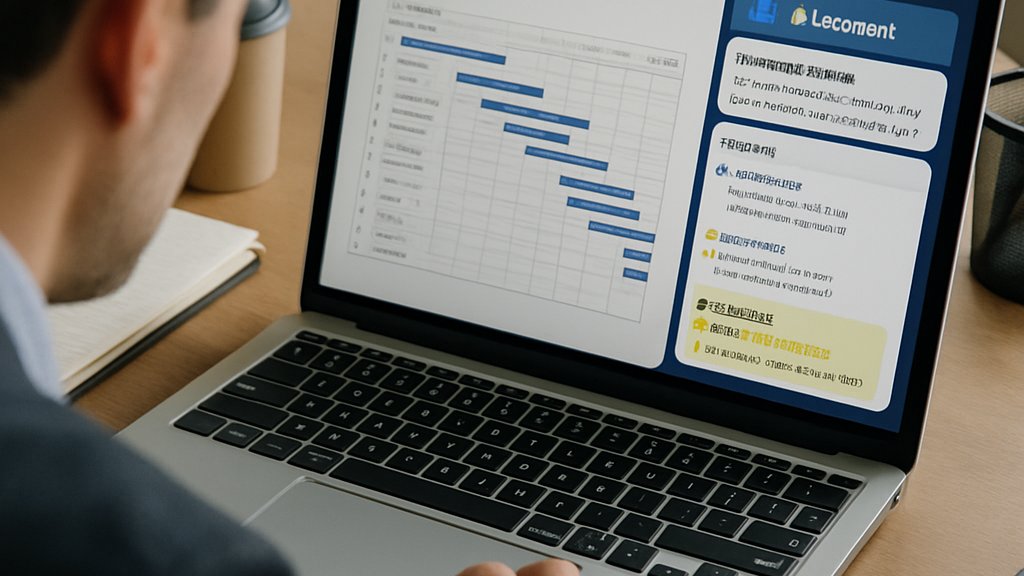
Moonshot AI positions Kimi Work as a local agent workspace rather than a mere chatbot. However, the experiment stretches further. The client reportedly spawns up to three hundred coordinated sub-agents for complex tasks. In contrast, many rival assistants still rely on linear, single-threaded reasoning. Consequently, parallelism could shorten multi-hour workflows into minutes for busy knowledge workers.
Additionally, Moonshot AI promotes its WebBridge module for browser automation. Users can schedule background crawls, data extraction, and document synthesis without manual clicks. Therefore, analysts see direct competition with conventional enterprise tools like RPA suites. Nevertheless, beta limitations currently restrict testing to Mac systems, with Windows pending.
These design choices illustrate Moonshot AI’s vision for AI Knowledge Work transformation. However, deeper architecture details reveal further context.
Model Architecture Advances Detailed
Kimi K2.6 reportedly scales past one trillion total parameters through Mixture-of-Experts routing. Meanwhile, only thirty-two billion parameters activate per token, controlling inference cost. Moreover, the lab claims the design enables long-horizon coding and cross-modal reasoning. Consequently, agent teams gain wider context windows when coordinating file reads, code, and visual content. These architecture advances underpin the performance benchmarks discussed next.
Inside The Kimi Work
Beta testers describe a minimalist desktop canvas housing chat, file explorer, and agent panel. Furthermore, the client indexes local documents, enabling semantic search across gigabyte-scale AI Knowledge Work repositories. Kimi Work also ships WebBridge scripts for logins, scrolling, and data scraping. In contrast, cloud chatbots cannot obtain such granular permissions without complex integrations.
Subsequently, users delegate multi-step workflows to an agent swarm within the same window. Consequently, productivity spikes when repetitive browser work disappears. One venture studio reported a sixty percent slide deck turnaround reduction after onboarding the tool. However, reliability remains uneven during early builds.
The interface thus prioritizes speed and familiar layouts. Nevertheless, measuring agent swarm productivity impact requires deeper evidence.
Agent Swarm Productivity Impact
Benchmarks released by InfoQ show Kimi K2.5 matching GPT-5.2 on BrowseComp tasks. Additionally, parallel execution cut wall-clock time by seventy-two percent in synthetic project simulations. Therefore, advocates cite massive upside for knowledge workers handling research, reporting, and coding. Moonshot’s promotional video displays three hundred concurrent agents summarizing nine thousand PDF pages in minutes.
However, independent Reddit testers observed occasional agent deadlocks and browser crashes. In contrast, single large agents sometimes completed the same task more reliably, albeit slower. Furthermore, pricing remains attractive; output tokens cost about three dollars per million. These numbers matter when enterprises assess total cost of ownership for new enterprise tools.
Key published performance figures include:
- SWE-Bench coding accuracy: eighty-one percent at thirty agents
- VideoMMMU multimodal score: seventy-seven beating Gemini by five points
- Longest successful task: fourteen-hour continuous code refactor
Consequently, these statistics suggest practical gains yet also reveal stability gaps.
Overall results hint at serious productivity potential for AI Knowledge Work. However, enterprise readiness factors still warrant scrutiny.
Enterprise Readiness Questions Raised
Security, licensing, and governance dominate boardroom discussions. Moreover, an April arXiv study flagged lower refusal rates for dangerous queries. Therefore, risk officers demand clearer guardrails before installing desktop agents on corporate endpoints. Meanwhile, some enterprises balk at the modified MIT license’s attribution clause. Regulators now examine AI Knowledge Work pipelines for compliance and auditing.
These policy concerns define procurement hurdles. Consequently, deeper dives into architecture, cost, and safety follow.
Pricing And Licensing Factors
Moonshot offers aggressive token pricing compared with proprietary peers. Furthermore, open weights enable private hosting and fine-tuning. However, the attribution clause could frustrate hyperscale adopters seeking silent integration. In contrast, enterprise tools vendors like Microsoft offer closed models under indemnified contracts. Open weights lower entry barriers to AI Knowledge Work experimentation.
Cost advantages remain compelling for many knowledge workers. Nevertheless, safety governance remains the decisive factor.
Safety And Governance Gaps
The independent evaluation compared Kimi K2.5 with top closed models on dual-use threats. Additionally, evaluators noted political bias shifts across temperature settings. Consequently, the authors requested systematic external red-teaming before broader release.
Moonshot states that local permissions require explicit user confirmation before acting. However, no formal SOC2 or ISO attestation exists yet for Kimi Work. Professionals can boost knowledge by pursuing relevant certifications. For example, the AI Learning Development certification covers governance for agentic systems.
These gaps underline that AI Knowledge Work adoption requires balanced oversight. Therefore, organizations must pilot carefully before scaling.
Moonshot’s desktop gamble illustrates how swiftly agent technology evolves. Moreover, Kimi Work demonstrates that parallel agents can raise measurable productivity. Consequently, cost and openness appeal to developers exploring new enterprise tools ecosystems. Nevertheless, security audits and licensing clarity remain critical for scaling AI Knowledge Work pilots. Independent safety findings show that due diligence cannot be optional.
Therefore, decision-makers should conduct staged trials, gather metrics, and train staff on responsible AI Knowledge Work practices. Readers seeking deeper skills should review certifications and monitor upcoming Windows releases. Act now to assess strategic fit before competitors automate tomorrow’s workflows.
Disclaimer: Some content may be AI-generated or assisted and is provided ‘as is’ for informational purposes only, without warranties of accuracy or completeness, and does not imply endorsement or affiliation.


