

AI CERTS
5 days ago
Intel’s Crescent Island Promises Efficient AI Inference
Moreover, market analysts project the global inference segment will surpass USD 117.8 billion next year. Meanwhile, supply constraints around high-bandwidth memory continue to pinch budgets. Therefore, a design that trades peak bandwidth for abundant mobile DRAM could reshape server economics.
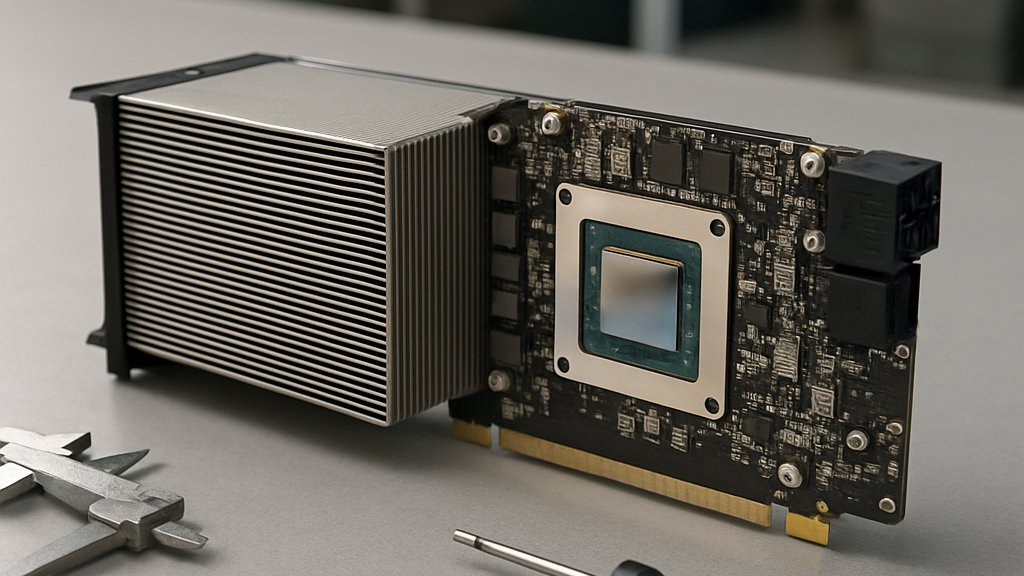
Additionally, we examine how Crescent Island compares with rival HBM-centred offerings. We also explore cost efficiency implications for operators planning multi-rack deployments. Professionals can enhance their expertise with the AI Engineer™ certification to stay ahead of evolving hardware trends.
AI Inference Demand Surge
Global models now serve trillions of tokens daily. Consequently, operators seek hardware that lowers latency without hiking energy bills.
Market reports forecast USD 103.7 billion in inference spending for 2025, rising steadily toward USD 117.8 billion in 2026. Moreover, U.S. expenditure could more than double by 2030.
- 2025 global spend: USD 103.7 billion
- 2026 global forecast: USD 117.8 billion
- 2025 U.S. spend: USD 32.3 billion
- 2030 U.S. forecast: USD 77.6 billion
Therefore, infrastructure leaders prioritize Efficient AI Inference to satisfy user expectations and shareholder margins alike.
In short, skyrocketing demand intensifies focus on throughput per watt. However, achieving that goal requires fresh silicon approaches that the next section explores.
Crescent Island Feature Overview
Intel unveiled Crescent Island as its first Xe3P inference GPU aimed at air-cooled servers. Subsequently, the company highlighted several differentiators.
The reference card integrates 160 GB of LPDDR5X and runs within a 350 W envelope. In contrast, many HBM-equipped boards draw 600 W or more.
Furthermore, support spans FP4 through FP64 data types, enabling aggressive quantization for Efficient AI Inference without retraining overhead.
The accelerator also maintains a standard PCIe form factor, easing qualification in brownfield racks. Meanwhile, upstream Linux patches reveal multiple PCI IDs, hinting at tiered SKUs.
These features showcase an ambitious roadmap for Intel. Nevertheless, memory architecture remains the pivotal differentiator, as the next section details.
Memory Choice Key Tradeoffs
Memory architecture shapes both performance and cost efficiency. Crescent Island abandons expensive HBM and opts for abundant LPDDR5X.
Moreover, 160 GB on the reference board can stretch to 480 GB in partner designs. Consequently, large-context LLMs may keep entire key-value caches on-card, improving Efficient AI Inference throughput.
However, the mobile DRAM offers lower peak bandwidth than HBM. Therefore, bandwidth-bound kernels might throttle before compute units saturate.
- Higher local capacity lowers host memory traffic.
- Lower voltage improves cost efficiency and thermals.
- Bandwidth gap could hurt transformer attention workloads.
- Supply chain for LPDDR5X is less constrained.
Subsequently, software orchestration must stream data intelligently to realise the promised Efficient AI Inference.
To summarise, LPDDR5X amplifies capacity but demands smarter scheduling. The next section tackles power and cooling implications.
Power And Cooling Considerations
Power envelopes dictate deployment density. The accelerator targets roughly 350 W, enabling air cooling in standard 2U servers.
Consequently, operators can retrofit existing racks without exotic liquid loops. That shift immediately improves cost efficiency at scale.
In contrast, many HBM cards require 600 W and direct-to-chip liquid systems. Moreover, air-cooled designs ease maintenance and lower risk.
The company claims its inference GPU achieves favourable performance-per-watt, yet formal MLPerf data is pending.
Efficient AI Inference further depends on sustaining token throughput within that modest thermal budget.
Energy realism underpins total owning cost. Nevertheless, software remains the other half of the efficiency equation, discussed next.
Software Ecosystem Strategy Roadmap
A capable hardware platform fails without matching software. Therefore, Intel pushes oneAPI, SYCL, and open compilers for its inference GPU line.
Furthermore, the company promises yearly GPU releases to reassure buyers that kernels will migrate smoothly. However, CUDA dominance remains a barrier.
Consequently, system integrators must evaluate library maturity and scheduler support. They also need solid quantization tooling for Efficient AI Inference on Crescent Island.
- oneAPI support for Transformer Engine.
- PT-Q flows for FP4 quantization.
- Integration hooks for Kubernetes schedulers.
- Community benchmarks expected H2 2026.
Robust libraries will decide early adoption. Subsequently, we examine the remaining risks that could slow market traction.
Risks Market Impact Outlook
No launch is free of challenges. Nevertheless, Intel faces three notable hurdles before Crescent Island reaches volume.
First, LPDDR5X bandwidth may cap certain vision workloads regardless of quantization, limiting Efficient AI Inference gains.
Second, absent public benchmarks generate uncertainty on comparative value. Moreover, pricing remains undisclosed.
Third, software ecosystem inertia could stall migrations from incumbent platforms despite promised cost efficiency advantages.
Industry analysts advise pilots using early samples to validate workload fit. Meanwhile, cloud providers plan mixed hybrid clusters to hedge risk.
These risks underscore the importance of transparent data. Consequently, customer sampling timelines and market reactions deserve close attention.
Customer sampling for Crescent Island begins in the second half of 2026. Subsequently, real MLPerf submissions should surface.
If results align with claims, operators could deploy thousands of cards.
They would then realise large-scale Efficient AI Inference within existing power budgets.
Moreover, LPDDR5X supply is expanding as memory vendors ramp 24 Gb dies, further sharpening value levers.
Competitive responses from NVIDIA and AMD will likely focus on bandwidth, yet may struggle to match on-card capacity per dollar.
Overall momentum appears constructive for the vendor. However, procurement teams should prepare evaluation plans well before general availability.
Conclusion And Next Actions
Crescent Island positions itself as a capacity-rich, air-cooled inference GPU that prioritises cost efficiency without sacrificing flexibility.
Intel bets that LPDDR5X, moderate power, and open software will unlock truly Efficient AI Inference for mainstream operators.
Nevertheless, buyers must verify bandwidth adequacy, ecosystem depth, and pricing once samples arrive. Furthermore, upskilling teams remains vital.
Professionals aiming to master deployment trade-offs should pursue the AI Engineer™ certification and stay alert for benchmark disclosures.
Disclaimer: Some content may be AI-generated or assisted and is provided ‘as is’ for informational purposes only, without warranties of accuracy or completeness, and does not imply endorsement or affiliation.


