

AI CERTS
2 hours ago
AP’s AI Data Licensing Push via Snowflake Marketplace
Moreover, the move diversifies AP’s revenue while promising buyers lower legal risk. However, it also sparks questions about newsroom impact and pricing opacity.
Marketplace Shift Accelerates Rapidly
Snowflake claims more than 820 providers and 3,400 AI-ready listings. Furthermore, over 13,300 customers can now subscribe to curated feeds without moving information outside company walls. In June 2025, Snowflake unveiled Cortex Knowledge Extensions and spotlighted AP business articles as a flagship listing. Therefore, the platform positions itself as neutral infrastructure for scalable AI Data Licensing.
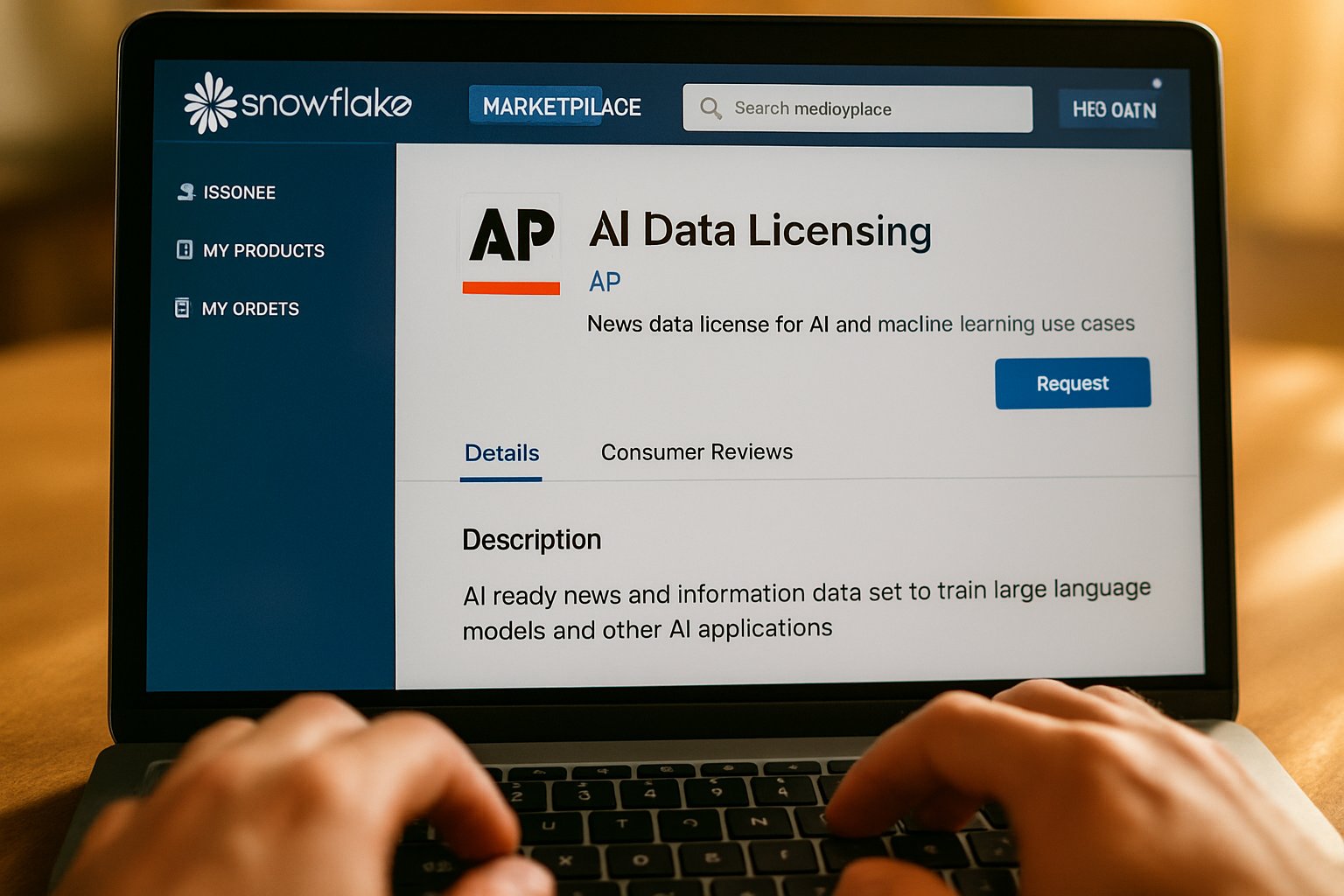
Prasanna Krishnan, Snowflake’s apps chief, stated that powerful agents require high-quality external input. In contrast, unlicensed scraping threatens compliance. Consequently, marketplaces promise attribution, governance, and streamlined procurement.
These fundamentals explain the surge in publisher interest. However, scale alone does not guarantee sustainable payments. Buyers still demand clear returns before funding recurring licenses.
Snowflake Cortex Advantage Explained
Cortex Knowledge Extensions wrap unstructured stories with metadata, embeddings, and access controls. Additionally, enterprises can query AP headlines directly from existing Snowflake tenants. That architecture reduces egress costs and simplifies audits. Moreover, attribution fields remain attached, satisfying IP requirements.
MarketsandMarkets projects the global RAG segment will jump from $1.9 billion in 2025 to $9.9 billion by 2030. Consequently, publishers view AI Data Licensing as a growth hedge against shrinking print syndication. Meanwhile, Snowflake strengthens stickiness by keeping analytic and generative workloads in one cloud.
The synergy appeals to regulated sectors. Finance teams already license AP material to monitor supply-chain disruption and macro shifts. Subsequently, internal chatbots answer analyst questions with live citations instead of hallucinated summaries.
AP Strategy And Revenue
AP produces about 5,000 stories daily across 100 countries. Moreover, technology company revenue reportedly grew 200 percent during four years. Kristin Heitmann, AP’s chief revenue officer, called enterprise clients “almost unlimited” in potential.
The organization also inked earlier deals with OpenAI and Google Gemini. Therefore, its Snowflake listing extends a multi-channel blueprint. Julie Pace, AP executive editor, asserted that the wire service is “not a newspaper company” anymore.
However, April 2026 buyout offers to U.S. staff raised alarm. The News Media Guild argued that leadership “flirts with artificial intelligence” without investing in training. Nevertheless, AP insists new income will sustain journalism.
These contrasting positions spotlight a core dilemma. AI Data Licensing promises cash, yet labor groups fear newsroom erosion.
Industry Competition Intensifies
Snowflake is not alone. Microsoft launched a Publisher Content Marketplace pilot in early 2026 to feed Copilot products. Additionally, platforms such as AWS Data Exchange and FactSet Marketplace chase similar dollars.
Publishers respond by packaging archives into machine-readable bundles. USA TODAY Network, Stack Overflow, and CB Insights joined Snowflake alongside AP. Moreover, smaller outlets explore consortium models to negotiate leverage.
Consequently, enterprises face widening choices. However, fragmentation complicates contract reconciliation across multiple vendors. Therefore, governance teams value standardized schemas, usage reporting, and clear indemnification.
These competitive dynamics will accelerate pricing transparency. Yet, until marketplaces publish dollar benchmarks, analysts must rely on anecdotal figures.
Challenges And Concerns Raised
Despite promise, unresolved issues persist:
- Pricing opacity prevents buyers from benchmarking similar feeds.
- Legal exposure remains while copyright lawsuits evolve.
- Newsroom staff worry about resource shifts and byline dilution.
- Excessive reliance on one platform could create vendor lock-in.
Moreover, independent verification of revenue impact is scarce. AP discloses growth percentages, not absolute numbers. In contrast, unions demand wage guarantees tied to licensing proceeds.
These challenges highlight critical gaps. However, emerging audits and attribution tooling aim to close trust deficits.
Practical Steps For Buyers
Enterprises considering AI Data Licensing should follow a structured checklist:
- Define RAG objectives and required freshness windows.
- Evaluate platform governance and attribution enforcement.
- Negotiate usage-based terms with volume projections.
- Pilot small datasets to measure answer accuracy gains.
- Document compliance controls for downstream stakeholders.
Additionally, professionals can validate skill gaps before deployment. They may enhance expertise with the AI Writer™ certification, which covers content governance and prompt engineering.
Subsequently, teams should monitor vendor roadmaps. Snowflake plans tighter integration between intelligence functions and Marketplace feeds. Consequently, early adopters will benefit from smoother orchestration.
These steps reinforce due diligence. Therefore, organizations can capture value while mitigating risk.
AI Data Licensing will remain a strategic lever. However, continuous review of legal and technical shifts is essential.
Conclusion And Outlook
AP’s partnership with Snowflake underscores a pivotal realignment of journalism economics. Moreover, competitive marketplaces, rising RAG demand, and publisher diversification fuel momentum. Nevertheless, transparency, labor concerns, and legal flux could hinder scale.
Consequently, decision-makers must weigh governance strength against cost and reputation risk. Adopting the practices outlined above will position enterprises for compliant innovation. Finally, explore the linked certification to deepen knowledge and confidently lead future AI Data Licensing initiatives.
Disclaimer: Some content may be AI-generated or assisted and is provided ‘as is’ for informational purposes only, without warranties of accuracy or completeness, and does not imply endorsement or affiliation.


