

AI CERTS
2 months ago
Enterprise AI Management drives Walmart workforce systems
This article dissects how Enterprise AI Management underpins the retailer’s strategy, benefits, and risks. Furthermore, readers will gain data-rich insights into architecture choices and governance hurdles. Relevant certification options are provided for professionals steering similar transformations. By the end, you will grasp practical lessons for complex Integration projects.
Accelerating AI Roadmap Momentum
The retailer revealed its agentic blueprint in mid-2025, bundling several domain agents under one governance layer. Sparky handles customers, Marty assists suppliers, while Associate Agent supports employees. Additionally, a Developer Agent orchestrates code deployments across back-office systems.
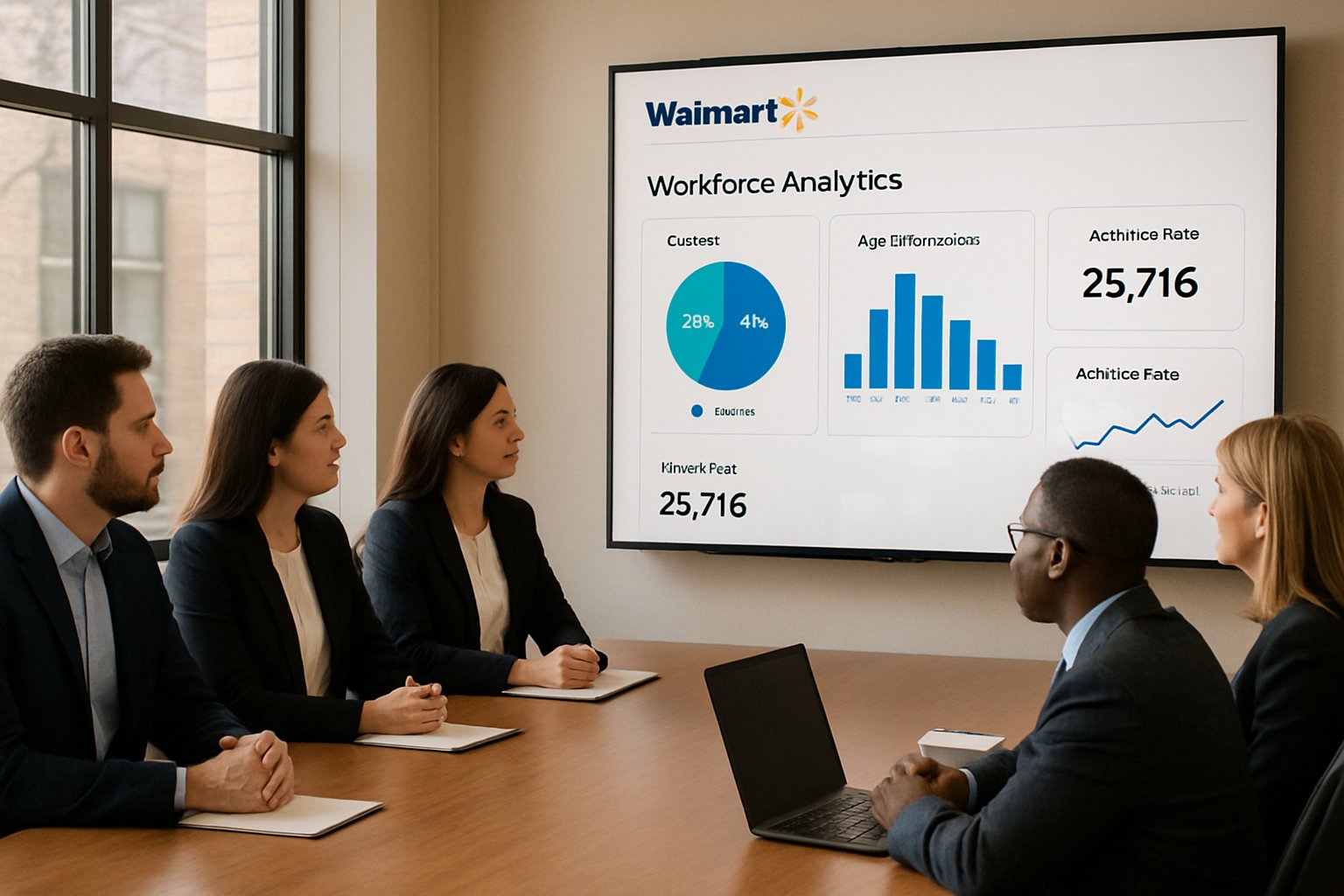
Greg Cathey described the shift as transformational because intuitive tools reach 1.5 million U.S. associates. Therefore, Enterprise AI Management became a board-level metric tied to productivity and cost-to-serve. Early pilots showed shift-planning time falling from ninety to thirty minutes, a striking 67% reduction.
- Shift-planning time cut from 90 to 30 minutes in pilot stores.
- Real-time translation supports 44 languages for cross-store teams.
- Automation slated to service 65% of Supercenters by FY2026.
Moreover, real-time translation spanning forty-four languages lowered communication friction inside multicultural Workforce hubs. Independent analysts still question scale, yet concede the roadmap is moving faster than most rivals. Consequently, leadership signals suggest automation will cover 65% of Supercenters by fiscal 2026.
These milestones validate initial momentum and frame aggressive targets ahead. In contrast, unresolved scheduling concerns steer the discussion toward practical Workforce outcomes.
Emerging Workforce Tools Impact
Store leaders interact with Me@Walmart, a mobile hub combining task lists, translation, and knowledge search. However, the experience now layers generative chat, pulling insights from fulfilment and labour modules. Manager dashboards recommend staffing adjustments based on forecast demand, inventory arrivals, and local events.
Furthermore, Enterprise AI Management aligns these recommendations with policy rules, overtime thresholds, and human override options. Human-in-the-loop design lets supervisors accept, edit, or reject proposed schedules within seconds. Nevertheless, employee forums cite sudden hour variations after recent software updates.
Donna Morris, chief people officer, insists transparency training accompanies every update. She argues data visibility empowers associates to contest disputed allocations. Meanwhile, academic researchers emphasise audit logs and fairness dashboards to reinforce trust across diverse Workforce segments.
Evidence shows tangible time savings and translation benefits. Yet lingering questions about perceived fairness lead naturally to Integration mechanics behind the curtain.
Key Integration Architecture Layers
At technical depth, the program stacks data lakes, model ops tooling, and real-time APIs. Upstream robotics feed inventory events; downstream WFM engines surface task priorities in associate apps. Consequently, Integration patterns follow a publish-subscribe bus, enabling loose coupling among legacy systems.
Identity federations secure agent handoffs while observability pipelines capture latency and drift metrics. Moreover, Enterprise AI Management monitors cost allocation, prompt performance, and policy compliance across regions. That telemetry flows into a governance console accessible to both engineering and Morris’s HR team.
In contrast, external vendors, including UKG and Workday, remain in peripheral roles for payroll and compliance. This hybrid stance reduces lock-in risk but complicates version control during quarterly release cycles. Subsequently, rigorous regression testing becomes mandatory before live feature flags expand nationwide.
Layered design eases future expansion and vendor swaps. However, added complexity heightens demand for disciplined Enterprise AI Management oversight.
Governance And Fairness Challenges
Algorithmic scheduling introduces legal exposure under city predictability ordinances and emerging AI fairness bills. Therefore, internal auditors evaluate outcome distributions across tenure, gender, and shift availability. Results remain private, so labor groups request independent verification from Walmart leadership and Morris directly.
Moreover, experts from INFORMS recommend transparent scorecards and periodic human calibration. They warn that black-box systems can erode morale even when statistically balanced. Nevertheless, Enterprise AI Management frameworks can embed explainability layers that translate model logic into everyday language.
Managers could then justify schedule tweaks during stand-ups, reinforcing procedural justice. Meanwhile, escalation workflows would allow associates to contest errors and flag bias. Such guardrails require Integration between grievance portals and scheduling engines, a project still in pilot.
Fairness design remains a work in progress. Consequently, the organisation is doubling down on skills programs to equip the Workforce for active participation.
Upskilling And Certification Push
Training represents the social contract balancing automation gains with human opportunity. Subsequently, the retailer partnered with OpenAI to craft a bespoke credential covering prompt basics, data ethics, and tooling fluency. John Furner framed the move as enabling associates to maximize AI value.
Additionally, Donna Morris confirmed rollout through the Walmart Academy starting early 2026. Courseware integrates live lab exercises inside the production environment. Professionals can enhance their expertise with the AI+ Human Resources™ certification.
Furthermore, Enterprise AI Management dashboards track completion rates and correlate them with KPI improvements. Preliminary data links certified supervisors to lower overtime variance and higher employee satisfaction. In contrast, stores lacking coverage show slower adoption of advanced scheduling features.
Upskilling efforts offer measurable upside for both individuals and margins. Therefore, attention now shifts to macro market signals shaping future investment horizons.
Market Context And Outlook
Grand View Research pegged 2025 Workforce management software revenue in high single-digit billions. Moreover, analysts expect growth near ten percent CAGR through 2030 as AI penetration widens. Retail represents a leading vertical thanks to thin margins and volume variability.
Consequently, competitors studying the retailer’s blueprint will benchmark Enterprise AI Management maturity levels. Those findings could influence vendor roadmaps, merger activity, and regulatory engagement. Meanwhile, investors increasingly scrutinize ESG disclosures covering algorithmic impact and human capital development.
Independent academics advocate public release of audit summaries to assure stakeholders. Nevertheless, industry watchers agree momentum toward deeper Integration is irreversible. The unanswered question is rate of value capture versus reputational risk.
Market forces favour disciplined, transparent execution. Subsequently, the next fiscal year will test scalability of Enterprise AI Management at global scale.
Strategic Takeaways And Actions
Walmart’s experiment shows automation, agentic tooling, and upskilling can move in tandem. However, fairness, transparency, and human agency must evolve equally fast. A structured governance stack can align models, compliance, and business KPIs. Moreover, disciplined interfaces, HITL validation, and certification recordkeeping limit downside exposure. Leaders should pair every algorithmic rollout with rigorous change management and public accountability reports. Finally, readers seeking deeper HR-AI fluency should pursue the highlighted certification and follow upcoming field studies.
Disclaimer: Some content may be AI-generated or assisted and is provided ‘as is’ for informational purposes only, without warranties of accuracy or completeness, and does not imply endorsement or affiliation.


