

AI CERTS
5 hours ago
Legal AI Technology Speeds Victim Court Transcripts
This article unpacks the latest data, pilots, and policy debates. Readers will see why Legal AI Technology could redefine justice workflows and what safeguards remain essential.
Faster Access For Victims
Victims often wait weeks for certified transcripts, prolonging trauma and confusion. In contrast, automatic speech recognition can deliver rough text within hours. UK Ministry of Justice pilots cut note-taking time by 50% and target delivery to victims within 14 days. Similarly, North Dakota rulemakers study audio-first workflows that could expand access across sparse rural courts. Consequently, stakeholders view speed as the primary benefit.
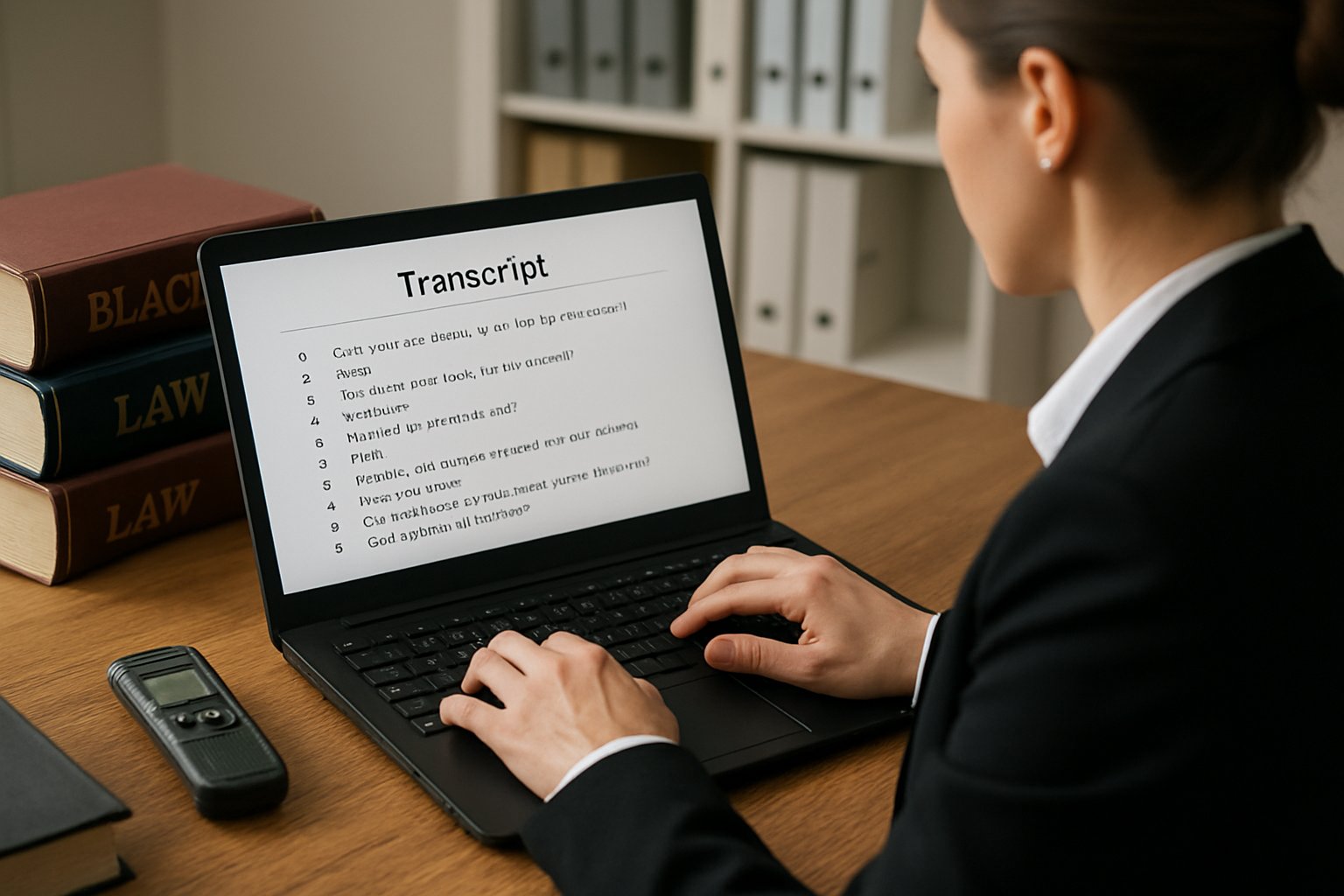
Legal AI Technology enables immediate playback of sentencing remarks, allowing victims to understand judicial reasoning quickly. Moreover, arbitration providers report 24-hour draft turnaround, demonstrating commercial feasibility. These advances illustrate the compelling human impact.
The acceleration improves transparency. However, rapid delivery means little without reliability. These gains frame the next discussion on accuracy and equity.
Accuracy And Equity Risks
Legal transcripts demand near-perfect precision. Koenecke’s landmark study found commercial systems misheard Black speakers nearly twice as often as white speakers. Therefore, uncorrected errors could distort official records and harm confidence in Justice.
Industry claims 96–97% draft accuracy, yet courts demand 99.5% for certification. Furthermore, overlapping speech, legal jargon, and emotional testimony challenge current models. The National Court Reporters Association warns that predictive engines cannot replace trained stenographers.
Equity also matters. Disparities risk compounding systemic bias against marginalized Victims. Consequently, many pilots pair Legal AI Technology with human editors. This hybrid approach seeks to marry speed with trustworthy outcomes.
These tensions highlight the stakes. Nevertheless, practical cost data suggests a viable compromise, which the next section explores.
Hybrid Model Gains Traction
Most active pilots embrace a human-in-the-loop design. First, ASR drafts the text. Subsequently, certified editors correct speaker attributions and legal terms. AAA-ICDR reports final products reaching 99% accuracy while halving per-page cost.
Legal AI Technology acts as an accelerator rather than a replacement. Additionally, hybrid models reduce reporter fatigue and broaden coverage in understaffed Court regions. However, human oversight remains vital for redaction, confidentiality, and chain-of-custody verification.
This balanced workflow now informs procurement documents in the UK and multiple U.S. states. Consequently, the model appears to dominate near-term strategy. Cost metrics further reinforce the trend.
Cost And Speed Metrics
Traditional certified reporters often charge between $4.50 and $7.00 per page. Hybrid providers cite prices near $2.30. Moreover, draft transcripts arrive in 24 hours versus 10–14 days.
- 50% note-taking reduction in UK pilot
- 24-hour draft delivery in AAA arbitration
- Up to 60% per-page savings over stenography
These figures excite budget-constrained Justice departments. Nevertheless, variable accuracy still requires contingency funds for manual fixes. Professionals pursuing deeper expertise can validate their skills through the AI Writer™ certification, which covers quality-assurance techniques.
Lower costs create momentum. Nonetheless, global policy experiments will determine whether savings translate into sustainable victim access.
Global Court Policy Experiments
Parliamentary debate in June 2025 proposed free sentencing transcripts for UK Victims within two weeks. Meanwhile, the MoJ runs Speech AI tests to assess safeguarding and racial bias. Across the Atlantic, North Dakota considers mandatory audio records to underpin hybrid transcripts.
Local Court rules in Lucas County, Ohio already grant discounted access, demonstrating fragmented U.S. practice. Additionally, Arizona’s acceptance of AI-generated victim statements shows growing comfort with digital evidence.
Legal AI Technology threads through each experiment. However, final adoption depends on standards for authenticity and privacy. Certification hurdles thus remain central.
Certification And Trust Barriers
Court appeals rely on immutable records. Consequently, any automated text must meet strict verification thresholds. Judges ask whether the official record should be the audio itself or a human-verified transcript.
Digital forensics experts warn deepfakes complicate authentication. Moreover, automated redaction still misses sensitive data, risking exposure of child Victims. Therefore, policies insist on layered review before release.
Legal AI Technology can pass if governance keeps pace. Independent audits and clear accuracy metrics will be critical. These requirements inform practical steps for diverse stakeholders.
Practical Steps For Stakeholders
Courts should start with limited-scope pilots covering sentencing remarks only. Meanwhile, victim advocates must test readability with diverse participants. Vendors ought to publish audited error rates by demographic group.
Researchers can design open benchmarks reflecting real courtroom noise. Moreover, legislators should codify accuracy floors and data retention periods. Such coordinated action will accelerate safe deployment of Legal AI Technology.
These actions align incentives. Consequently, they move the debate from theory to measurable progress.
Conclusion And Outlook
Speed, affordability, and expanded coverage make Legal AI Technology attractive for modern Justice systems. However, accuracy gaps, bias, and certification hurdles still threaten reliability. Hybrid workflows, rigorous auditing, and clear policy can bridge this divide.
Professionals must stay informed and skilled. Therefore, consider exploring the linked certification to deepen expertise and lead responsible innovation. The next era of transcripts will reward informed pioneers.


