

AI CERTS
2 months ago
U.S.–Taiwan Trade Investigation Reshapes Chip Policy
However, Taipei fears losing its manufacturing crown if incentives drive factories offshore. This introductory overview sets the stage for deeper analysis of legal tools, market data, and security concerns.
Washington Launches New Inquiry
On 11–12 March 2026, USTR opened Section 301 dockets targeting structural excess capacity. Furthermore, semiconductors sit at the top of the covered sectors list. The Trade Investigation aims to determine whether Taiwanese policies burden U.S. commerce. Nevertheless, Taipei can submit comments before 15 April and testify at May hearings. Jamieson Greer stressed that America will no longer “sacrifice its industrial base.”
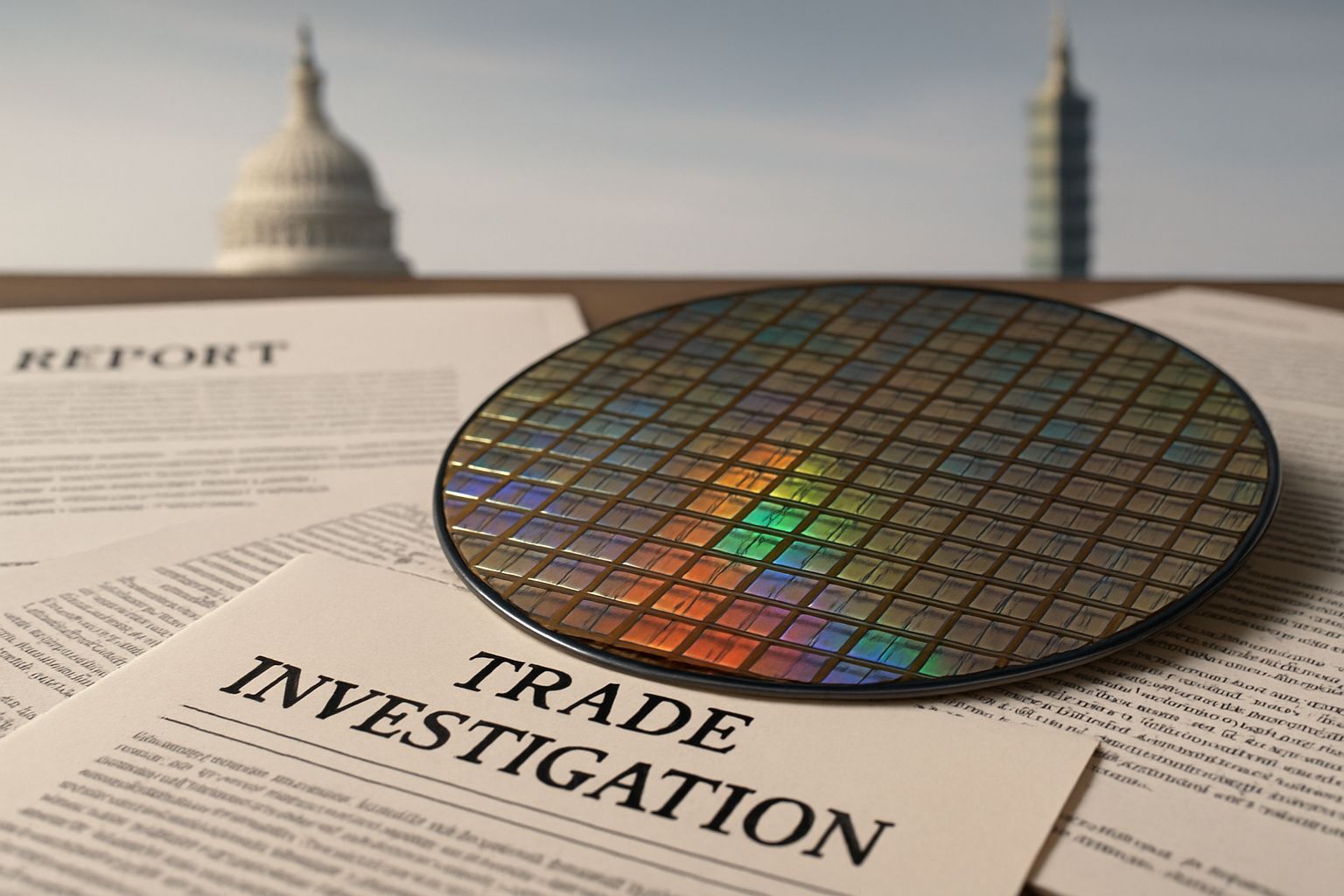
These opening moves escalate bilateral tension. However, they also create a negotiation window for mutually beneficial solutions. The section therefore frames the initial procedural landscape. Meanwhile, subsequent sections examine legal foundations.
Key Legal Tools Overview
Section 301 empowers USTR to impose punitive tariffs if foreign practices restrict U.S. trade. Additionally, Section 232 allows the President to curb imports threatening national security. January’s proclamation already slapped a 25 percent duty on certain AI chips. Moreover, a tariff-offset program promises duty relief for firms building U.S. capacity. Taiwan’s $250 billion investment pledge responds directly to that carrot-and-stick approach.
Section 301 Probe Mechanics
The Trade Investigation follows a rigid timetable. Comments open 17 March, close 15 April, and hearings start 5 May. Consequently, lawyers and lobbyists are racing to prepare briefs. In contrast, Section 232 actions require separate Commerce regulations that could arrive later this year.
These overlapping statutes give Washington broad leverage. However, their combined impact depends on final remedy choices. This legal backdrop clarifies why corporate strategists watch every Federal Register notice. Therefore, we now shift focus to Taipei’s strategic calculus.
Taiwan Faces Strategic Tradeoffs
Taiwan commands roughly 70 percent of advanced-node output, primarily through TSMC. Consequently, U.S. incentives that shift capacity abroad spark “hollowing out” fears. Moreover, scholars warn that eroding this “silicon shield” could weaken deterrence against coercion. Taipei’s Ministry of Economic Affairs insists local R&D will stay. Nevertheless, lawmakers debate how many fabs can relocate without harming innovation.
The Trade Investigation magnifies those debates. Furthermore, the tariff-offset scheme links market access to onshore factories. Therefore, Taiwanese executives must balance U.S. opportunities with domestic priorities. Two key dilemmas dominate boardroom conversations:
- How to preserve cutting-edge know-how while meeting American capacity targets.
- How to avoid duplicate capital expenditure amid uncertain global demand.
These pressures illustrate the complex tradeoffs. However, quantitative data offers clearer insight into actual exposure. The next section presents that data.
Critical Market Data Snapshot
Industry trackers show TSMC’s foundry share nearing 67 percent in 2025. Additionally, Taiwan supplied more than 80 percent of its U.S. exports from the ICT sector. Meanwhile, the United States consumes one-quarter of world chips but makes only 10 percent domestically. Such numbers underscore the stakes behind the current Trade Investigation.
Key indicators worth monitoring include:
- Quarterly capex guidance from TSMC, Intel, and Samsung.
- Actual tariff savings achieved through the offset program.
- USTR docket submissions citing excess capacity evidence.
Data points reveal potential supply shifts and price changes. Consequently, purchasing managers should brace for lead-time volatility. These metrics also inform security assessments explored next.
Security Stakes Intensify Quickly
The White House frames advanced chips as a national-security imperative. Moreover, AI accelerators underpin emerging defense platforms. Therefore, Washington argues that concentrated foreign supply threatens readiness. In contrast, some analysts warn that forcing fabs abroad could destabilize cross-strait deterrence.
Nevertheless, bipartisan momentum supports reshoring. Furthermore, defense agencies increasingly tie procurement to domestic content thresholds. Consequently, semiconductors stand at the intersection of economic and military strategy. Professionals can deepen compliance expertise through the AI Legal & Policy™ certification.
These security narratives elevate policy urgency. However, final outcomes hinge on procedural milestones, discussed below.
Upcoming USTR Process Milestones
Several dates will shape the Trade Investigation’s trajectory. Comments close 15 April. Subsequently, public hearings on 5 May allow stakeholders to testify. Moreover, USTR must release findings within one year unless extended. Should violations appear, remedial tariffs could follow swiftly.
Meanwhile, Commerce will publish rules detailing tariff-offset qualifications. Consequently, Taiwanese firms eye factory groundbreaking schedules in Arizona and Texas. Additionally, Congress may propose funding top-ups for CHIPS Act incentives during budget negotiations.
These milestones give executives clear planning horizons. However, geopolitical variables could still alter timelines. Therefore, continued monitoring remains essential.
The section summaries above trace the investigation’s legal, strategic, market, and security dimensions. Each stage introduces new leverage points and risks. Collectively, they outline a fast-moving policy environment demanding agile responses.
The following conclusion consolidates the most critical insights and offers actionable guidance.
Consequently, the U.S.–Taiwan Trade Investigation blends legal muscle, economic incentives, and security doctrine. Taiwan’s dominance in semiconductors confronts Washington’s reshoring agenda. Moreover, overlapping Section 301 and Section 232 statutes equip USTR with tariff tools that could reshape supply chains. Data shows heavy U.S. dependence on Taiwanese chips, while Taipei fears strategic erosion from capacity loss.
Nevertheless, negotiated investment pledges and tariff-offset plans offer a collaborative path forward. Professionals should track upcoming milestones, scrutinize docket filings, and evaluate offset eligibility. Finally, bolster policy fluency and compliance readiness by pursuing advanced certifications, and stay prepared for rapid regulatory shifts.
Disclaimer: Some content may be AI-generated or assisted and is provided ‘as is’ for informational purposes only, without warranties of accuracy or completeness, and does not imply endorsement or affiliation.


