

AI CERTS
2 months ago
Algorithmic Asset Management Meets Bloomberg B500 Reconstitution
Algorithmic Asset Management strategies thrive on such predictable index events. Moreover, reconstitution announcements offer advance signals that sophisticated systems can monetize. This article dissects the B500 methodology, recent additions, and the expanding derivatives ecosystem. Additionally, we weigh costs, benefits, and practical considerations for buy-side teams. All insights derive from official Bloomberg documents, exchange filings, and press releases. Readers will gain actionable knowledge for future trading windows around the benchmark.
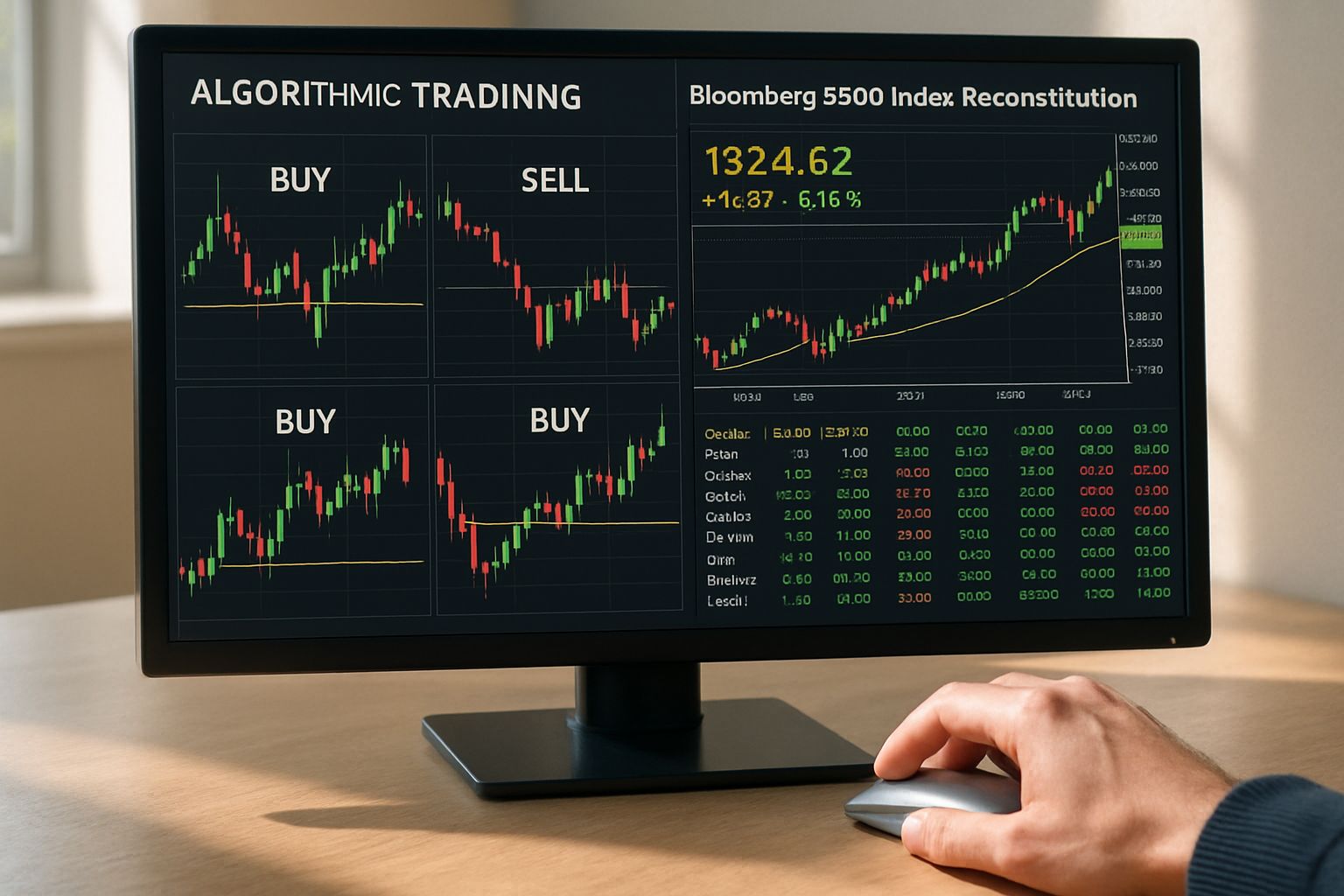
Large Cap Benchmarking Basics
Bloomberg positions the B500 as the definitive float-adjusted measure of United States corporate scale. Meanwhile, the benchmark launched on 31 March 1986 and now covers roughly 500 constituents. In contrast, its July 31 2025 fact sheet recorded 503 names because buffer rules limited turnover. Therefore, investors view the gauge as broad yet responsive compared with committee driven alternatives.
- $58.19 trillion market cap at March 5 2026 announcement.
- Top ten weight 37.32 % per July 2025 fact sheet.
- Average market cap $113.61 billion; P/E 27.71; dividend yield 1.19 %.
Algorithmic Asset Management teams rely on such metrics to calibrate factor tilts. Consequently, the statistics highlight concentration risk alongside significant breadth.
These figures demonstrate powerful scale and liquidity. However, methodology details decide future composition. Next, we explore those rebalancing mechanics.
Reconstitution Mechanics In Detail
Quarterly share updates keep weights current, yet composition changes occur only twice each year. Moreover, the second Wednesday of March and September anchors the reconstitution calendar. Bloomberg publishes adds and deletes at least ten business days before effective open. Fast-track IPO rules allow large newcomers to join outside scheduled cycles.
Algorithmic Asset Management systems program these milestones to trigger liquidity forecasts and pre-hedging routines. Consequently, managers must monitor announcements to avoid Index mismatch risk.
Timetables give systematic desks reliable event structure. Nevertheless, surprise IPO inclusions maintain competitive tension. The following section quantifies price ripples around each shake-up.
Market Impact Analysis Insights
Academic studies show significant volume spikes during reconstitution weeks. Furthermore, Bloomberg data from March 2026 recorded elevated turnover in added names like Ciena. In contrast, deletions often underperform the benchmark by several basis points before removal. B500 futures, once live, may offer cheaper hedging than basket trading.
Algorithmic Asset Management engines can exploit temporary demand imbalances through intraday liquidity maps. Therefore, understanding magnitude and timing improves execution quality for passive replication.
Event windows historically create measurable alpha opportunities. However, liquidity constraints can erode theoretical gains. Derivatives development seeks to smooth these frictions.
Derivatives Pipeline Growth Outlook
MIAX has filed proposals to list cash-settled B500 options and futures. Meanwhile, market makers prepare quoting infrastructure across OPRA feeds. Consequently, portfolio managers anticipate tighter spreads and deeper trading liquidity once contracts launch. The exchange highlights rule-based governance as a selling point over incumbent benchmarks.
Algorithmic Asset Management groups welcome additional instruments because synthetic exposure reduces tracking error.
Derivatives broaden the toolkit for benchmark exposure. Nevertheless, final regulatory approval remains pending. Operational considerations deserve equal scrutiny.
Operational Pros And Cons
Every benchmark carries implementation trade-offs that matter for real money accounts. Pros include transparent rules, responsive IPO inclusion, and quarterly float updates. Cons encompass higher turnover, potential inclusion of unprofitable firms, and limited product history. Moreover, derivative depth remains narrower than legacy Index ecosystems like S&P 500.
Algorithmic Asset Management desks must weigh slippage against factor accuracy.
Balanced evaluation avoids unexpected cost surprises. Consequently, disciplined monitoring offsets many drawbacks. Finally, we consider strategic implications.
Implications For Asset Managers
Buy-side leaders increasingly embed this large-cap gauge within performance dashboards. Furthermore, systematic desks align execution algorithms with semi-annual data cuts. Algorithmic Asset Management remains central as data feeds, derivative quotes, and corporate actions synchronize automatically. Therefore, Algorithmic Asset Management frameworks integrate real-time constituent feeds.
Professionals can deepen expertise through the AI+ Cloud Architect™ certification. Consequently, credentialed analysts gain credibility when recommending benchmark aligned products.
Efficient workflows demand automation and credentials. Nevertheless, skills must track rule changes continually. We now summarize core lessons.
Closing Insights
Recent reconstitutions underscore how transparent rules reshape capital flows across large caps. Moreover, futures and options will soon extend benchmark access for hedging and Trading. Consequently, Algorithmic Asset Management must monitor announcements, volume patterns, and derivative spreads. Additionally, skill gaps shrink when teams pursue structured learning opportunities. Algorithmic Asset Management professionals should secure certifications and automate data pipelines to maintain an edge. Explore certifications today and strengthen your strategic toolkit before the next reconstitution window.
Disclaimer: Some content may be AI-generated or assisted and is provided ‘as is’ for informational purposes only, without warranties of accuracy or completeness, and does not imply endorsement or affiliation.


