

AI CERTS
2 months ago
SES AI events boost Energy Storage Research momentum
Investors, analysts, and technologists can expect seven headline events between January and March. Furthermore, the company’s FY 2025 revenue rose 124 percent year-over-year in Q4, reaching $4.6 million. These improvements, while modest, lend credibility to management’s forecasts. Nevertheless, SES remains loss-making, and execution risks persist. This article dissects the upcoming roadshow, strategic messages, technical promises, and professional development angles, repeating core takeaways for busy readers engaged in Energy Storage Research.
SES Event Schedule Overview
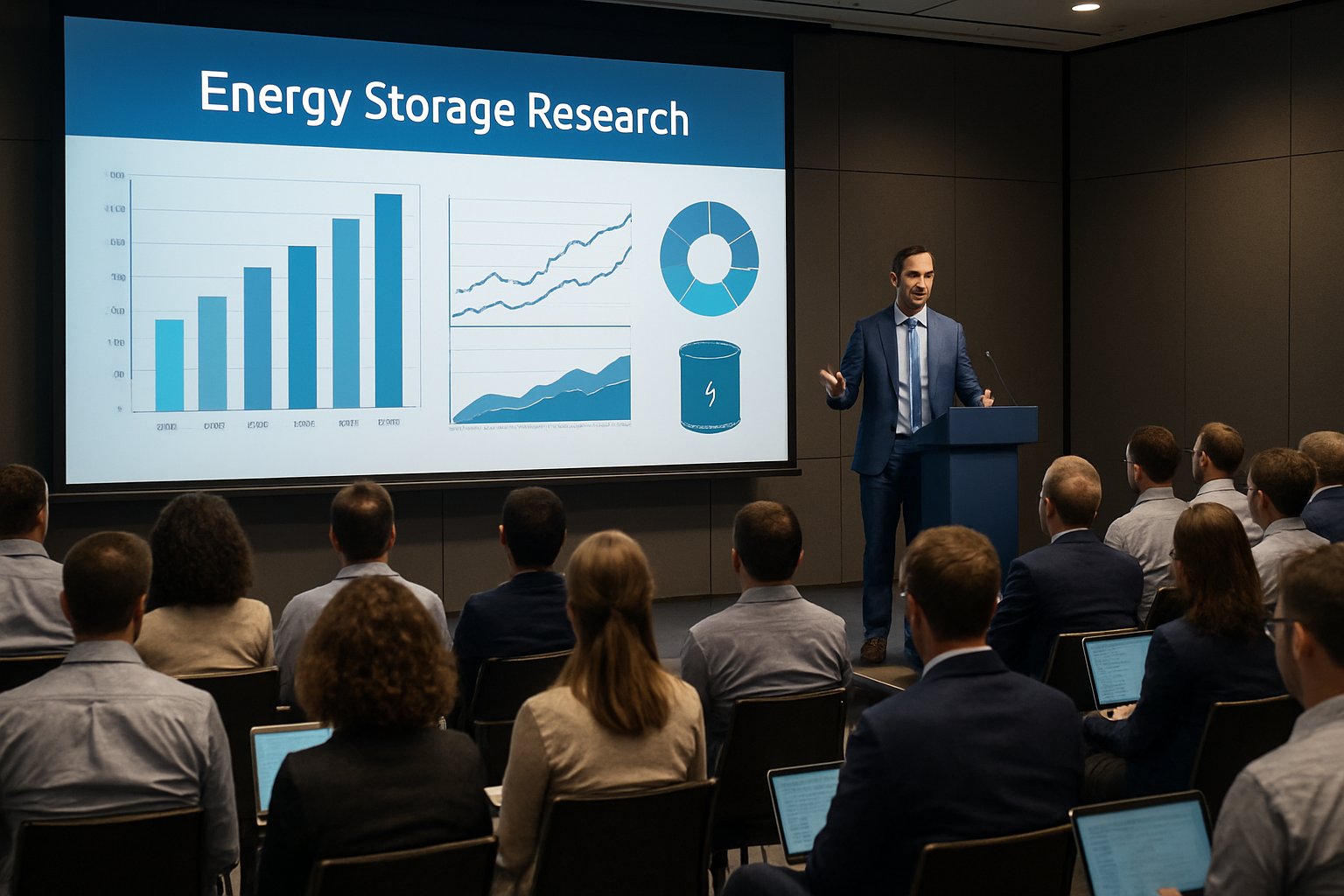
SES kicks off at CES in Las Vegas on 6 January. Meanwhile, CTO Kang Xu will address the Gordon Research Conference on electrochemistry the same day. The 28th Annual Needham Growth Conference follows on 16 January with a virtual fireside chat. Subsequently, NASA hosts the Aerospace Battery Workshop from 20 to 22 January at Johnson Space Center. March’s roster adds the Cantor Growth Conference, InterBattery Korea, the International Battery Seminar, the Energy Storage Summit USA, and Drones & Uncrewed Asia.
For journalists seeking interviews, Angel Chan and Shana Tischler handle CES inquiries, while investor relations manages webcast logistics. Additionally, SES maintains replay links on its newsroom page. These channels streamline access to executives, ensuring timely Energy Storage Research coverage. In summary, the schedule blends mass-market showcases with deep technical forums. However, the investor-heavy structure underscores capital market priorities.
Investor Outreach And Guidance
Financial messaging will dominate the Needham and Cantor conferences. Therefore, CEO Dr. Qichao Hu plans to reiterate FY 2026 revenue guidance of $30 million to $35 million. He is also expected to highlight a liquidity buffer near $200 million. Moreover, Cantor Fitzgerald recently praised SES for disciplined cash usage and Battery innovation potential. Such endorsements could temper skepticism created by prior quarterly misses.
Hu’s shareholder letter claimed six new electrolyte materials surfaced through the Molecular Universe platform, each now under customer evaluation. Consequently, the firm promotes a capex-light model built on SaaS and joint development revenue. Energy Storage Research stakeholders should weigh these projections against ongoing net losses of $73 million in 2025. In short, the events give SES a megaphone to refine guidance. Yet prudent analysts will probe for signed purchase orders.
Breakthrough Li-Metal Science Focus
Technical credibility rests on SES’s Li-Metal cell architecture. Historically, Li-Metal anodes improved density but raised safety issues. However, SES pairs advanced electrolytes with its Avatar “AI for Safety” system to predict failure modes. Additionally, the Molecular Universe engine applies physics-informed machine learning to screen millions of candidate molecules, accelerating R&D cycles.
Kang Xu’s Gordon Research keynote and the Orlando Battery Seminar panel titled “Material Informatics and AI” will showcase these methods. Furthermore, SES says forty customers now test prototypes across drones, electric vehicles, and stationary storage. Such trials, if validated, could reshape Energy Storage Research benchmarks. Still, independent data remain scarce, prompting calls for third-party replication. Overall, the Li-Metal story will command attention, yet evidence must match rhetoric.
Diverse Commercial Use Cases
Beyond cells, SES markets three business units: Drones, Energy Storage Systems, and Materials SaaS. Consequently, appearances at InterBattery Korea and Energy Storage Summit USA aim to convert pilot projects into revenue. Drone operators seek lighter packs for extended missions, while grid developers demand higher cycle life. Moreover, MU licenses promise recurring fees from chemical companies needing rapid discovery tools.
Key commercial statistics illustrate progress:
- FY 2025 revenue: $21 million across segments
- 124 percent Q4 revenue growth year-on-year
- Six materials breakthroughs under active customer testing
- Forty-plus organizations engaged in trials
These numbers suggest early traction. Nevertheless, confirmed long-term contracts remain limited. Therefore, Energy Storage Research professionals should monitor event announcements for definitive supply agreements. Summing up, SES targets multiple verticals, yet each path carries unique adoption hurdles.
AI Compute Partnerships Explained
Advanced analytics require costly infrastructure. Accordingly, SES partnered with NVIDIA, Supermicro, and Crusoe Cloud to scale Molecular Universe training workloads. Crusoe’s flare-gas-powered data centers reduce carbon impact, aligning with sustainability claims. Meanwhile, NVIDIA GPUs and Supermicro servers provide high-density compute essential for complex molecular simulations.
Partner executives stress mutual benefit. For instance, Crusoe CEO Chase Lochmiller said the collaboration supports SES’s mission to map the molecular universe. Moreover, the alliance mirrors a broader “AI for Science” trend across R&D domains. Consequently, rivals may need similar alliances to stay competitive. Energy Storage Research teams should note this convergence of compute and chemistry. In essence, SES leverages strategic suppliers to offset capital intensity and accelerate discovery.
Managing Financial Execution Risks
Despite upside, several cautionary flags exist. Firstly, SES remains unprofitable, and market volatility could strain funding. Secondly, supply-chain disruptions or regulatory hurdles may delay Li-Metal scaling. Furthermore, the company faces integration challenges after the UZ Energy acquisition and must maintain NYSE compliance.
Analysts will question whether MU subscription revenue can offset manufacturing costs quickly. In contrast, management argues its capex-light approach limits burn. Nevertheless, historical earnings misses fuel doubt. Therefore, Energy Storage Research observers need balanced skepticism when evaluating SES projections. To conclude this section, execution risk will stay central to valuation debates. However, clear milestones disclosed at each event could improve transparency moving forward.
Upskilling Energy Sector Professionals
Rapid innovation creates a talent gap. Professionals can enhance career prospects by mastering AI-driven workflows and customer engagement. Accordingly, industry players may consider specialized credentials. For example, professionals can enhance their expertise with the AI Customer Service™ certification. Such programs teach data-centric service design that complements technical Battery knowledge.
Moreover, conference delegates gain direct exposure to SES’s Molecular Universe demos and R&D roadmaps. Consequently, combining event insights with formal learning accelerates personal growth. Energy Storage Research leaders should encourage teams to pursue continuous education. Ultimately, skilled staff can translate emerging science into profitable solutions.
These professional pathways finalize our overview. Meanwhile, SES’s busy calendar will keep the spotlight on its strategy and technology.
Key Takeaways Ahead
1. SES schedules nine high-visibility events through March 2026.
2. Management links revenue guidance to Molecular Universe traction.
3. Technical sessions will test Li-Metal safety claims.
4. Partnerships with NVIDIA, Crusoe, and Supermicro bolster compute power.
5. Upskilling via certifications strengthens workforce readiness.
Consequently, Energy Storage Research stakeholders should track each milestone for signals on commercial viability.
These insights close our analysis. Nevertheless, continual monitoring remains essential as SES advances toward its ambitious targets.
Conclusion
SES AI’s event marathon offers a real-time case study in aligning science, markets, and messaging. Furthermore, the blend of investor briefings and technical forums will reveal much about Li-Metal scalability, MU software demand, and fiscal discipline. However, persistent losses and validation gaps temper enthusiasm. Nevertheless, informed professionals who follow each webcast, examine reported data, and pursue relevant certifications can position themselves at the forefront of Energy Storage Research innovation. Act now: register for upcoming sessions and expand your skill set to capitalize on the next wave of Battery technology.
Disclaimer: Some content may be AI-generated or assisted and is provided ‘as is’ for informational purposes only, without warranties of accuracy or completeness, and does not imply endorsement or affiliation.


