

AI CERTS
3 months ago
Meta Faces Major Biometric Privacy Lawsuit Over Ray-Ban Footage
Industry customers, meanwhile, wonder whether promised privacy controls ever existed. This article unpacks the timeline, legal theories, and operational risks behind the controversy. Moreover, it explores how human review pipelines function inside modern vision AI. Market scale matters here because more than seven million units shipped last year. Therefore, any systemic flaw could implicate millions of users and countless bystanders. Professionals need actionable insight, not hype. The sections below deliver that clarity. Global sales momentum places wearables at the center of everyday life. Yet intimate cameras force society to revisit long-debated privacy norms.
Kenyan Footage Revelations Rise
Investigative reporters at Svenska Dagbladet published their findings on 27 February 2026. Furthermore, they interviewed Nairobi workers contracted through Sama to perform Data Labeling. Workers described receiving unredacted first-person clips from the Smart Glasses.
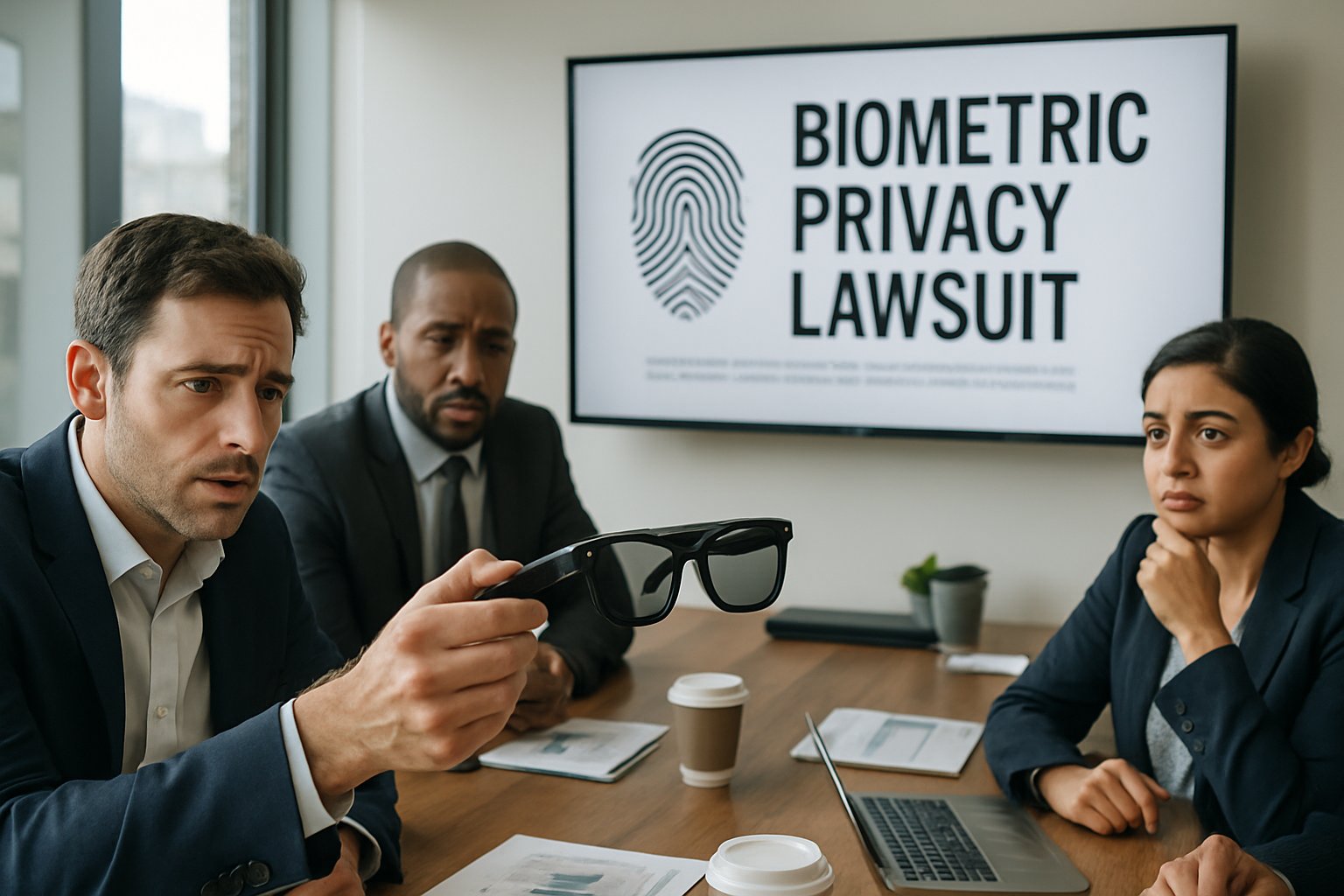
Examples included bedroom activity, children changing clothes, and visible credit card numbers. In contrast, Meta marketing had promised that users controlled sharing at every step. The disparity fed outrage and propelled the Biometric Privacy Lawsuit into mainstream headlines.
These testimonials illustrated potential consent failures. Consequently, attention shifted from anecdote to market scale.
Sama managers reportedly warned staff against speaking publicly, citing nondisclosure clauses. Nevertheless, several workers provided emails corroborating their claims to reporters. The documentation included internal screenshots of annotation dashboards showing personal identifiers. Such evidence boosted the investigation’s credibility among legal analysts.
Scaling Sales, Growing Exposure
EssilorLuxottica’s February call confirmed over seven million Ray-Ban Smart Glasses sold during 2025. Moreover, Counterpoint analysts placed Meta’s market share well above competing wearable cameras. Therefore, privacy weaknesses suddenly look systemic rather than anecdotal.
- 7M+ units shipped in 2025, according to EssilorLuxottica
- Dominant consumer share, says Counterpoint Research
- 150 countries reached through Luxottica retail channels
Collectively, these numbers expand the potential class size for any Biometric Privacy Lawsuit. Subsequently, lawyers and investors pivoted toward advertising claims and legal exposure.
Analysts forecast compound annual growth above 25% through 2028. Nevertheless, heavy regulation could dampen that trajectory if compliance costs soar. Investors therefore monitor privacy news as closely as unit shipments. Luxottica executives told analysts that transparent AI governance would protect brand equity.
Legal Theories Under Scrutiny
The complaint filed in California and New Jersey alleges deceptive trade practices, intrusion, and unjust enrichment. Additionally, plaintiffs argue Meta and Luxottica violated state biometrics statutes through undisclosed collection of face vectors. They reference marketing slogans like "designed for privacy" to bolster the Biometric Privacy Lawsuit narrative.
In contrast, Meta’s terms admit that some content shared with Meta AI may receive human review. However, the policy buries this disclosure deep inside supplementary documents few Smart Glasses buyers read. Consequently, plaintiffs claim consent was neither informed nor freely given, strengthening a second Biometric Privacy Lawsuit count.
These allegations hinge on how data moves from device to labeler. Therefore, technical workflows deserve closer inspection next.
The suit also invokes unjust enrichment, arguing Meta benefited financially from unpaid user data. Plaintiffs request statutory damages, restitution, and an injunction halting disputed processing. Furthermore, they seek class certification covering buyers across all fifty states. Legal experts predict early motions to compel arbitration or dismiss certain claims.
Regulators Worldwide Begin Responding
Within days, the UK ICO said the claims were "concerning" and demanded information from Meta. Meanwhile, Kenyan advocacy group Oversight Labs petitioned the ODPC for an inquiry into cross-border Data Labeling. European NGOs such as NOYB signaled upcoming GDPR complaints.
Regulators now treat the unfolding saga as a transatlantic Biometric Privacy Lawsuit waiting to happen in Europe. Furthermore, privacy watchdogs in California and Washington weighed the Smart Glasses under new state statutes. Regulatory momentum adds pressure because injunctions could stall global shipments within weeks.
Collectively, these probes create parallel timelines that executives must track. Nevertheless, understanding the human review pipeline clarifies potential remedies.
Kenya’s ODPC has fifteen days to acknowledge receipt of the petition. Subsequently, it may launch an investigation or request additional documents. Meanwhile, European regulators could coordinate under the GDPR one-stop-shop mechanism. Coordination would place Ireland’s Data Protection Commission in a lead role.
Human Review Process Explained
Vision AI models rarely learn without labeled examples. Therefore, Meta routes selected clips to annotators who tag objects, speech, and context. Sama’s Nairobi facility manages much of this Data Labeling work.
Meta insists automatic filters blur faces and redact credit cards before human viewing. However, Swedish interviews suggest those filters sometimes fail with low lighting or odd angles. Consequently, workers watched raw intimate footage, raising mental-health and compliance questions.
This pipeline forms the factual core of every Biometric Privacy Lawsuit count. Next, we examine operational risk and mitigation.
Human reviewers typically label a fraction of incoming footage for quality assurance. Selection algorithms ideally exclude sensitive segments, yet perfect filtering remains elusive. Annotators work under tight time metrics, sometimes watching thousands of clips daily. Psychologists warn that repeated exposure to distressing content can cause secondary trauma.
Operational Risks And Safeguards
Companies face overlapping technical, legal, and reputational hazards. Moreover, cross-border transfers can breach GDPR adequacy rules if standard clauses lag. Failure to audit subcontractors may expose Smart Glasses providers to joint liability.
- Consent gaps between marketing claims and terms
- Sensitive content escaping automated redaction filters
- Annotator welfare and trauma mitigation costs
- Potential export restrictions on biometric data
Compliance teams can upskill via the AI+ UX Designer™ certification. Moreover, rigorous design thinking helps bake privacy into Smart Glasses features early. Such investments may reduce Biometric Privacy Lawsuit exposure by demonstrating demonstrable due diligence.
Robust governance shrinks both technical and legal attack surfaces. Consequently, strategic lessons emerge for the industry.
Risk officers map each data flow against applicable statutes before deployment. Documentation proves vital when authorities issue information requests. Moreover, third-party audits build credibility with skeptical consumers. Insurers increasingly require evidence of such audits before underwriting cyber policies.
Strategic Takeaways For Firms
First, verify marketing promises align with actual Data Labeling workflows. Second, document every privacy control for auditor review. Third, respond swiftly when journalists surface credible leaks from wearable AI pipelines.
In contrast, reactive statements alone rarely stop a Biometric Privacy Lawsuit tide. Therefore, cross-functional privacy teams should meet weekly until investigations settle. Meanwhile, investors must price litigation reserves realistically.
These steps position companies ahead of regulators and courts. Nevertheless, further turbulence remains likely, as the conclusion explains.
Communication staff should draft holding statements before any crisis erupts. Consequently, spokespeople can respond within the golden hour after publication. Cross-team drills ensure that technical leads and counsel speak with one voice. Preparedness reduces panic and supports consistent messaging across regions.
Conclusion And Next Steps
Ray-Ban Meta remains a breakthrough product facing mounting scrutiny. Swedish revelations, regulatory probes, and a fast-moving Biometric Privacy Lawsuit ecosystem converge simultaneously. Consequently, privacy engineering has become a board priority for every wearable maker. Organizations that redesign data flows, strengthen consent, and support annotators will blunt future Biometric Privacy Lawsuit risks. Moreover, transparent communication can restore consumer trust and regulator confidence. Now is the moment to act, not wait for verdicts. Explore the linked certification to deepen design, policy, and product governance skills today. Further court filings and regulator letters will arrive within weeks. Staying informed now prevents costly missteps later.
Disclaimer: Some content may be AI-generated or assisted and is provided ‘as is’ for informational purposes only, without warranties of accuracy or completeness, and does not imply endorsement or affiliation.


